Nov 072018
 

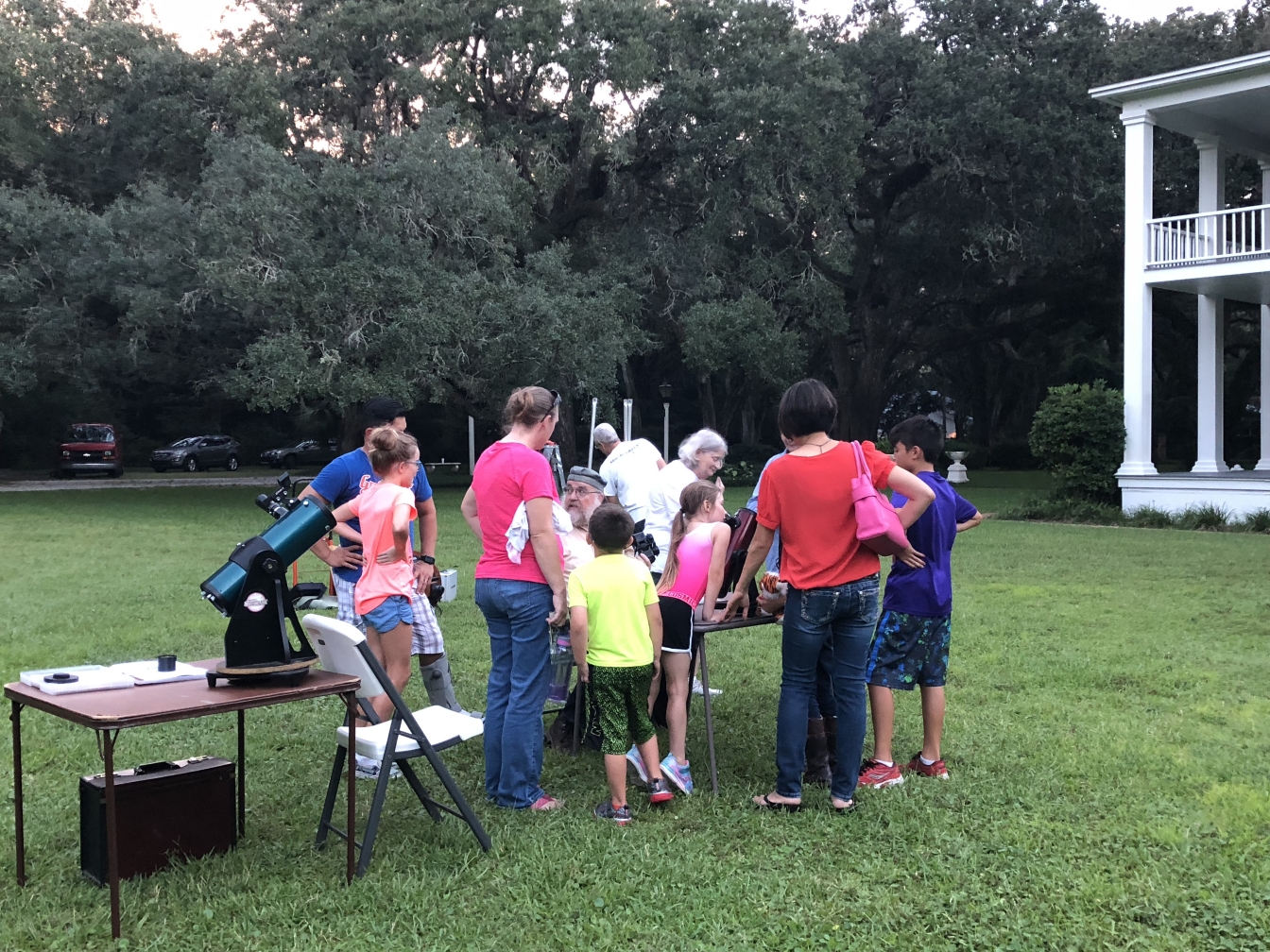
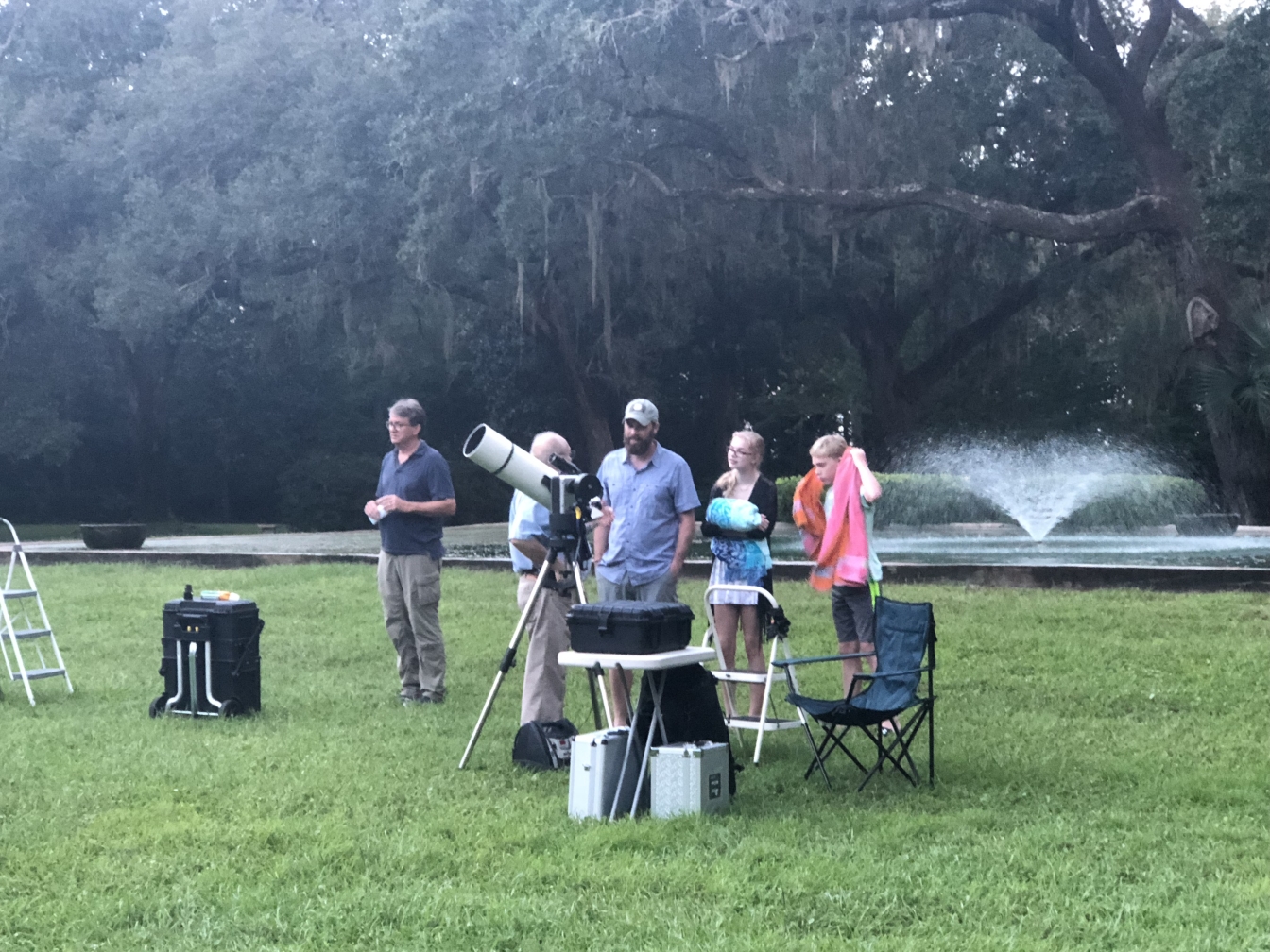
The members of the NWFAA that supported our Eden Gardens State Park star gaze drove through light rain showers on the way to the park but the skies were clear when we arrived. As usual for this park we had several early guest observers arrive as we were setting up. They were rewarded by getting a view of a crescent Venus in broad daylight just before the planet set behind the treeline.

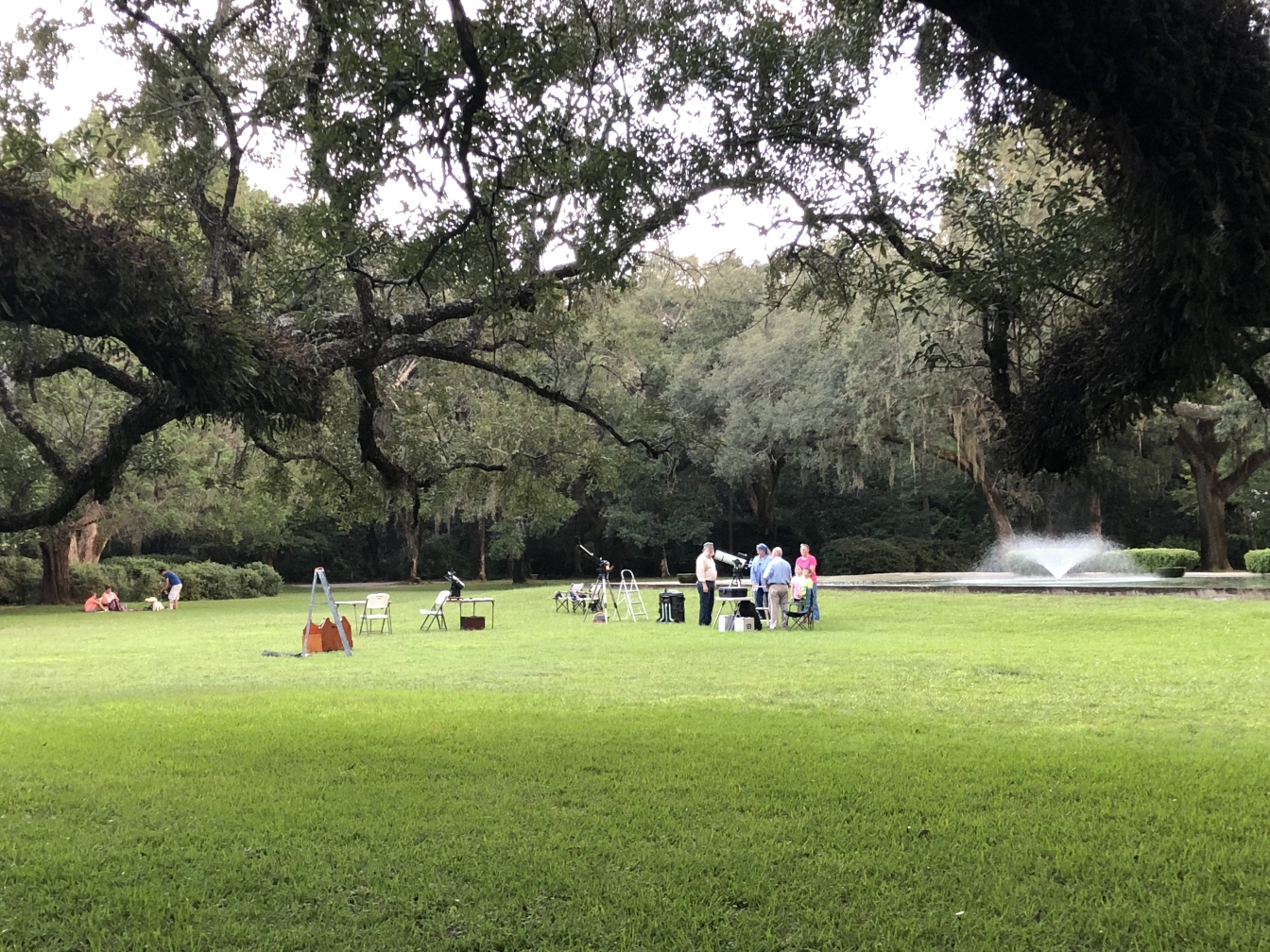
Eden Gardens is arguably our most photogenic star gaze location. The only problem with Eden Gardens is the ancient Spanish moss draped trees providing a 360° wall blocking every view of the horizon. However, the dark skies at the park more than make up for an obscured horizon.

Trees, trees and more trees.

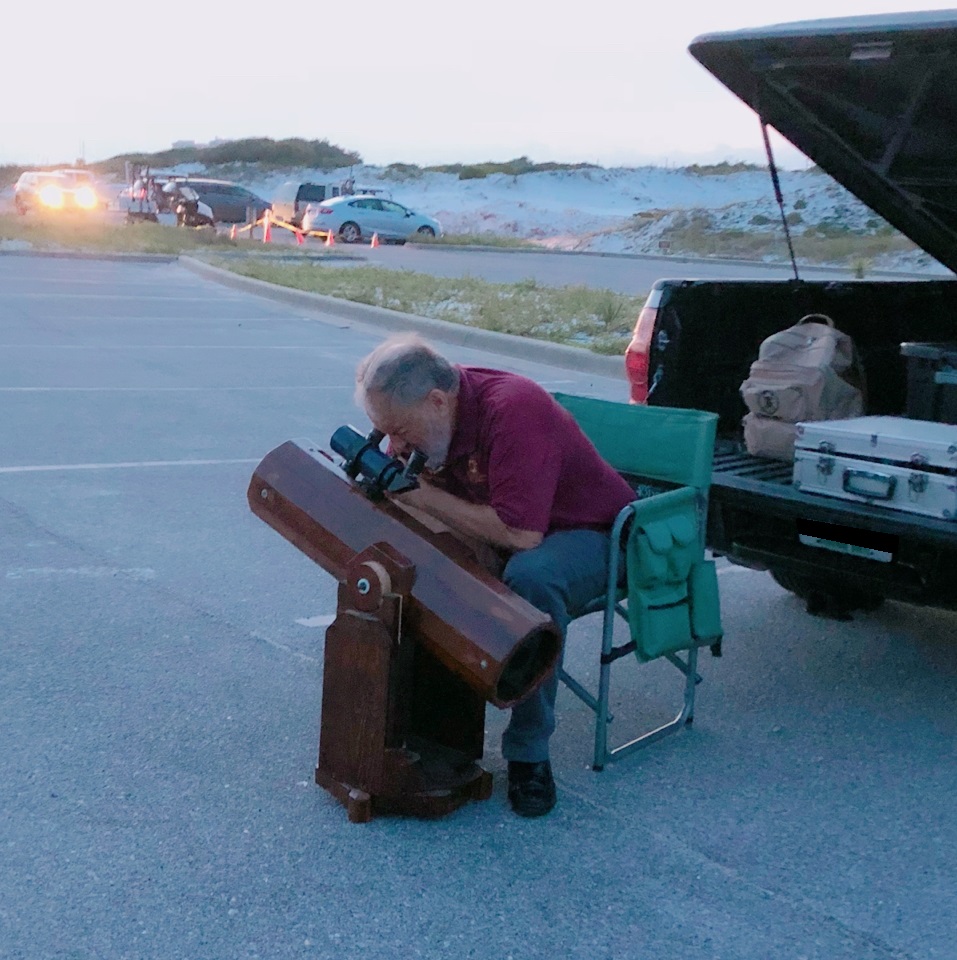
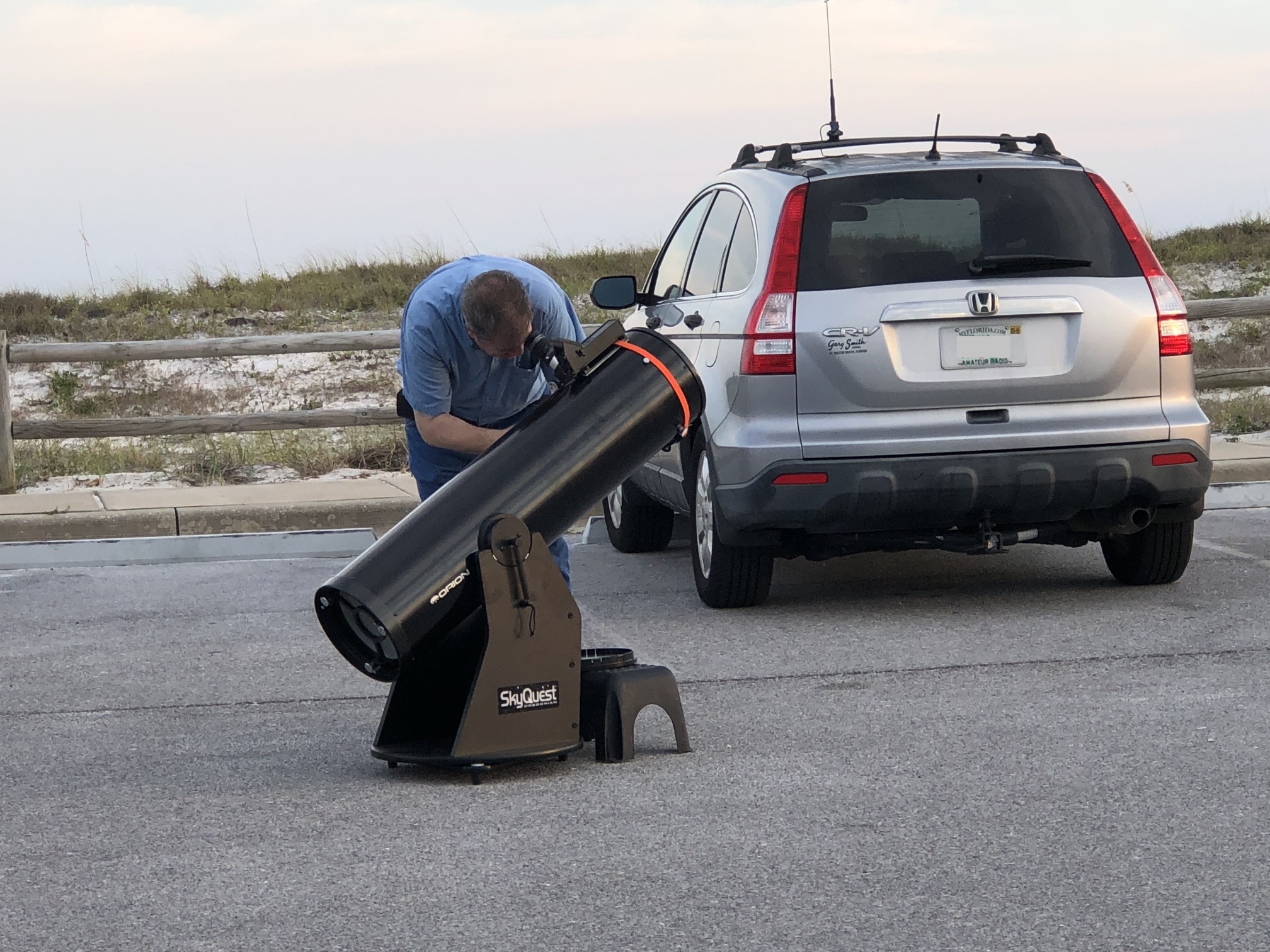
In the foreground, James sets up the club 16″ Dob.

The members who braved the weather were:

  • James Dubben
  • Tom Haugh
  • Dennis & Marietta Hausch

A 30% lit Moon was also visible before the Sun set. Then, as the sky darkened, Jupiter, Saturn and Mars all became visible spread out along the ecliptic. Jupiter’s Galilean moons were all situated to one side of the planet and Mars’ southern polar ice cap was plainly visible.

Ultimately, we had 45+ guest observers for the evening. We always encourage our guests to bring their scopes with them and join in the fun. This time we had a family bring their small Newtonian reflector along. Once we replaced the battery in their finder and aligned it, they spent the evening checking out the planets.

The family owned scope gets good use.

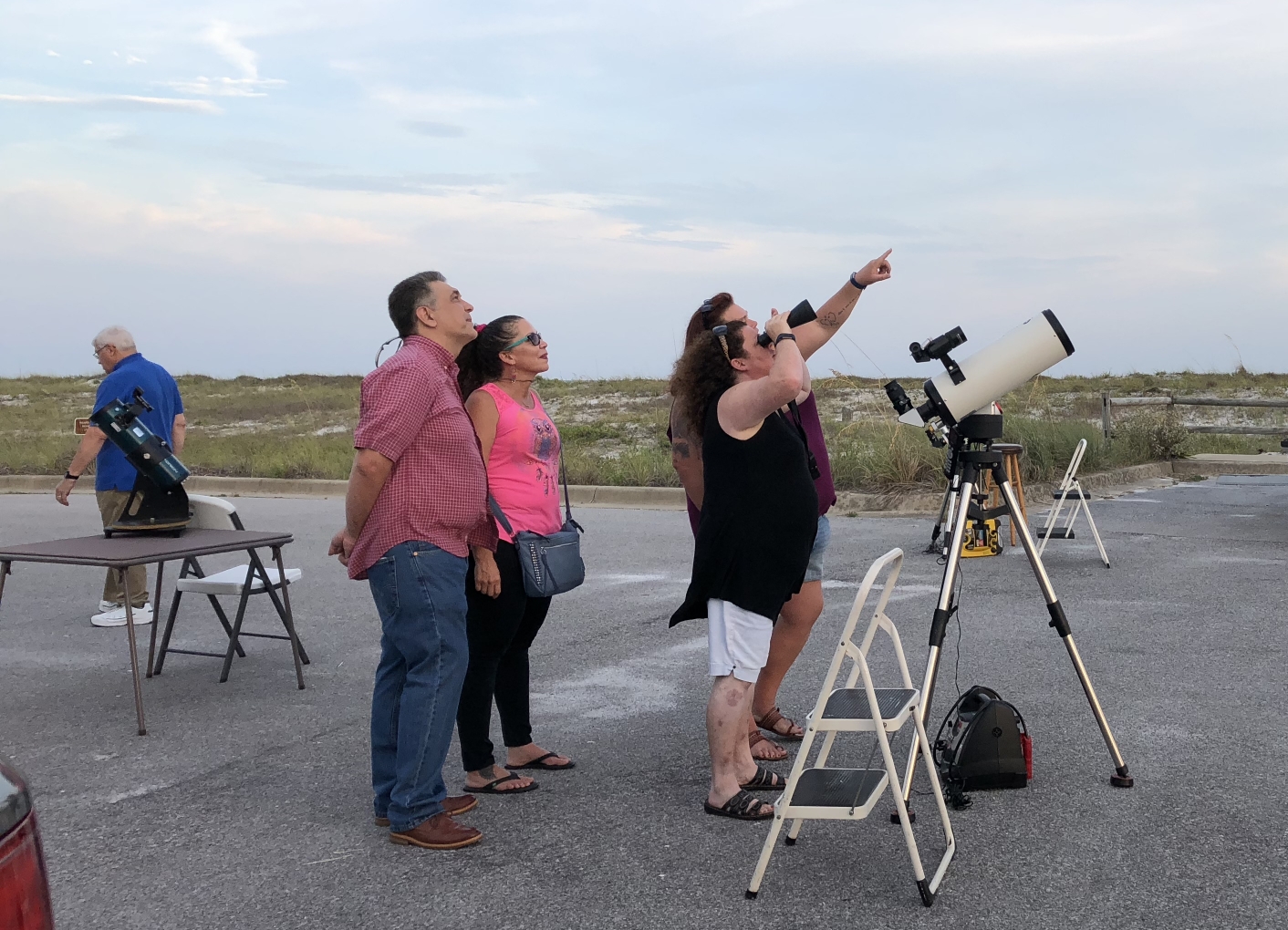
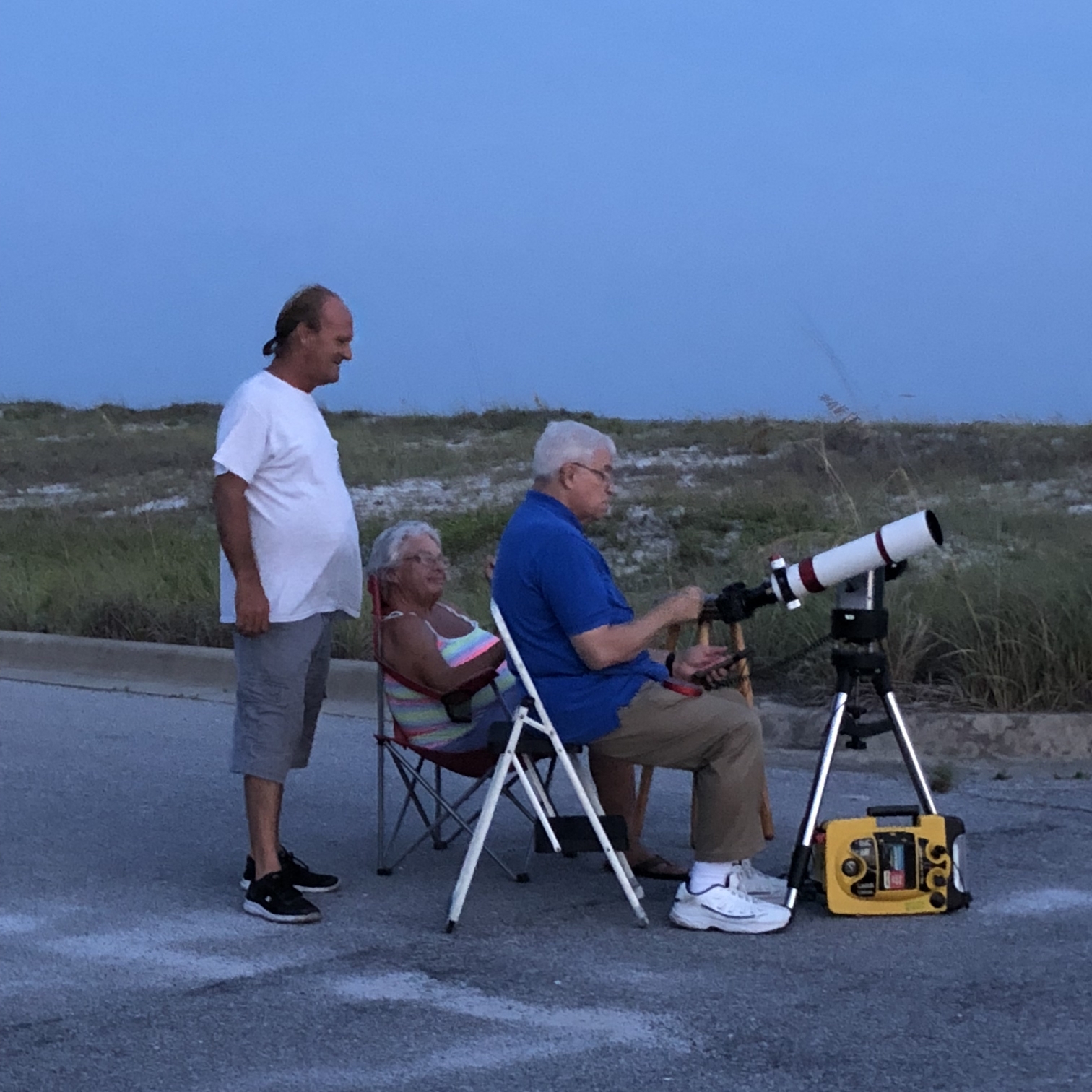
Dennis explains what is currently visible through his Maksutov.

The guests included a sizable group of Girl Scouts. They tried to attend several of our previous star gazes but the weather always conspired against them. Their determination finally paid off.

Once again, we need to thank Marietta Hausch for the event photos.

 Posted by at 1:41 pm
Nov 052018
 

The NWFAA was invited to participate in the 2018 Gulf Coast Council Powder Horn training course. The training is designed to expose adult leaders and older scouts to activities and resources that they might not have had previous access to. They could then take that experience and knowledge back to their respective troops.

The Astronomy requirements were to discuss the movement of the celestial sphere as it relates to date and time using a computer and planetarium program. Then, after the sun sets, provide practical examples such as finding the North star based on the visible constellations or locating the visible planets using finder charts. Tom Haugh gave the presentation to several older scouts and about 10 adult leaders using TheSkyX planetarium software. The group then divided up into two groups and headed out to the observation field where the NWFAA had several telescopes set up.

NWFAA members who brought scopes for the training session:

  • John Walker
  • James Dubben
  • George & Renee Gollohon
  • Dave Halupowski & Kennedy Odom

Although Venus, Jupiter, Saturn and Mars were all spread out along the ecliptic, only the first group of guest observers got to view them all. The second group had to deal with overcast skies with the planets visible through the clouds only momentarily.

 Posted by at 4:21 pm
Nov 052018
 

Several members of the NWFAA joined forces to observe the Perseid meteor shower on the night it was predicted to peak. We converged on the dark sky site that we share with the EAAA near Munson, FL. The skies started out with heavy clouds to the southwest but they continued moving to the southwest and cleared before sunset. What was left was a very high layer of wispy clouds.

The first objects to come into view once the Sun set were the lineup of planets strung out along the ecliptic. From west to east Venus, Jupiter, Saturn and Mars were all plainly visible. New NWFAA member John Walker had brought along his Celestron C-11 and everyone took turns viewing the planets in turn. What was nice to see was the atmosphere of Mars finally starting to clear of the planet wide dust storm. Martian surface detail was faintly visible.

The meteor count started fairly slow but noticeably picked up around 01:00 AM. The one thing that we did have plenty of were mosquitoes. The skies continued to clear as the night progressed but every once in a while a high wispy cloud would pass over.

A few of our group were keeping a count of the meteors observed. The others were there to enjoy the show. By the time we decided to pack it in (0300) the final counts were:

  • Dave Halupowski (103)
  • Dennis Hausch (85)
  • Tom Haugh (69)

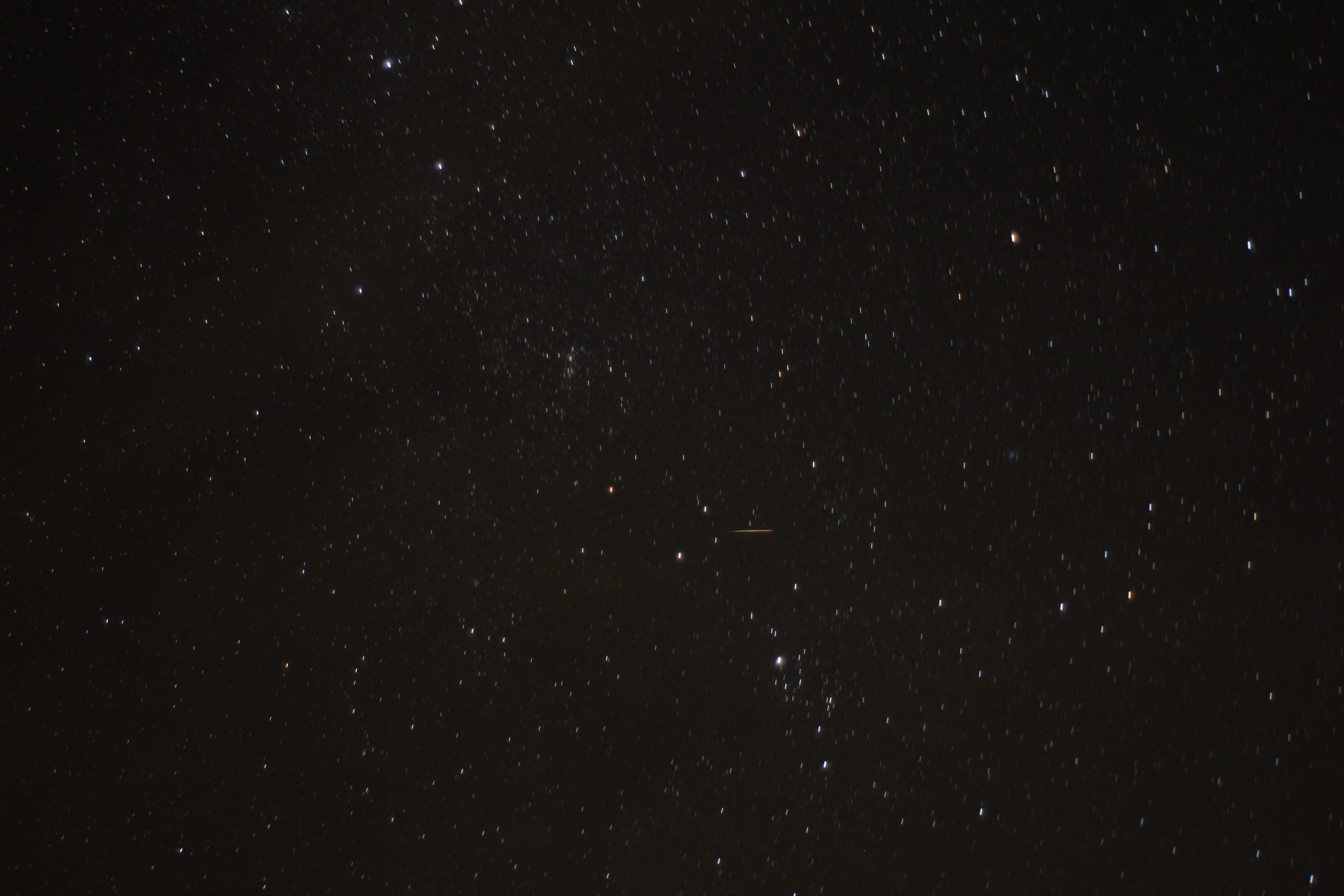
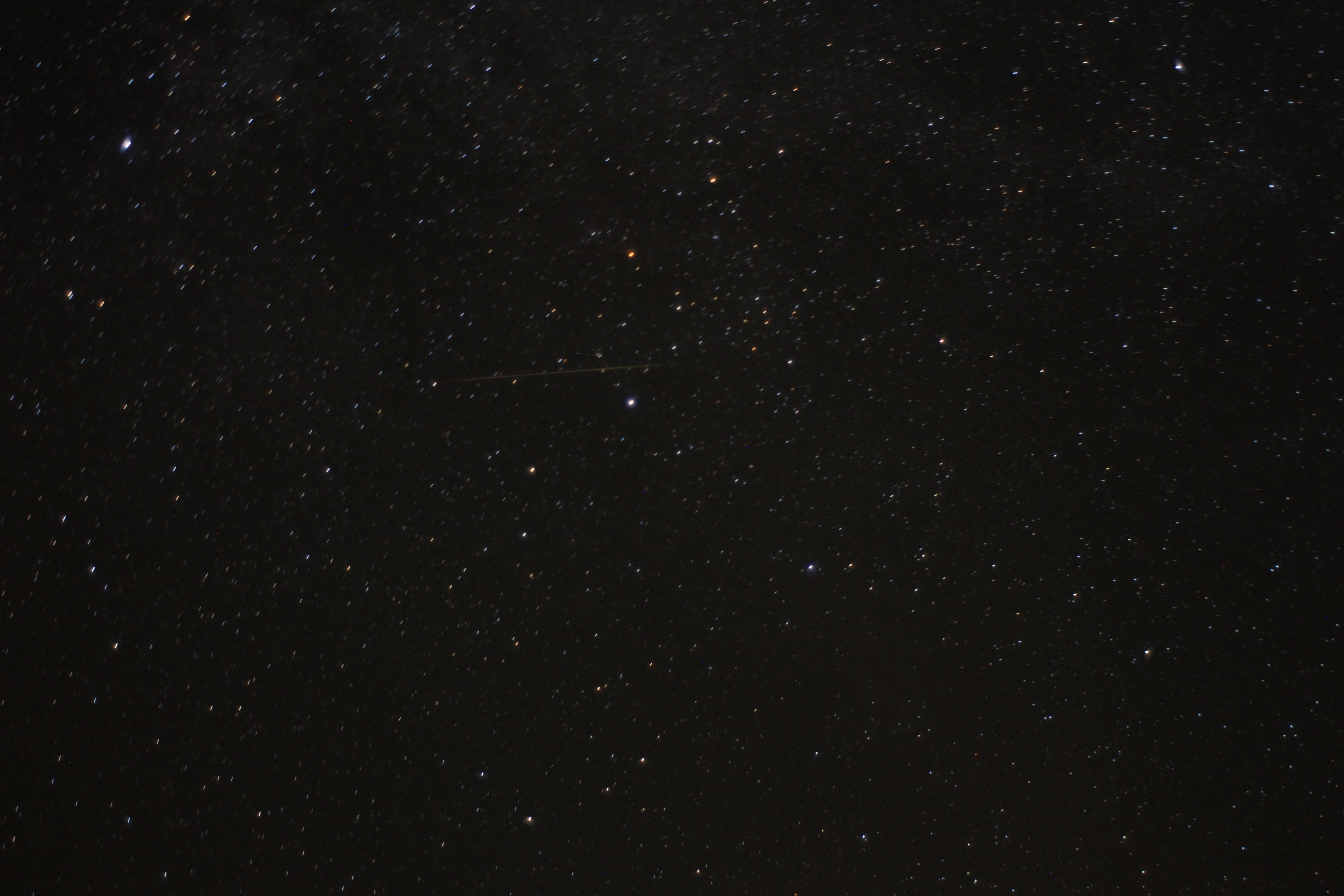
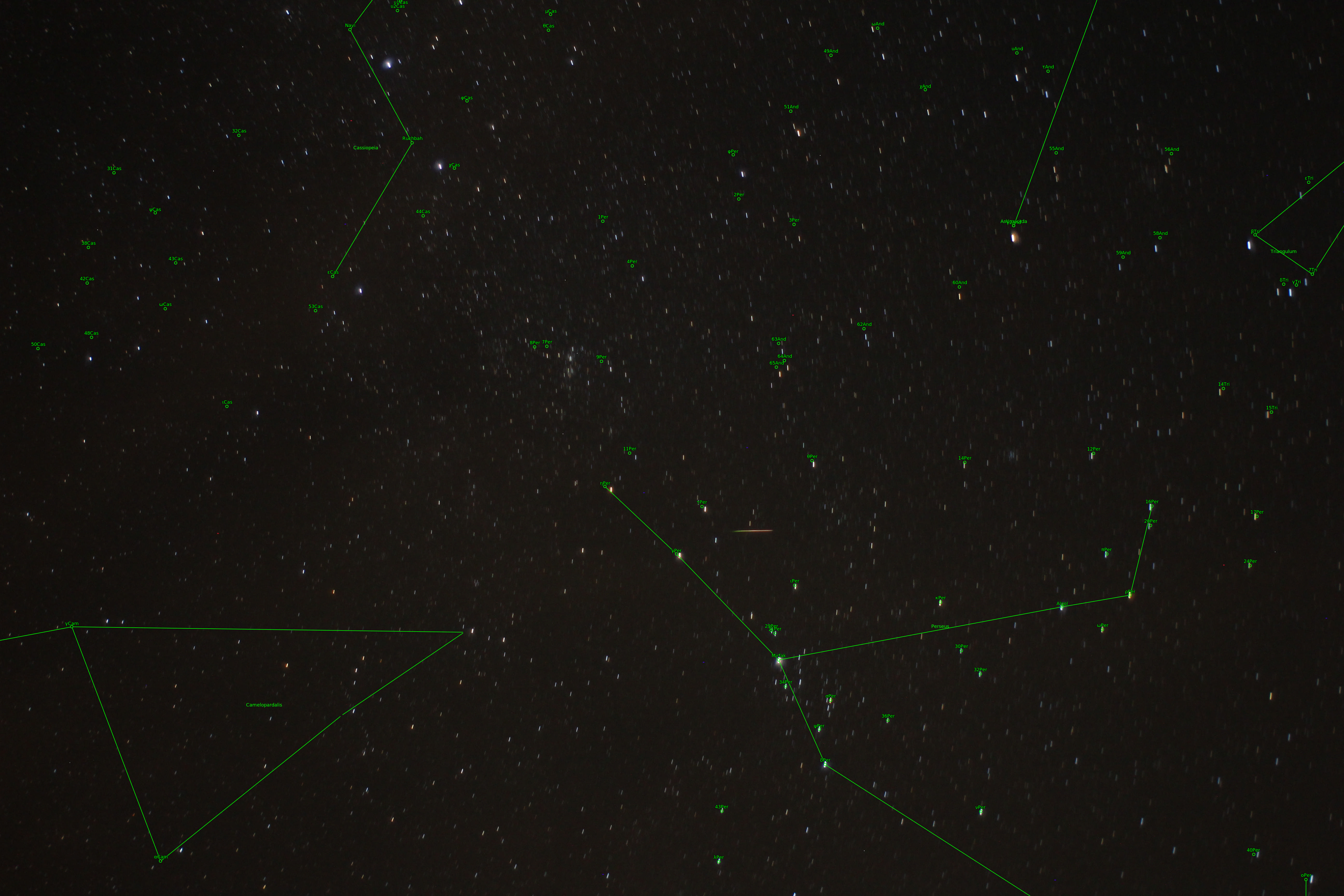
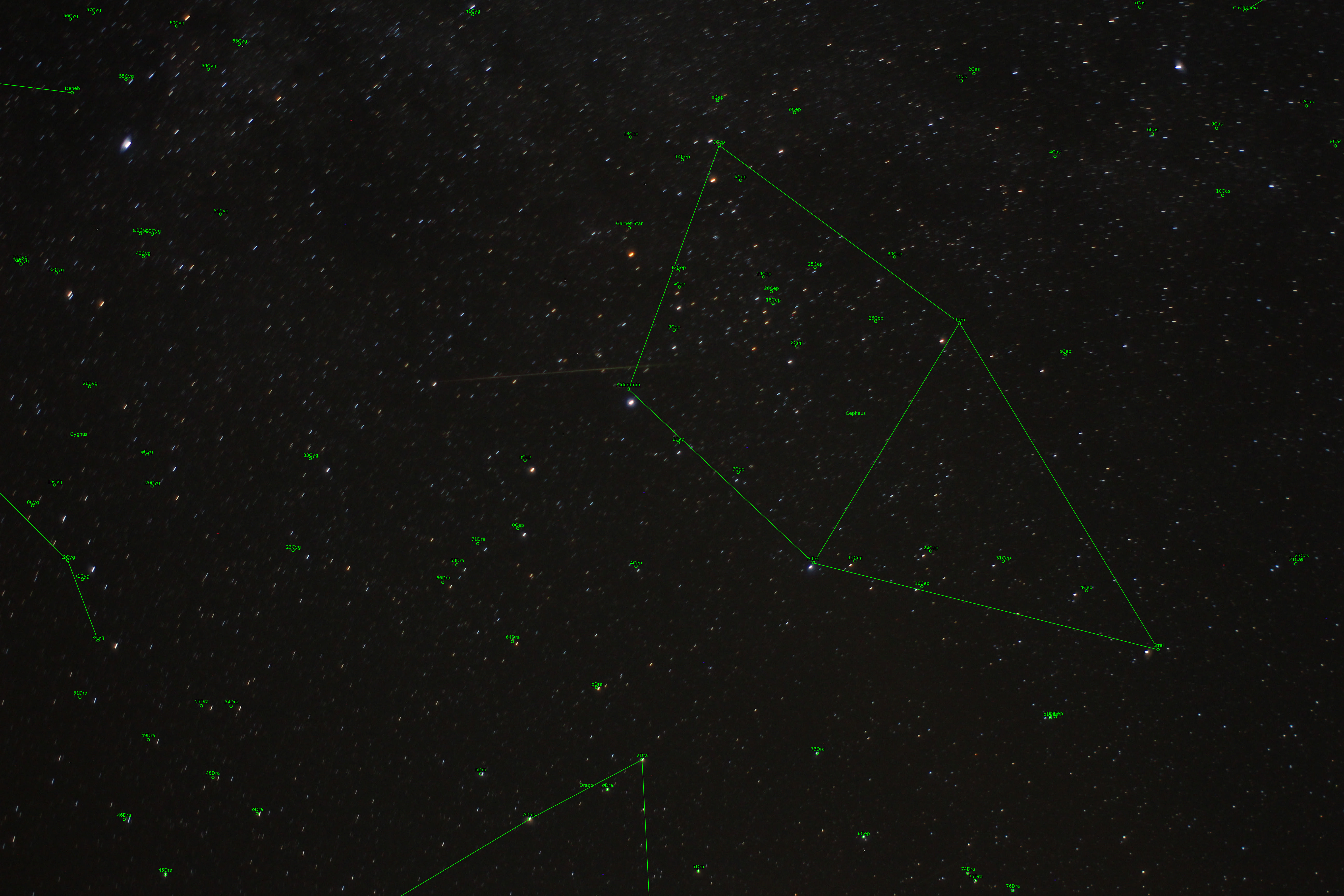
In addition to visually watching the skies, Frank and Dave set up still cameras and took extended exposures in attempts to capture some of the action. Dave was able to catch a couple.


Below are copies of the meteor images with annotations showing the constellations, major stars and deep space objects identified. The image fields of view are quite large leading to the annotations being somewhat misaligned as you move away from the center of the picture.

 
Tom set up an all-sky camera and took a continuous series of 10 second images. Assembled into a time-lapsed video several meteors can be seen. Unfortunately, more aircraft were viewed than meteors.

 Posted by at 3:11 pm
Sep 152018
 

The NWFAA rolled the dice and decided to go ahead with our Henderson Beach star gaze even though it was pretty cloudy. By the time the solar telescopes were set up the skies were somewhat clear. The few guests who braved the weather and came early to view the Sun did not have to wait long for a blocking cloud to move out of the way. Unfortunately, they didn’t get to see a whole lot. The Sun did not have any sunspots but there was one easy to see filament and one small very thin loop prominence visible in H-alpha light.

Since there were no sunspots, Dennis pointed his Maksutov at the planet Venus well before the Sun set. The partially lit planet made a fine picture in the daytime sky.

Pointing out Venus in the daytime sky.

Dave’s also checking out Venus.

Luckily, the lower the Sun got to the horizon, the clearer the sky became. As the Sun set into clouds on the western horizon, Tom reconfigured his scope to visible light and brought Jupiter into view. The view was very low contrast at first but as the skies darkened the Galilean moons popped into view one by one.

By the time the Sun set we had a great turnout of NWFAA members:

  • Frank Atchison
  • Dave Halupowski & Kennedy Odom
  • Tom Haugh
  • Dennis & Marietta Hausch
  • Scott Morgan

In addition to Venus and Jupiter our guest observers were treated to views of the planets Saturn and Mars. As usual Saturn was the highlight but Mars is starting to become a little more interesting. It has finally started to show some surface markings as the dust storm has started to wind down. We also viewed Vega and Antares; both bright enough to pierce the state park’s light pollution. Frank attached a DSLR to his scope and showed some star clusters via the camera’s preview screen. Scott tried the ring nebula with his newly acquired 10″ Dobsonian but the nebula was barely detectable through the haze and sky glow.

Frank enhancing the view with his DSLR.

Scott’s new 10″ Dob makes its debut.

Finally about 2130 the last guest observer left and at the same time some small clouds started to encroach from the north. We called it a night, packed up and headed home.

 Posted by at 3:11 pm
Aug 082018
 

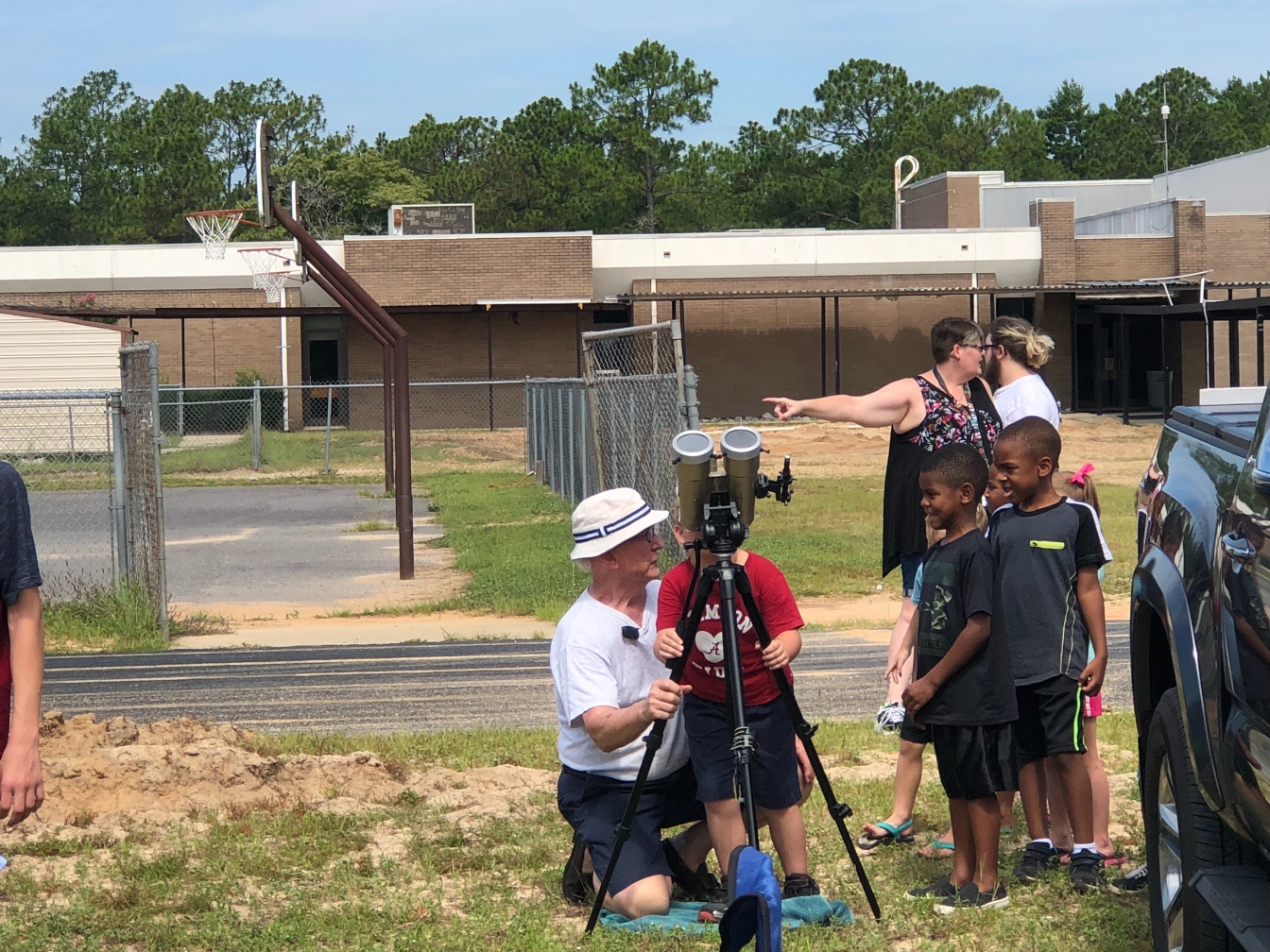
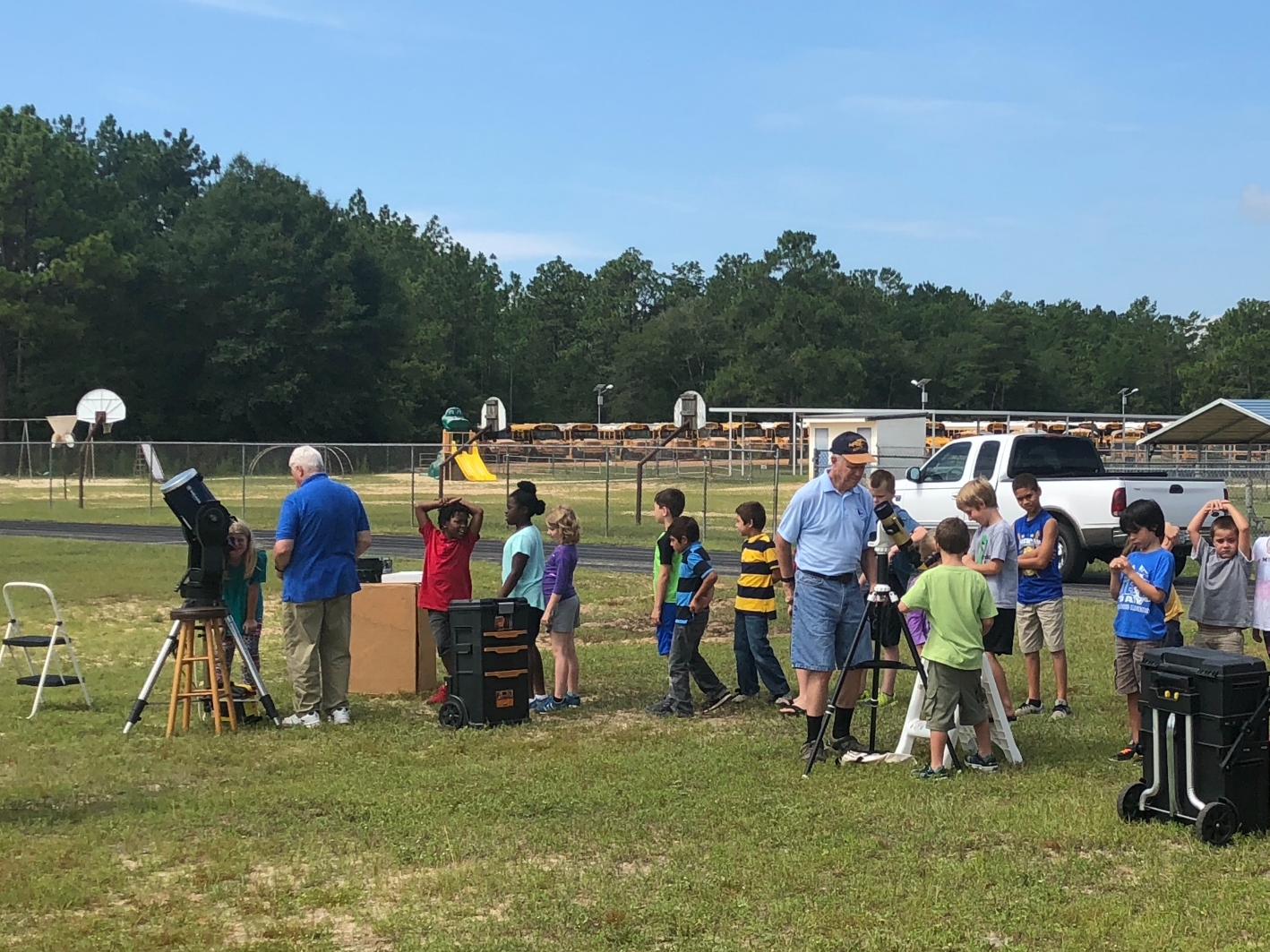
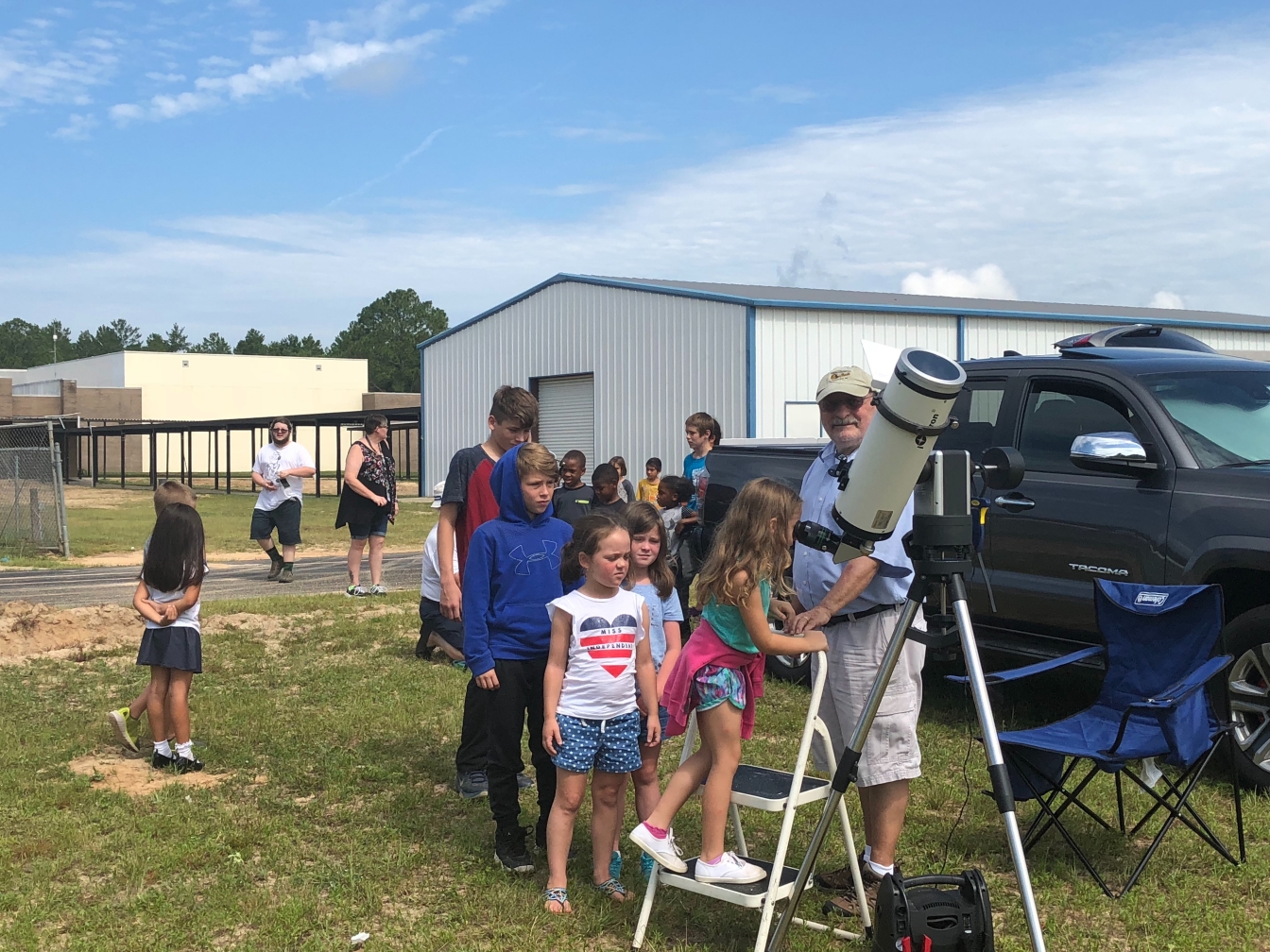
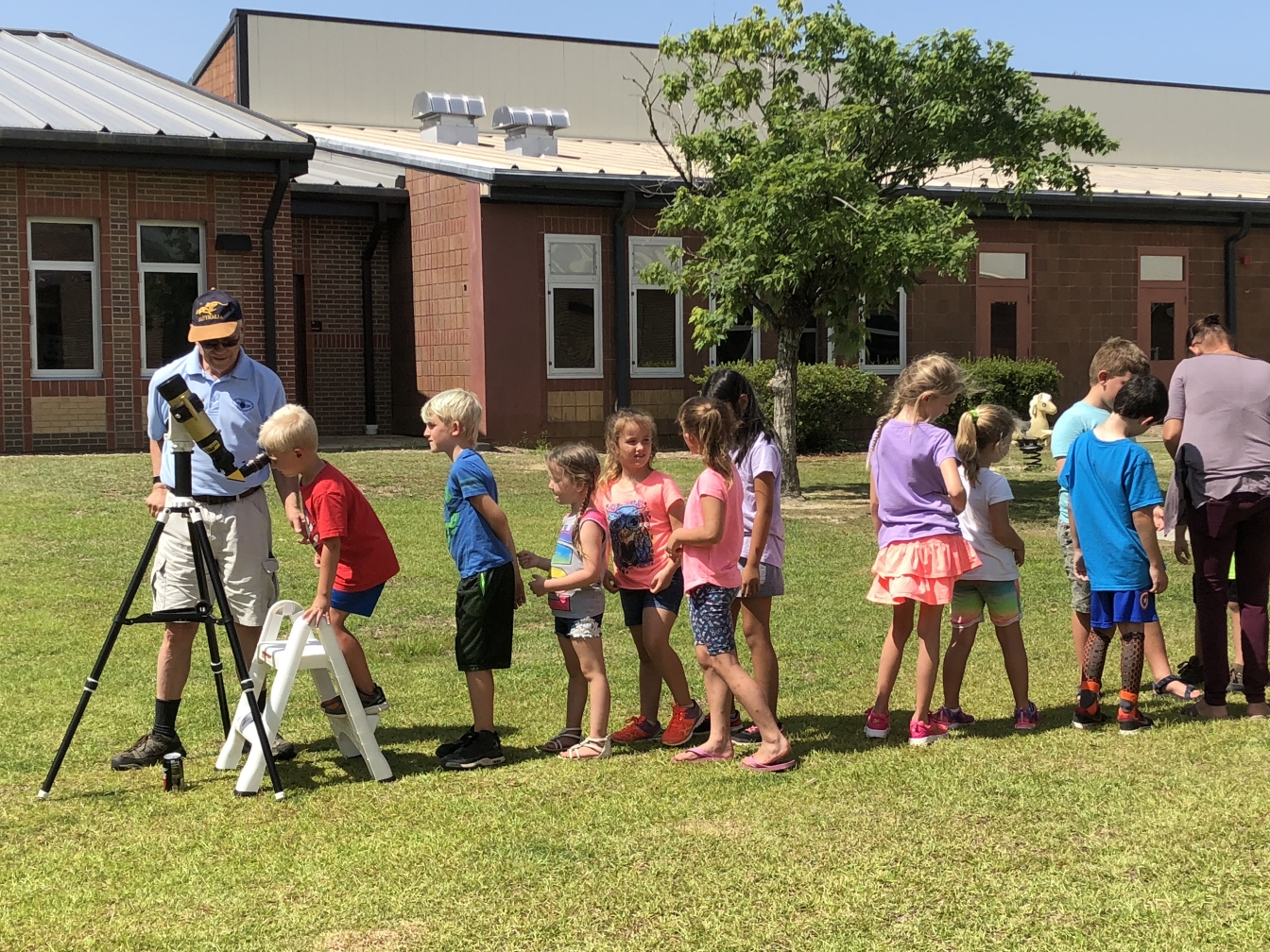
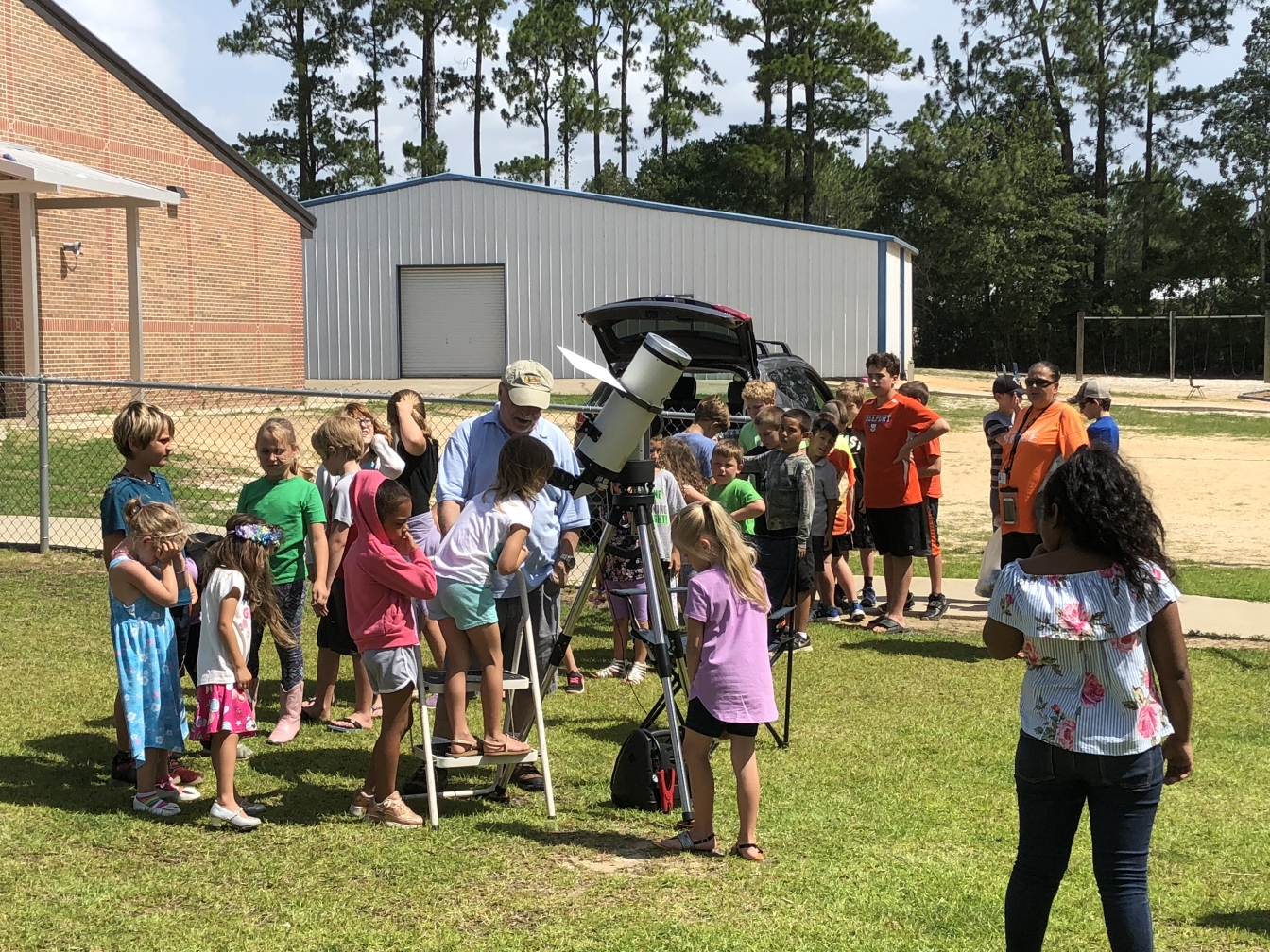
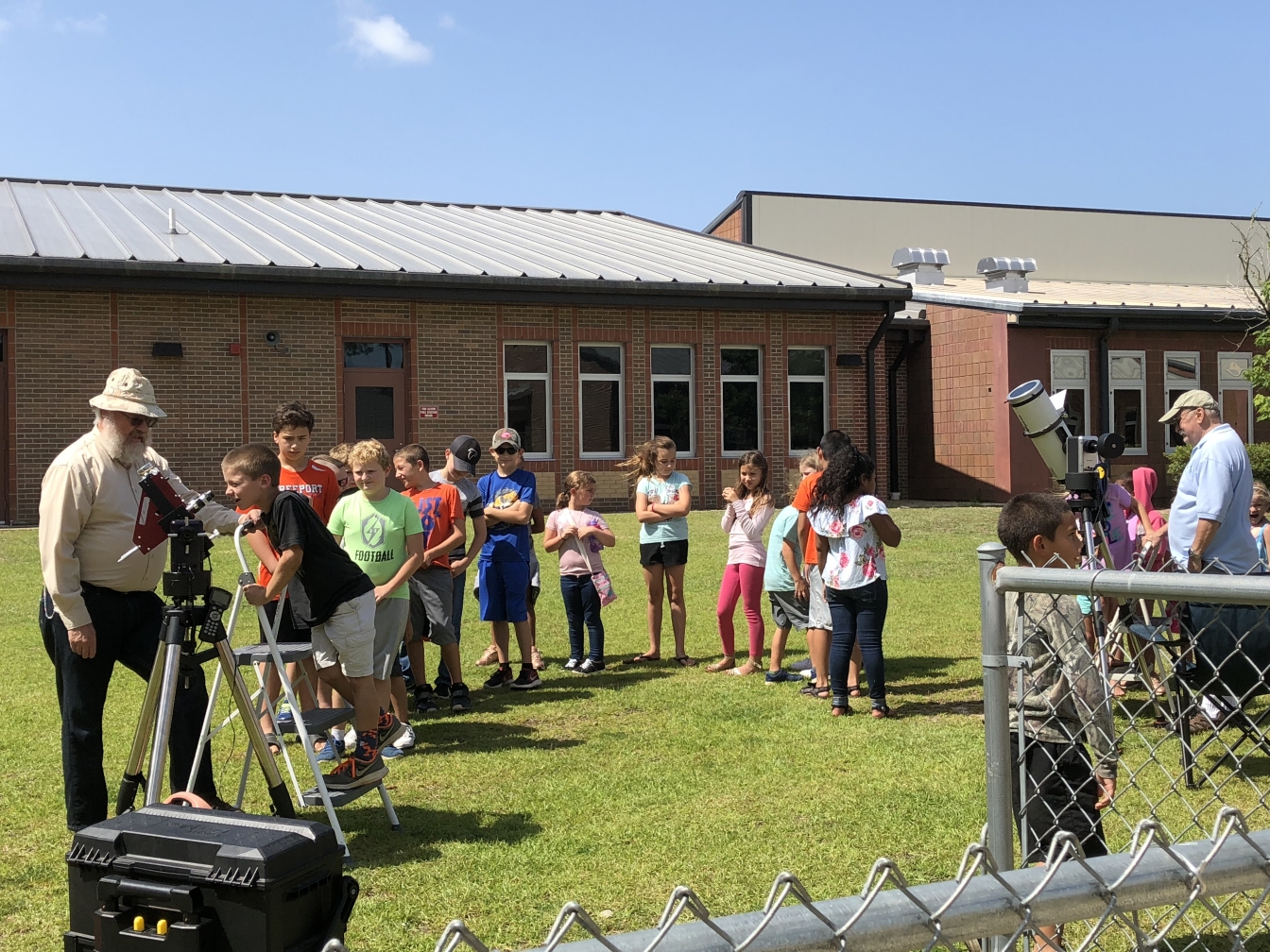
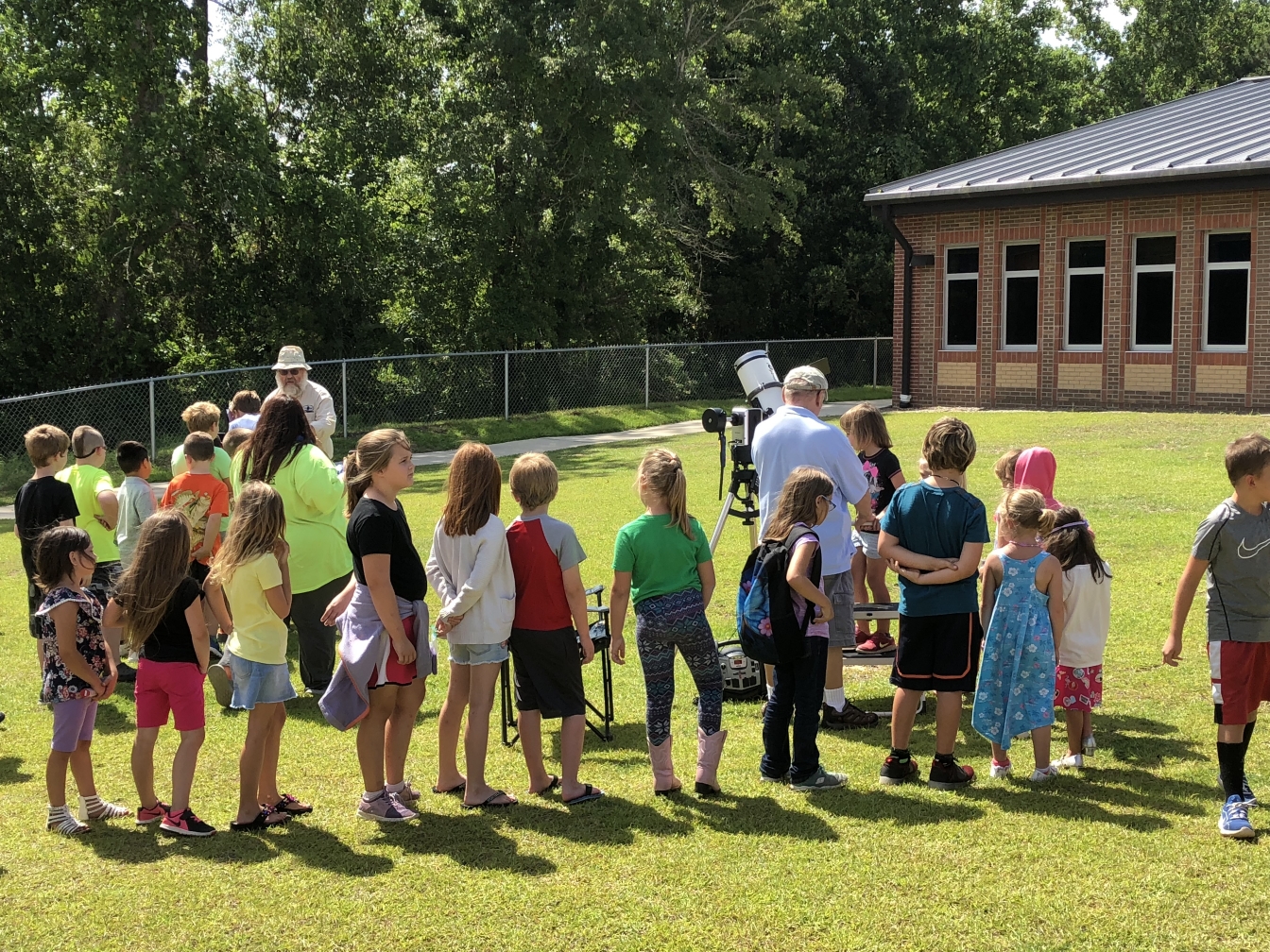
Our first visit to Maude Saunders Elementary school was our last SPICE event of the summer. We gave our solar presentation to about 45 students and an additional 3 or 4 adults. The students asked some excellent questions and there was a lively discussion after the session. Then it was time to head out to the telescopes. We had plenty of support for our first visit to the school. Each of the following club members provided instrumentation for the students to use:

  • Frank Atchson
  • Dean Covey
  • Tom Haugh
  • Dennis & Marietta Hausch
  • Ken Leone

The vanguard of the students hit the telescope lines.

Students view the Sun through Ken’s solar binoculars.

The lines at Frank’s (L) and Dean’s (R) scopes start to build.

The line at Dennis’ white-light filtered Maksutov.

The weather started somewhat cloudy but the clouds were light enough and broken enough that everyone got to see everything. We wish to thank the faculty and staff of the Maude Saunders SPICE program for the invite. We had just as much fun as the students.

 Posted by at 12:15 pm
Jul 142018
 

When we made the weather go/no go call Friday morning, the skies were clear and the day looked promising. But, by the time the cars were loaded and we started toward Freeport it was lightly raining. Once on site we re-evaluated the possibility of having a productive star gaze. It was very cloudy but there were blue skies to the south so we rolled the dice and kept going. Tom Haugh set up the projector and started the NWFAA solar presentation to the 66 or so students and teachers. Meanwhile outside, Dean Covey and Dennis & Marietta Hausch started to set up their scopes. They had to quickly cover the equipment as it started to rain again, but it stopped and they finished readying the equipment. By the time Tom’s presentation completed, the clouds cleared the students were treated to 3 different views of the Sun.

Students line up for Dean’s H-alpha scope.

There were no sunspots visible in Dennis’ white light telescope.

Tom’s spectroscope shows a colorful view of the Sun.

Lots of students under the hot Sun.

We would like to thank the Freeport SPICE coordinators for the invitation to share our enthusiasm of Astronomy with their students. We also thank Marietta Hausch for her constant support and event photography.

 Posted by at 1:43 pm
Jul 142018
 

This year the students of Bay Elementary School’s SPICE program did not have to wait around for the Sun to make an appearance. Once the NWFAA solar presentation was complete the 35 or so students made their way out to a clear sky to view our nearest star, the Sun.

Frank Atchison, Dean Covey, Tom Haugh, and Dennis & Marietta Hausch were able to support the daytime event this year.

The children got to look at the Sun through Dennis’s white light filtered Maksutov and Dean’s H-alpha refractor. Unfortunately, the Sun, still heading toward minimum in its 11-year cycle, did not present any visible sunspots or prominences. Since the Sun was featureless in white light, Dennis shifted his scope’s view over to Venus but the planet was below the local treeline, so it was back to a blank Sun. Tom set up his astronomical spectroscope providing yet another way to look at the Sun.

We would like to thank the Bay Elementary School SPICE coordinators for the invite to share our passion for astronomy and look forward to our next visit.

 Posted by at 1:06 pm
Jun 122018
 

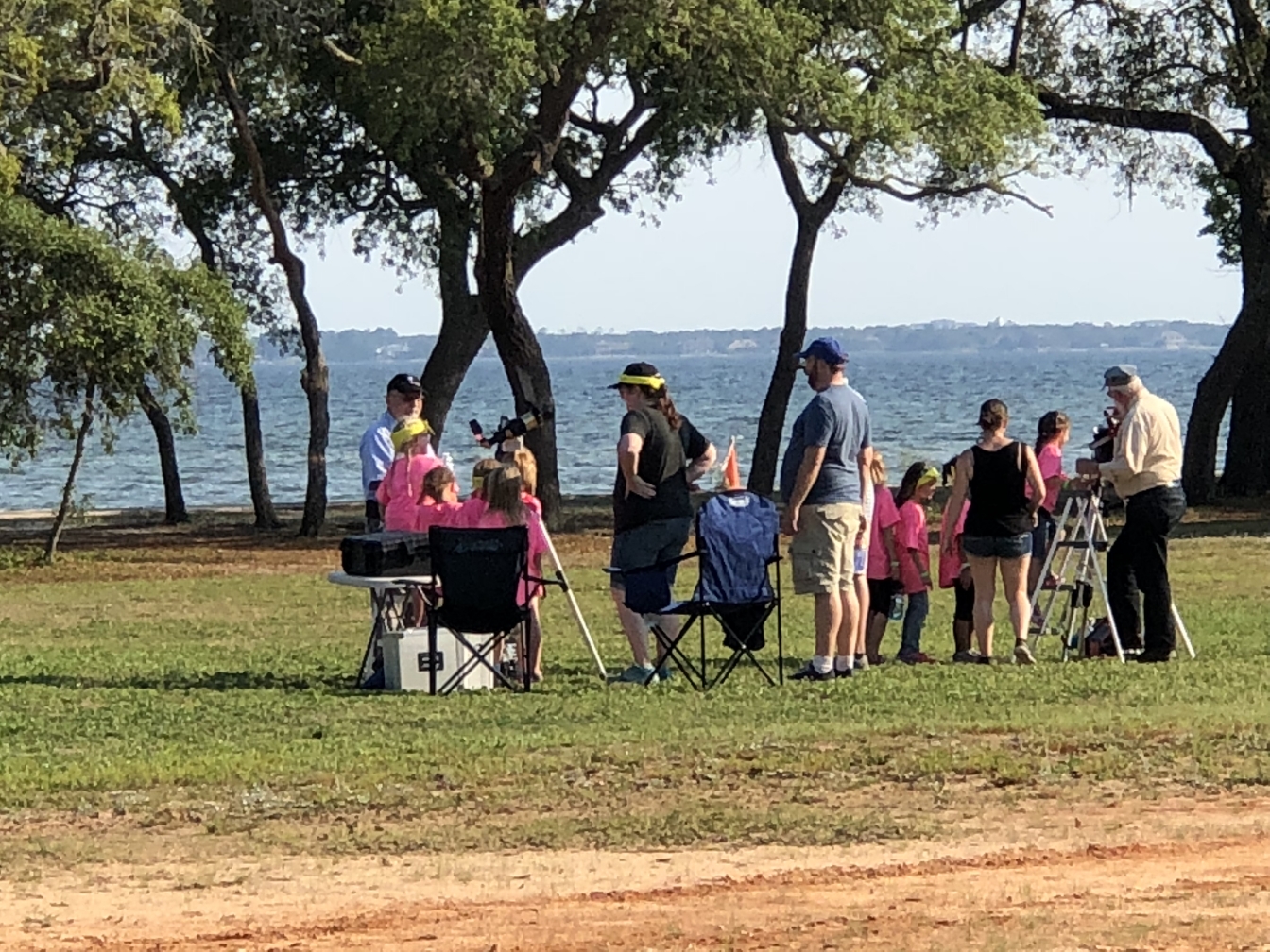
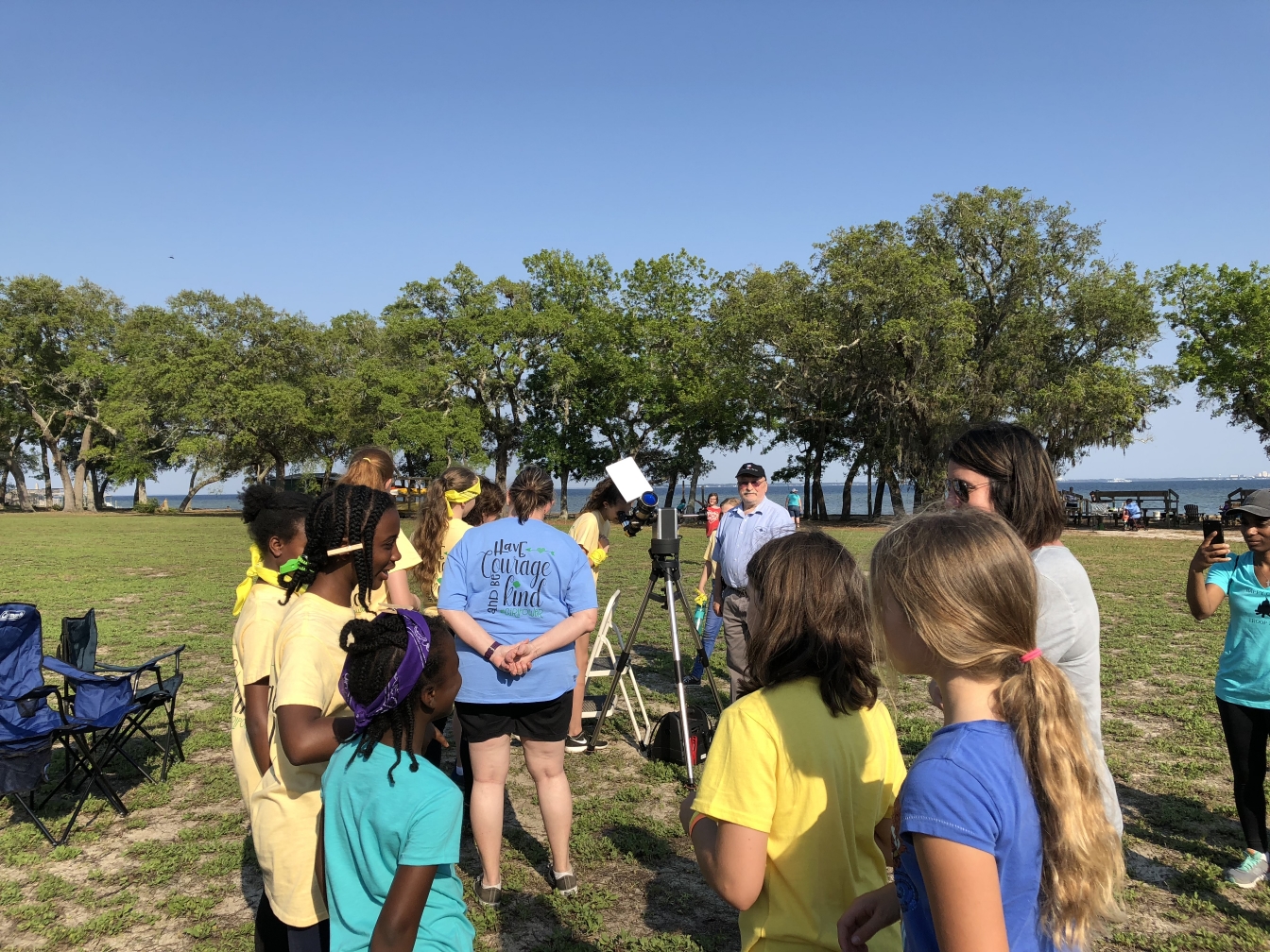
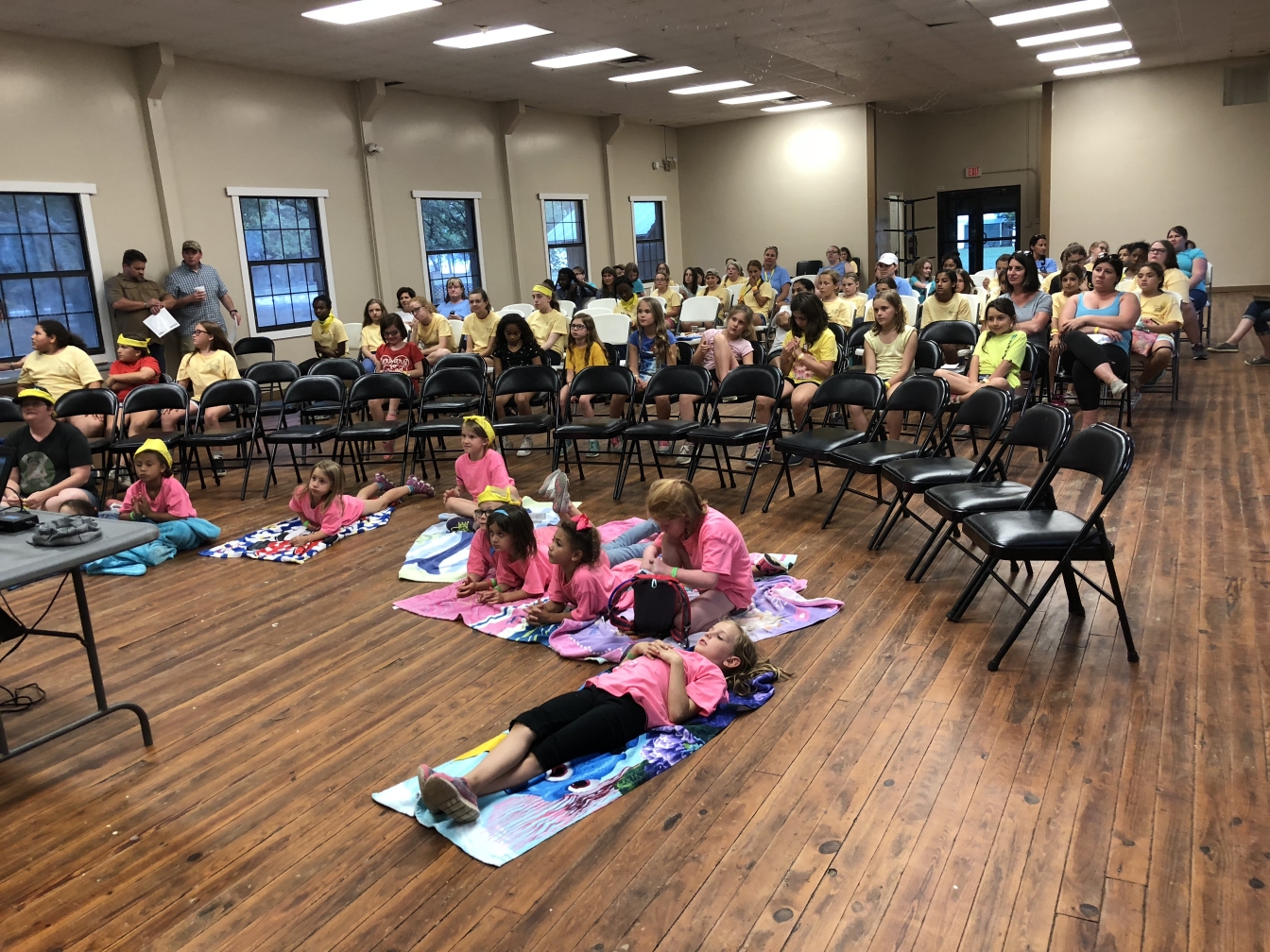
It’s been seven years since we last set up our scopes at Camp Timpoochee. The last was for 4-H youngsters, this time it was for a local Girl Scout Jamboree. Our first attempt this year was postponed due to weather but luckily, we had an opening in our schedule when the scouts re-scheduled. We had plenty of guest observers as we hosted 103 scouts and their parents and leaders.

Several NWFAA members were able to support the Camp Timpoochee event:

  • James Dubben
  • Dave Halupowski & and his granddaughter Kennedy Odom
  • Tom Haugh
  • Dennis & Marietta Hausch

We started in the late afternoon with solar observing. Dennis setup his H-alpha scope. There were no sunspots visible so instead of showing a featureless disk, Tom set up his spectroscope and displayed the Sun’s spectrum.


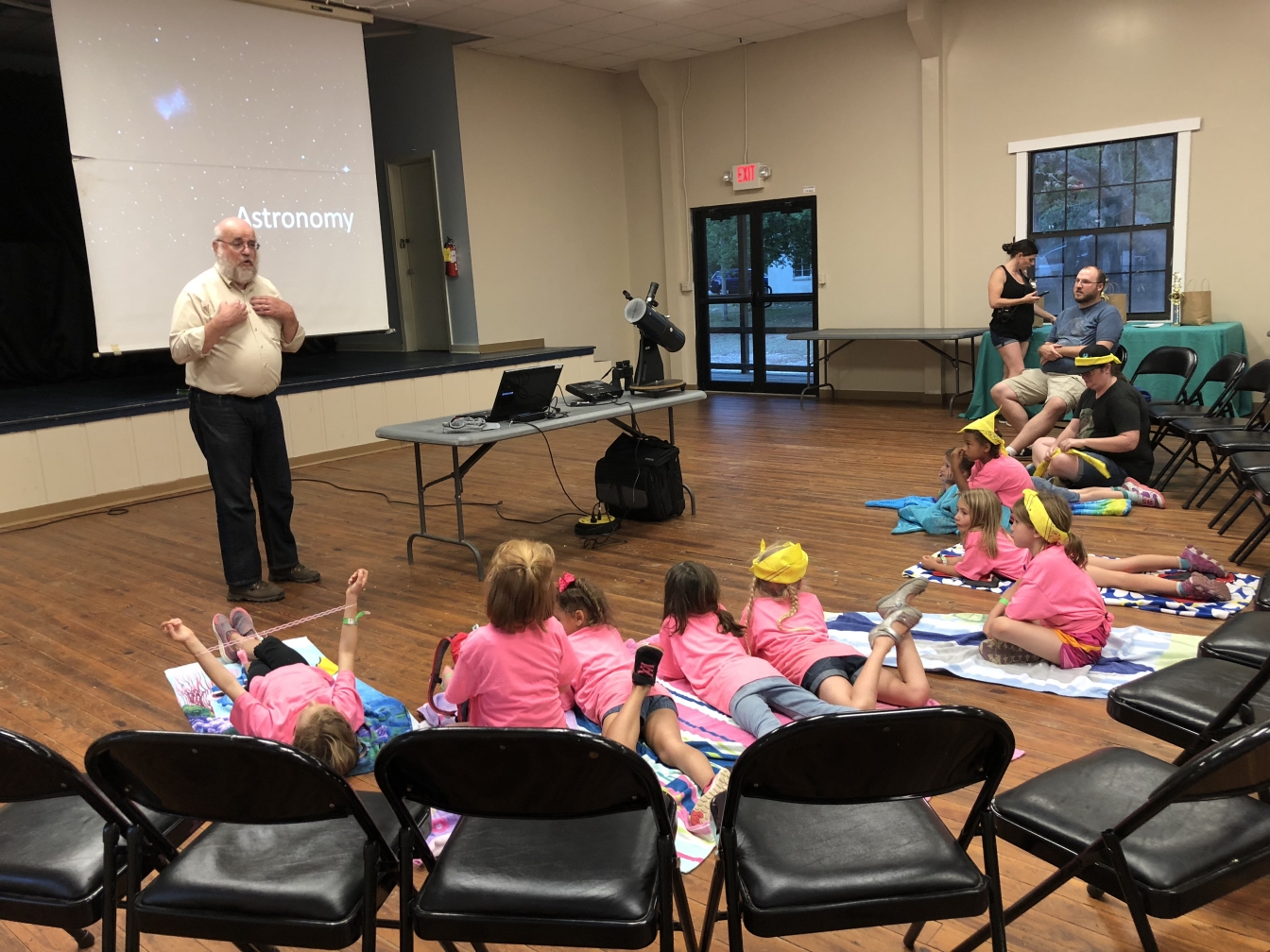
After all the scouts got to see the Sun, we were invited to join the scouts for supper. By then Dave & Kennedy and James had arrived and set up their scopes for nighttime viewing. After supper was over, and as the Sun started to set, the scouts adjourned to the campground meeting hall for our general astronomy presentation.


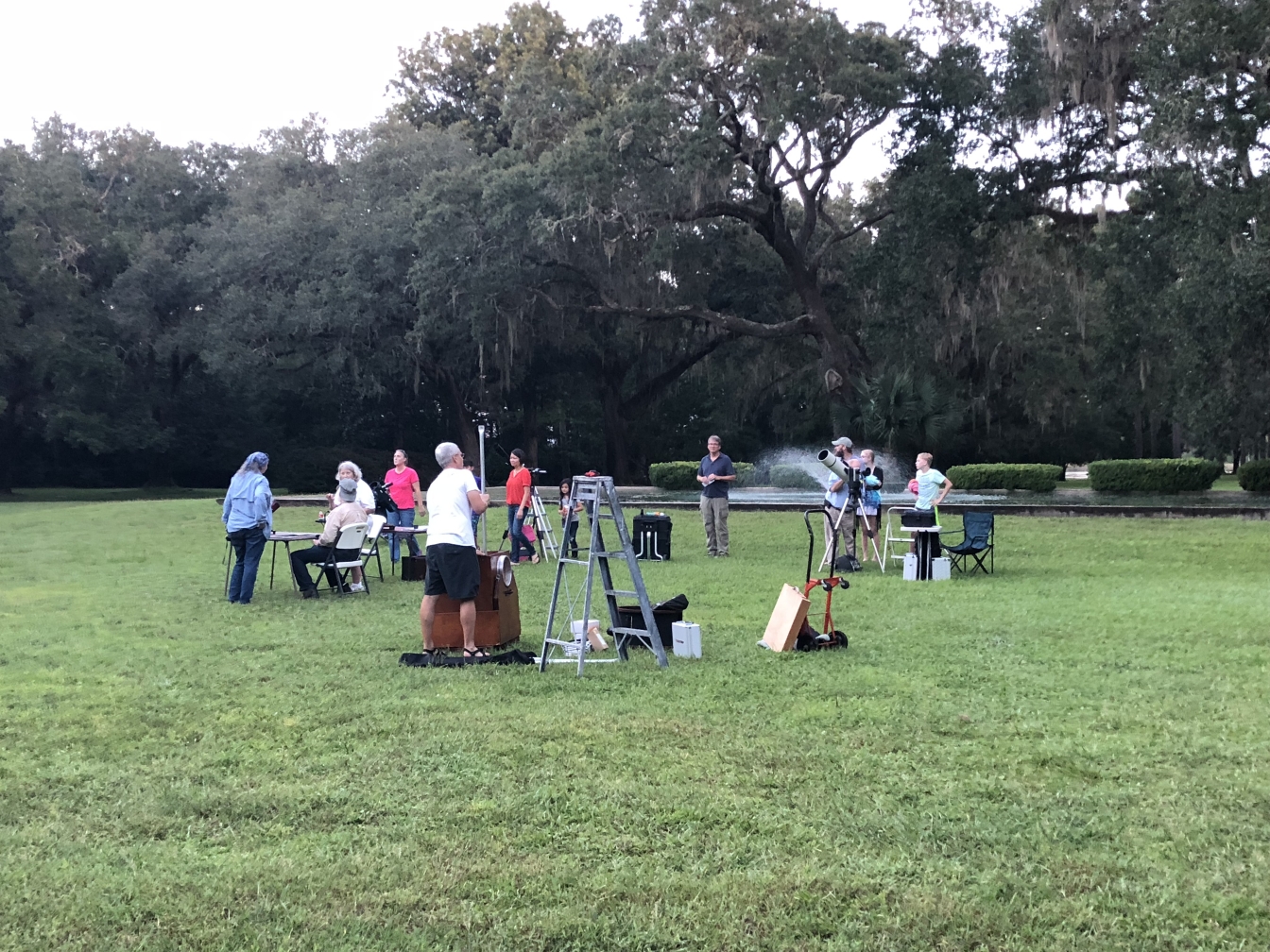
After the question and answer session, it was everyone outside to the scopes. Even though it was not completely dark yet, Venus was very obvious in the western sky and was our first target of the evening. Once dark it became obvious that there was a very high haze layer interfering with dim targets so we were limited to bright ones. Thankfully, there were several. Ultimately, Jupiter rose over the southeastern tree line. Several of the scouts had sharp enough vision to see the Jovian moon Europa’s shadow as it traversed the planets disk.

James used the club’s 16″ scope to show M 51 (The Whirlpool Galaxy) which was just visible through the haze. M 13 (Great Hercules Cluster) was also visible along with the big dipper’s Alcor and Mizar. Dave and Dennis moved one of the scopes to try and view Omega Centauri but it was very low and they could not find it through the trees.

We had an additional question and answer session with several scouts right up until it was time to break everything down and pack up. We would like to thank the Twin Cities Girl Scouts for their invitation and supper. We had a great time and look forward to our next event with the scouts. We also thank Marietta Hausch for her event photography.
 Posted by at 9:51 pm
Jun 122018
 

While other members supported Valpariso’s Saturday in the Park event, Tom Haugh supported Walton County’s Earth Day Festival at Topsail Hill Preserve State Park. He had a Hydrogen-Alpha telescope setup for the guests to safely view the Sun up close. But, with the Sun approaching solar minimum, there was little to see other than convection cells on the Sun’s surface.

Waiting for guest observers.

There was a steady stream of guests that got to view the Sun. Tom also handed out a lot of the club’s schedule of state park star gazes as well as 2018 Pear Tree Observatory calendars.

 Posted by at 12:25 pm
Jun 122018
 

Once again we were invited to support the Saturday in the Park Heritage Festival in Valparaiso. While other members supported Walton County’s Earth Day Festival, Dennis & Marietta Hausch and Dave Halupowski supported their home town event providing telescopic views of the Sun to their guest observers. This year they braved the requirement to have everything set up and vehicles out of the way by 7 AM. This, of course, led to a very long day, but an enjoyable one.

Dave demonstrating solar projection.

Dennis’ dual mounted scopes.

The skies were clear, but the Sun, nearing solar minimum, was very quiet. Dave set up his classic Unitron refractor to provide an image of the Sun by the projection method. Dennis, on the other hand, dual mounted his solar telescopes and was able to show both white light and Hydrogen-Alpha views of the Sun using one mount.

We want to thank Marietta Hausch for her photos of the event.

 Posted by at 12:09 pm