Sep 282012
 

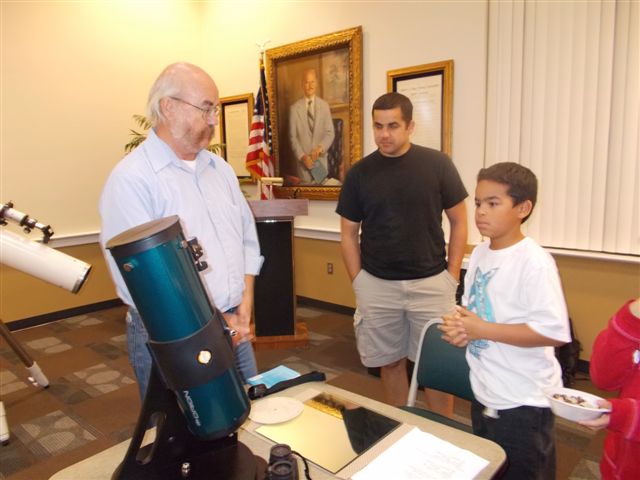
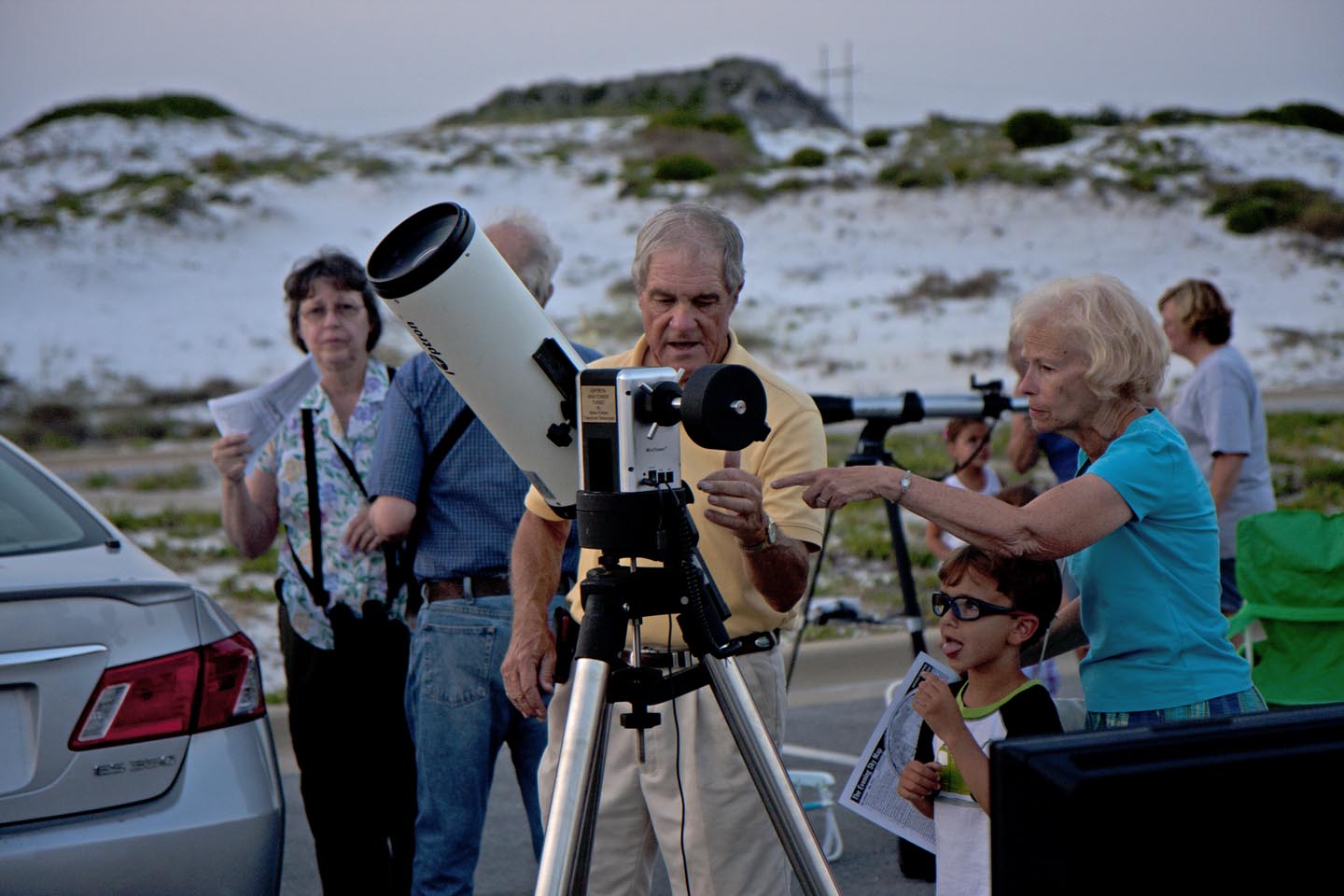
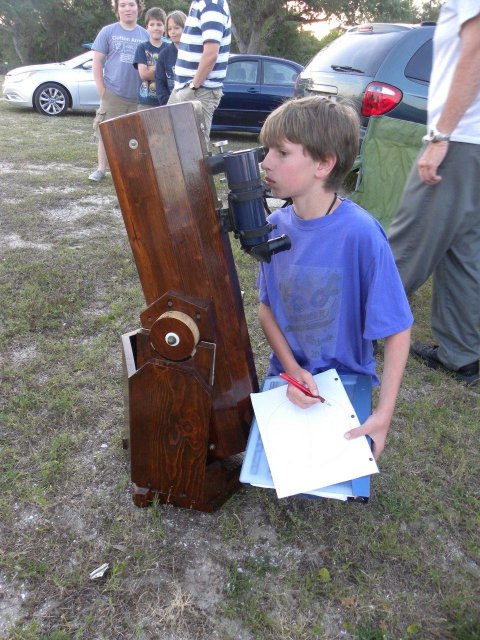
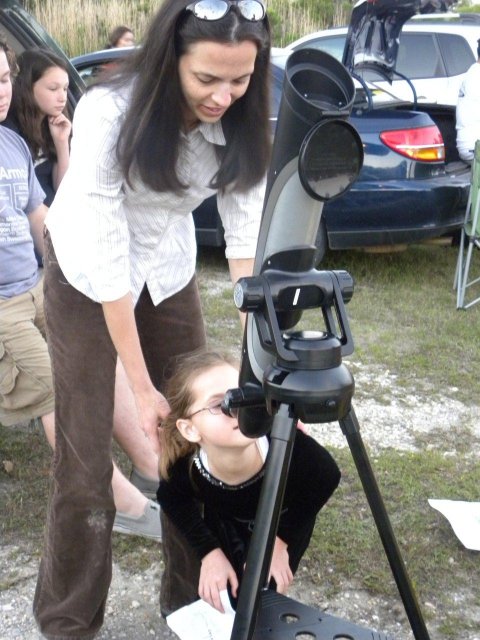
Once again the Crestview workshop had a small but enthusiastic group.  Tom Haugh briefed the guests on the library telescope, basic observing and what to expect when using the 4.5 inch Orion Starblast. 

Last month’s constellation was Lyra, which is directly above us and in the best atmospheric position for viewing.  Experience has shown it is not in the best position for viewing with an Alt/Az mounted telescope such as the library scope. 

This month the constellation was Pegasus.  It is in a somewhat lower in the sky but better positioned for the small scope.  After a map of Pegasus was handed out, Tom started with a brief discussion of Pegasus’ mythological background.  Then several observable objects were discussed.  The two deep sky objects were NGC 7331, a bright spiral galaxy and M15, a bright globular cluster.   51 Pegasi, the first sun-like star discovered to have a planet was mentioned as well as the bright variable star R Pegasi.

Tom then finished off with a list astronomical events that would be visible/occur before next month’s workshop.

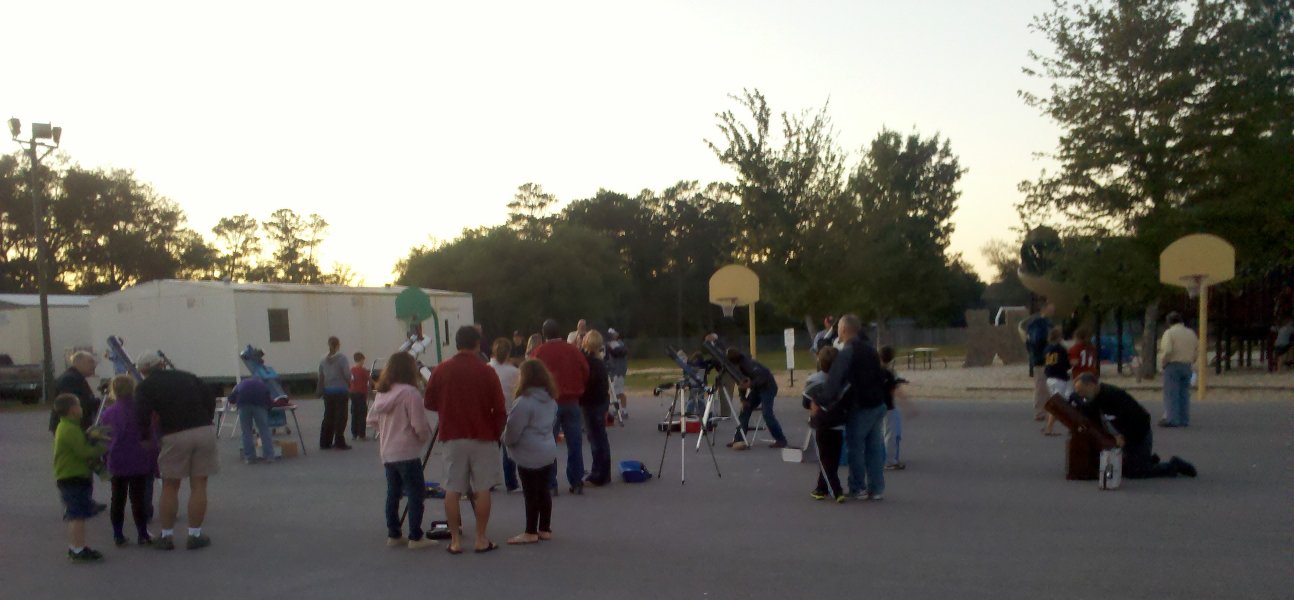
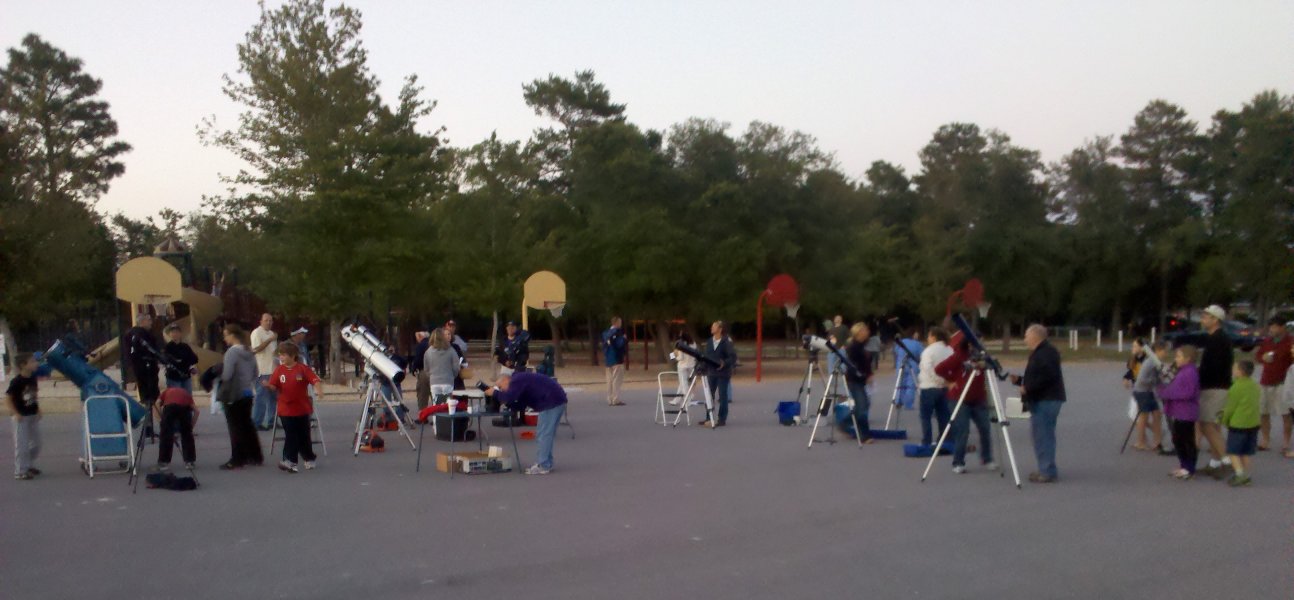
For the first time since the library workshops were started, the skies were clear once it got dark.  Tom took his 6″ Newtonian out to the grassy area in front of the library and set it up to attempt a look at the Pegasus objects.  Unfortunately, the library has no control over the exterior lighting around the library and surrounding area.  Although the light fixtures are full cut-off lights preventing light from shining up into the sky, the light that shines down onto the library is quite bright.  Any astronomical object will have to be very bright to be seen from around the library.


 Posted by at 7:13 pm
Sep 052012
 

With over 16 inches of rain in August, the skies have not been very kind to Northwest Florida astronomers.  However, they cleared enough during the monthly meeting to provide our visiting observers with plenty of targets to view.  Frank Atchison set up his 8″ SCT and Prof. Tony Russo had opened the dome and started the cool down process in anticipation of the evenings guests.  While the equipment acclimated, the meeting was brought to order and the normal club business was taken care of. 

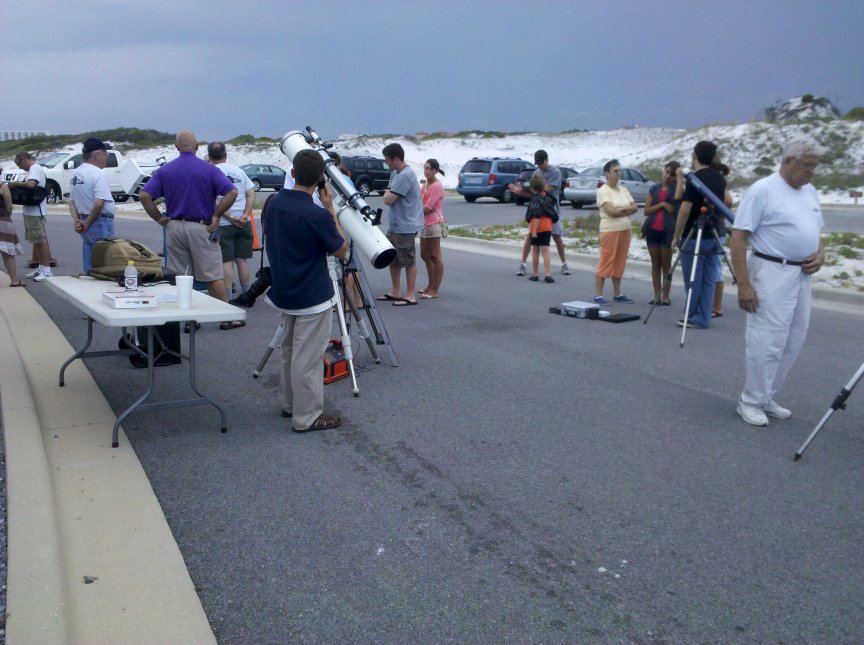
Members and guest observers await dark skies.

Professor Russo brings the meeting to order.


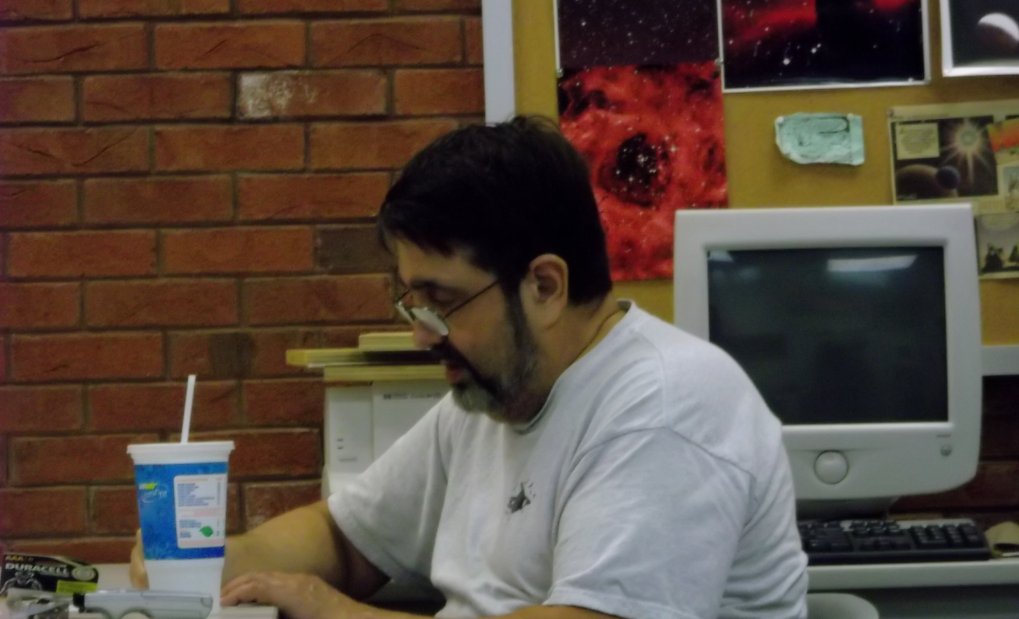
Tom Haugh presented his postponed ASCOM talk and by then the skies were dark and the meeting was adjourned.  While the guest observers went outside, Tony aligned the college 18″ Criterion and brought the system on-line.  The guest observers then made the rounds between the 8″ outside and the classroom where Tony was displaying the near real-time objects that he was imaging.  One of the first, was The Ring Nebula (M 57) in Lyra.

 Posted by at 6:39 pm
Aug 282012
 

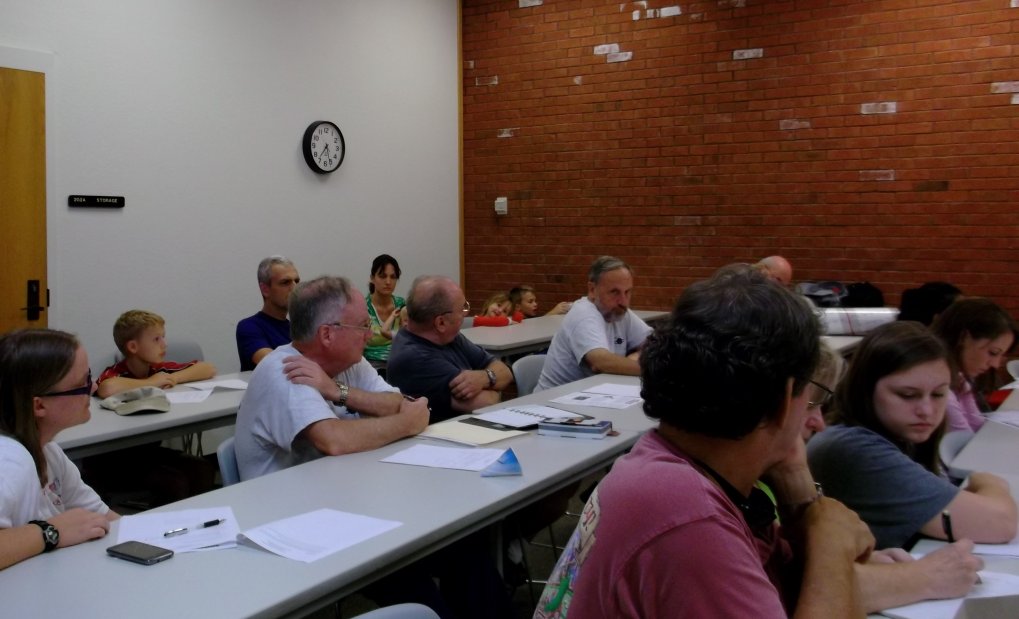
The second Crestview library astronomy workshop was attended by 8 guests.  Since only one of them had been to the first meeting, Tom started off with a beginning astronomy presentation.  It is intended to provide the people who check out the library telescope some simple instructions and an idea of what to expect.  This briefing explains Astronomy in general and starts with the solar system, then continues to objects viewable in deep space.  The pictures used as examples are supplied by club members.   Using amateur imagery gives a better representation of what will be visible in the library telescope.  Each attendee was given a club handout and  The Evening Sky Map.

Next, the constellation Lyra was discussed since it is currently directly overhead at dusk.  The constellation’s mythological background was explained.  Then objects visible in the libraries 4.5″ Newtonian telescope were shown.  The Ring Nebula (M 57),  several binary stars, Vega and the globular cluster M 56 were discussed.

Finally, astronomical events that would be visible before the next meeting (18 Sep 2012) were listed.

[Update:] One of  the public guests was a member of the press.  He wrote up the workshop in the Crestview News Bulletin.  The library staff sent the link for the online write-up to Tom.

We would like to thank Brian Hughes for bringing the workshop to the attention of so many future astronomers.

 Posted by at 7:20 pm
Aug 282012
 

A small patch of  blue sky tempted us to roll the dice and head out to Henderson Beach for the Friday night sky view.  By the time we got set up, the blue patch was a little larger and it continued to get bigger throughout the evening.  Frank  brought is 8″ SCT, Tom had his ancient and trusty 6″ Newtonian,  new member Brian Richey brought his 8″ dob and Tony unleashed the college’s 12″ SCT.

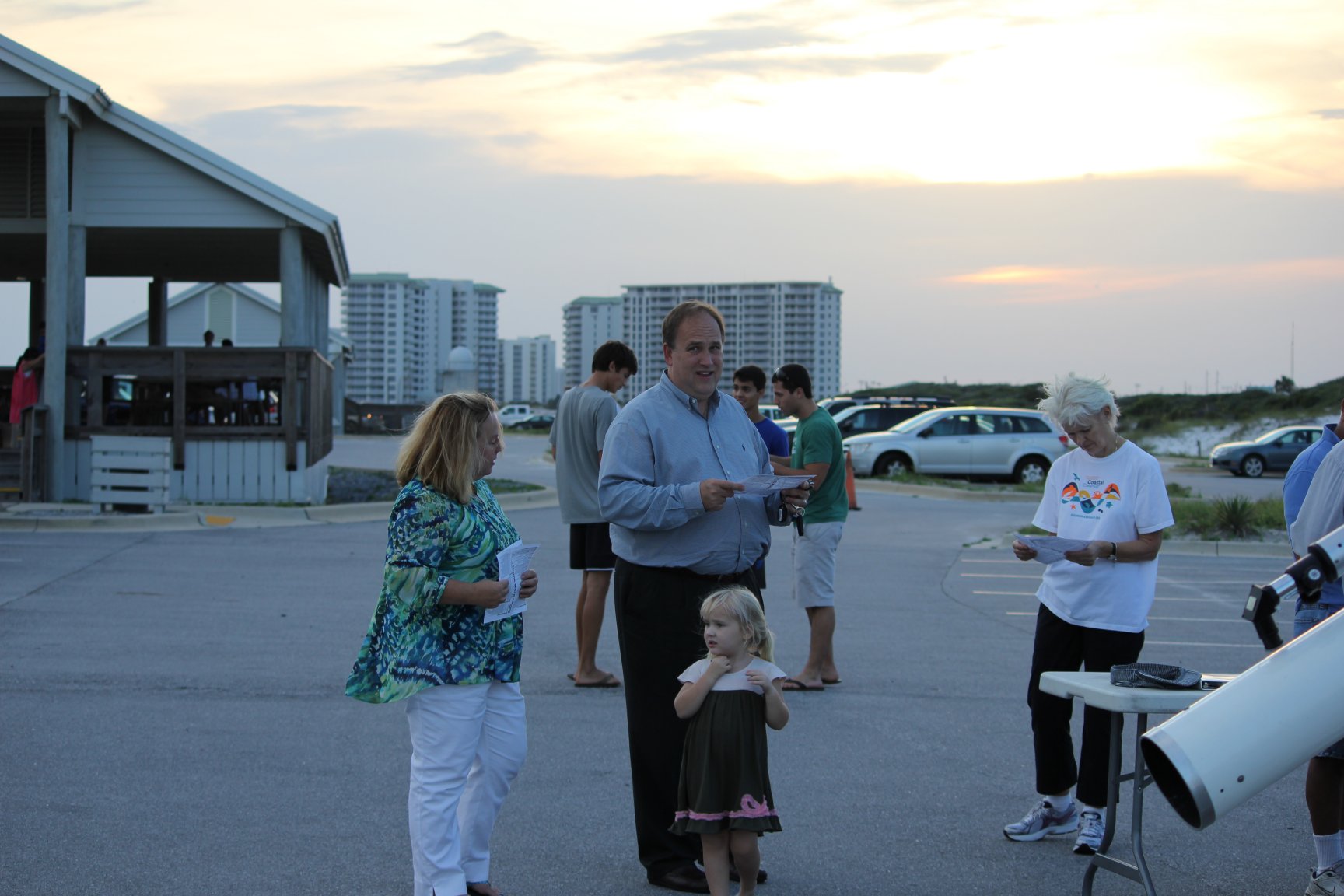
Early birds examine “The Evening Sky Map”

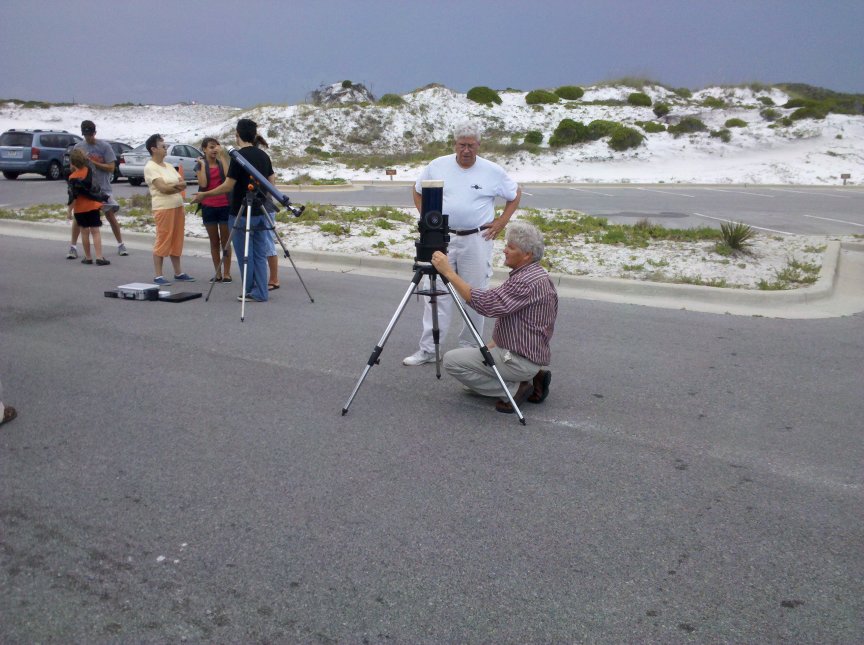
Brian and his 8″


 Over 100 guest observers braved the cloudy skies and were rewarded with views of the ever popular Saturn, Mars and several deep sky objects.  The ‘Walmart’ haze kept the sky bright enough that low contrast objects like the Ring Nebula were difficult to see, but bright star clusters were obvious and plenty.  The great globular cluster in Hercules (M 13) as well as the colorful Alberio were viewed as well.  Carefully using his LASER pointer, Tony conducted constellation tours while the guest observers viewed the evening’s sights through the college’s Meade.

 Posted by at 6:04 pm
Jul 012012
 

The once in a lifetime event came and went without any of our participants being able to check off the block.  We had quite a few stalwart attendees hopeful of seeing the transit.  However, the weather did not cooperate at all.  The best view any of us had was just at setup.  There was a light cloud cover that did not interfere at all with seeing the sun spots that were visible on the sun’s surface.  But, the weather very slowly got worse throughout the event with a light sprinkle of rain sending most of the telescopes for shelter.

Well, maybe the weather will be better on December 11, 2117.

 Posted by at 6:48 pm
Jun 072012
 

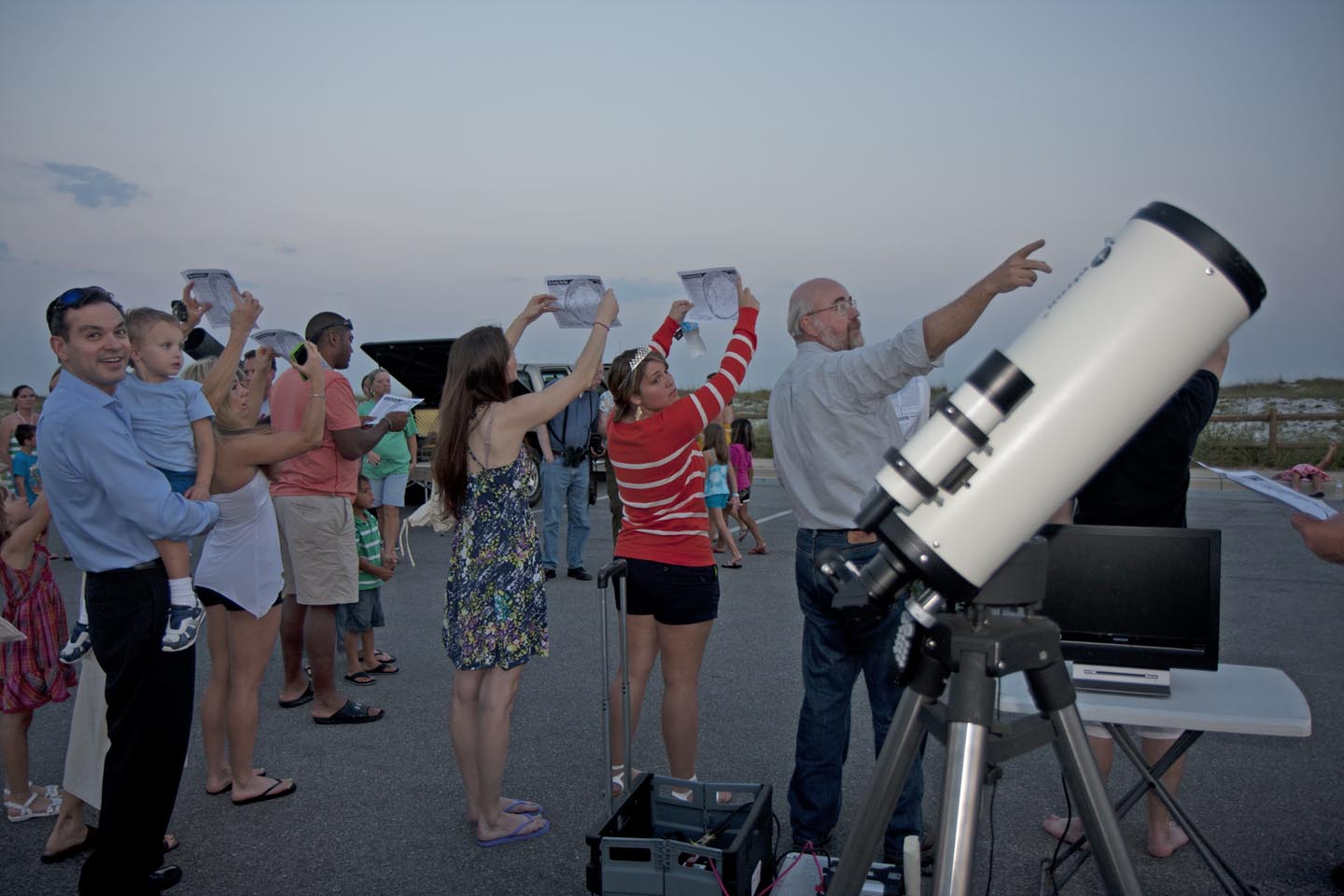
The first Henderson Beach State Park sky view of the year was a great success.  Club members arrived well before dusk as a dry run for June’s Venus transit.  Sight lines and angles were verified to ensure as much visibility as possible for the very rare event.   Early bird guest observers were able to take advantage of the daylight setup to safely view the sun.  There was a nice sun spot group visible.

The public started to arrive in force around 6:00 P.M.  and by the regular start time when the park rangers normally start off the formal introductions, one stopped by to tell us that cars were still backed up out onto US 98 waiting to get into the park. 

The club was well represented with Tom Haugh, Bob Gaskin, Ken Leone, Dennis Hausch, Matt S. all bringing scopes.  Chuck L. shepherded one of the library scopes as well.  Once again the club passed out Evening Sky Maps curtesy of  http://www.skymaps.com/.   These have proven to be very popular with our guest observers.
Bob Gaskin answers questions during setup.
Tom Haugh conducts Evening Sky Map orientation.


The crescent Venus started off the evening low on the western horizon.  It is quickly closing on the Earth in route to the transit on the 5th of June.  As the sky darkened, Mars and then Saturn got the attention of the crowd.  Saturn is usually the evening’s favorite object and more often than not elicits a vocal response from the observer.  It did not disappoint.  The library telescope targeted the moon and had a long line of observers.
Ken's home-made dew shield awaits dark skies.
Bob selects the next object.


Once the bright planets had been viewed by everyone, deep sky objects were attempted.  However, as the sky got darker, the sky glow became more and more of a problem.  The sky had been clear all week, but the heat finally got the best of the atmosphere and the gulf haze finally made an appearance.  M-13 (the Great Hercules Cluster) was just barely visible; you could see a slight glow, but that was all.  Luckily, by then the crowd had thinned and it was time to wrap-up the evening.

The park rangers reported an attendance in excess of 200 visitors.  The guest observers kept us busy all evening and the club members had a very good time.  We would like to thank the park staff for a well run event and we look forward to our next Henderson Beach State Park sky view in August.
 
 Posted by at 7:45 pm
May 152012
 

The second time was the charm as the rescheduled Hurlburt Field Star Gaze was a great success.  Coincidentally, the 28th was a multi-purpose day as it was also National Astronomy  Day and the NWFAA’s regularly scheduled meeting night.   This is event is usually a cooperative event between the NWFAA and the Escambia Amateur Astronomers Association (EAAA) out of Pensacola, but the reschedule conflicted with one of their beach sidewalk star gazes.  We would like to thanks Gary W. for coming over and helping us support the Hurlburt Library. ( He also brought the largest scope ).  If you haven’t been to one of the EAAA’s beach sidewalk star gazes or better yet, one of their monthly sky interpretation events at Ft. Pickens you really should try and make one.

The usual suspects +1.

Astronomy merit badge requirement 1a.

This year we had additional help during setup.  A couple of Boy Scouts came out to work on their Astronomy merit badges and successfully accomplished several requirements.  They assisted the Library staff with setting up the break area and helped unload some of the telescopes.  Once they had the support tasks done, they started on the Astronomy.

Once we finished initial setup we quickly held our April meeting.  By then guest observers had started to arrive. 

Young guest observing the moon.

The moon started things off until the sky was fully dark.  Our clubs had seven telescopes on site and two guest observers brought telescopes to add to the arsenal. 

With that many scopes the planets that were stretched out across the sky were well covered.  Toward the west, Venus was very prominent as it headed into a waning crescent phase.  Mars high overhead and Saturn climbing out of the eastern haze also had dedicated coverage.  The Great Orion Nebula was visible for a short time until it dropped into the Gulf  of Mexico haze.  Sirius and neighbor M 41 were also visible for a while.

The International Space Station made a brief appearance.  It arrived quite late and as such dropped into the earth’s shadow quite high in the sky.

Sabrina, our POC for the Hurlburt Field Library said the attendance was 220+.  We would like to thank her for her invitation, support and cookies.  She also provided the photos posted here.

 Posted by at 3:51 pm
May 022012
 

The weather cooperated fully with the Tuesday event at Bluewater Bay Elementary School.  We had a very good turnout of students, parents and teachers.  We had an even better turnout of equipment as we set a NWFAA Star View record with 16 telescopes on site. 

Club members Dave Halupowski, Frank Atchison, Tom Haugh, Ken Leone and Dennis Hausch all brought scopes.  However, an additional 10 were brought by our guest observers and the final one was the excellent iOptron Maksutov that the school owns.  There were several quick lessons on setting up and aligning the scopes as the sun set and there were plenty of excellent questions to answer.   


The moon provided the first target of the evening.  Venus, now in a crescent phase, quickly became the focus as the sky darkened and then Mars and Saturn in turn as each became visible.  All were well observed with a few other celestial objects thrown in for variety.

We would like to thank the teachers and staff of Bluewater Bay Elementary School for their invitation.  The enthusiasm of the guest observers along with the sheer number of telescopes made this a very fun event.

 Posted by at 6:49 am
Apr 242012
 

Early quick moving clouds tried to put a damper on the Scout-o-Rama but by the time the event officially started the skies were perfectly clear.  That left a small but well positioned sun spot group as the main attraction at the NFWAA’s merit badge midway display this year.  The sun spot group was far enough from the limb to remain in sight for the whole day but the shape and darkness changed appreciably.  Dennis H. provided a wide angle view of the sun with his 8″ Dobsonian while Tom’s 6″ Newtonian presented a narrower view centered on the sun spot group.

Dennis waits for the first observer of the day.

Tom and Dennis were early enough for the opening ceremonies, with Chuck L., Justin G., and Tony R. filtering in during the day.  The scouts and parents kept up a fairly constant flow of observers and several asked about the club and how to join.

You don't have to be a boy scout to enjoy the Scout-o-Rama.

We would like to thank several members of the Eglin Aeromodelers for their assistance with setting up the pop-up canopy we used for shade.

 Posted by at 11:28 pm
Apr 242012
 

The Edge Elementary School observatory tour and star gaze was a mixture of good and bad.  The weather did not cooperate at all, but the tour went on anyway.  In fact, we had too many guest observers to handle all at one time.  All counted, students, parents and teachers came to about 75 guest observers.  The classroom is not that big and the dome is smaller than that.  So, we had to split our guests into three different groups.  This would have been perfect had the skies been clear. 

As it was, Prof. Tony R. took one group up into the dome.  He demonstrated the telescope and equipment and explained the procedures used to record the imagery that the observatory uses for its research projects. 

In the classroom, Tom H. and Frank A. presented a slide show on the history of the observatory and an introduction to astronomy using club members photography. 

That left one group waiting for shift change.  If the skies had been clear, they would have been the group outside observing.  With as young as some of the students were, the wait became too much and a few of the families left early. 

Although, we received a lot of positive feedback, the families that left early definitely got shorted.  We will obviously have to enforce a head count in the future so that  no one leaves disappointed.

 Posted by at 10:52 pm