admin

Mar 122016
 

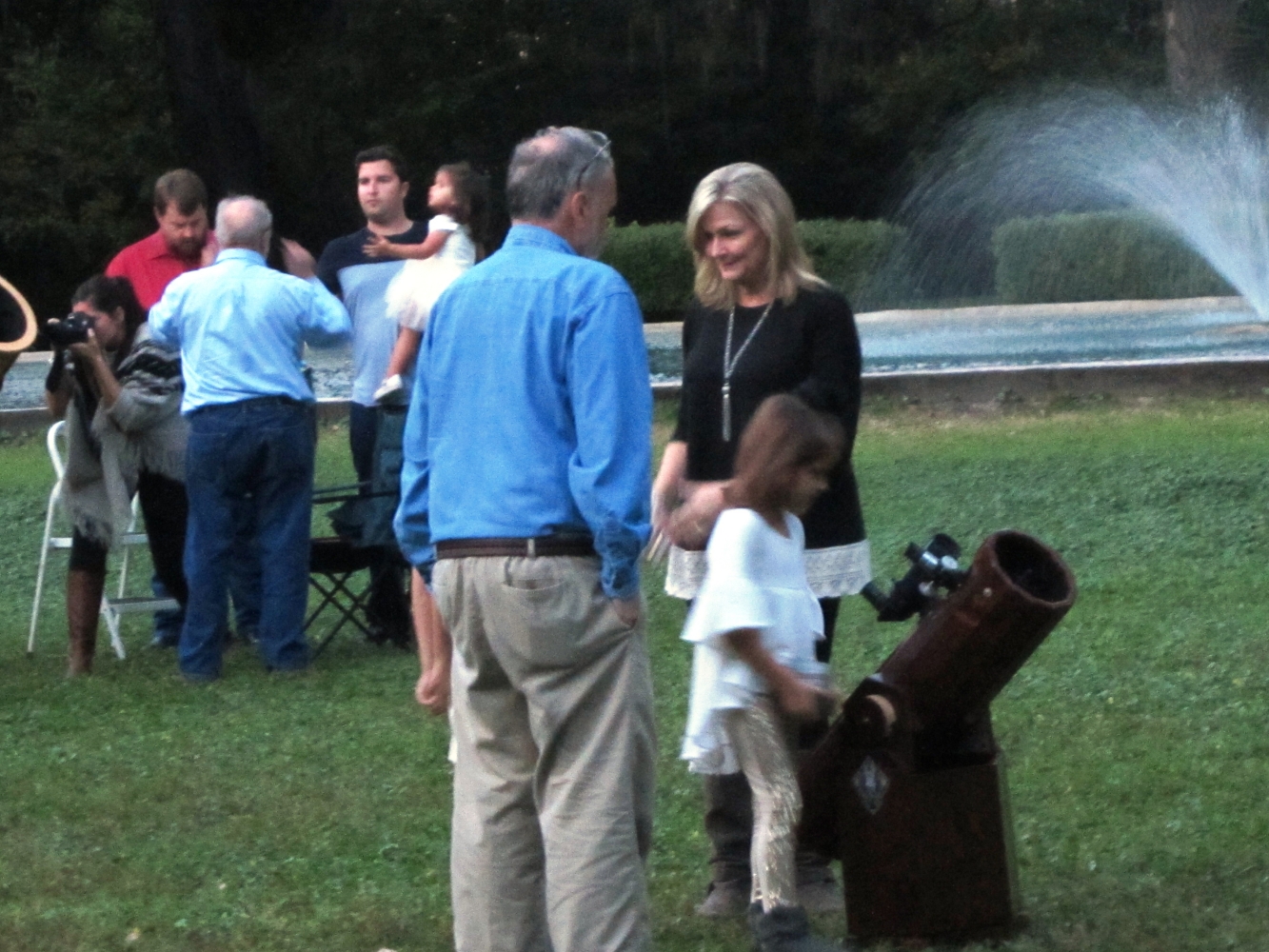
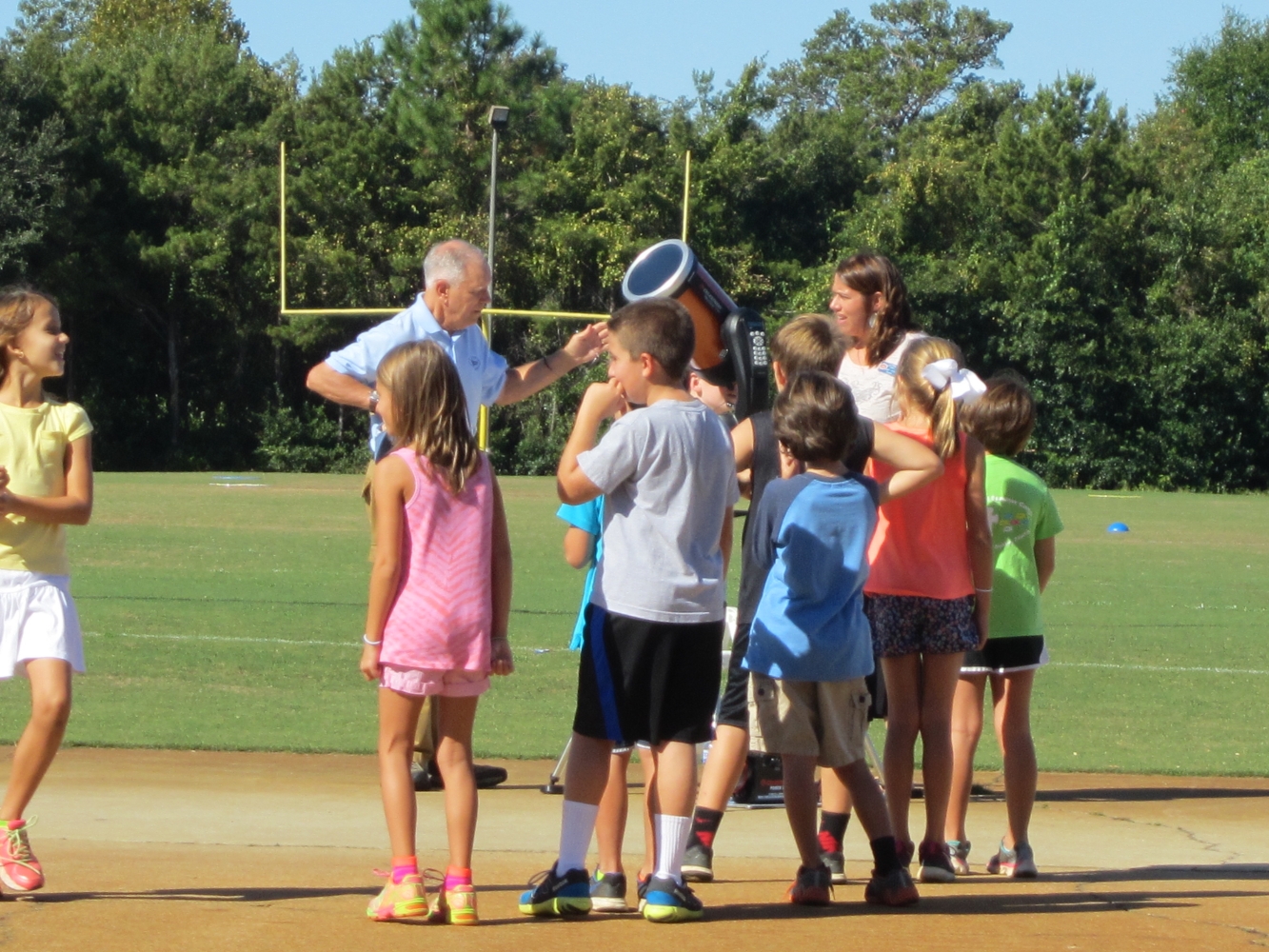
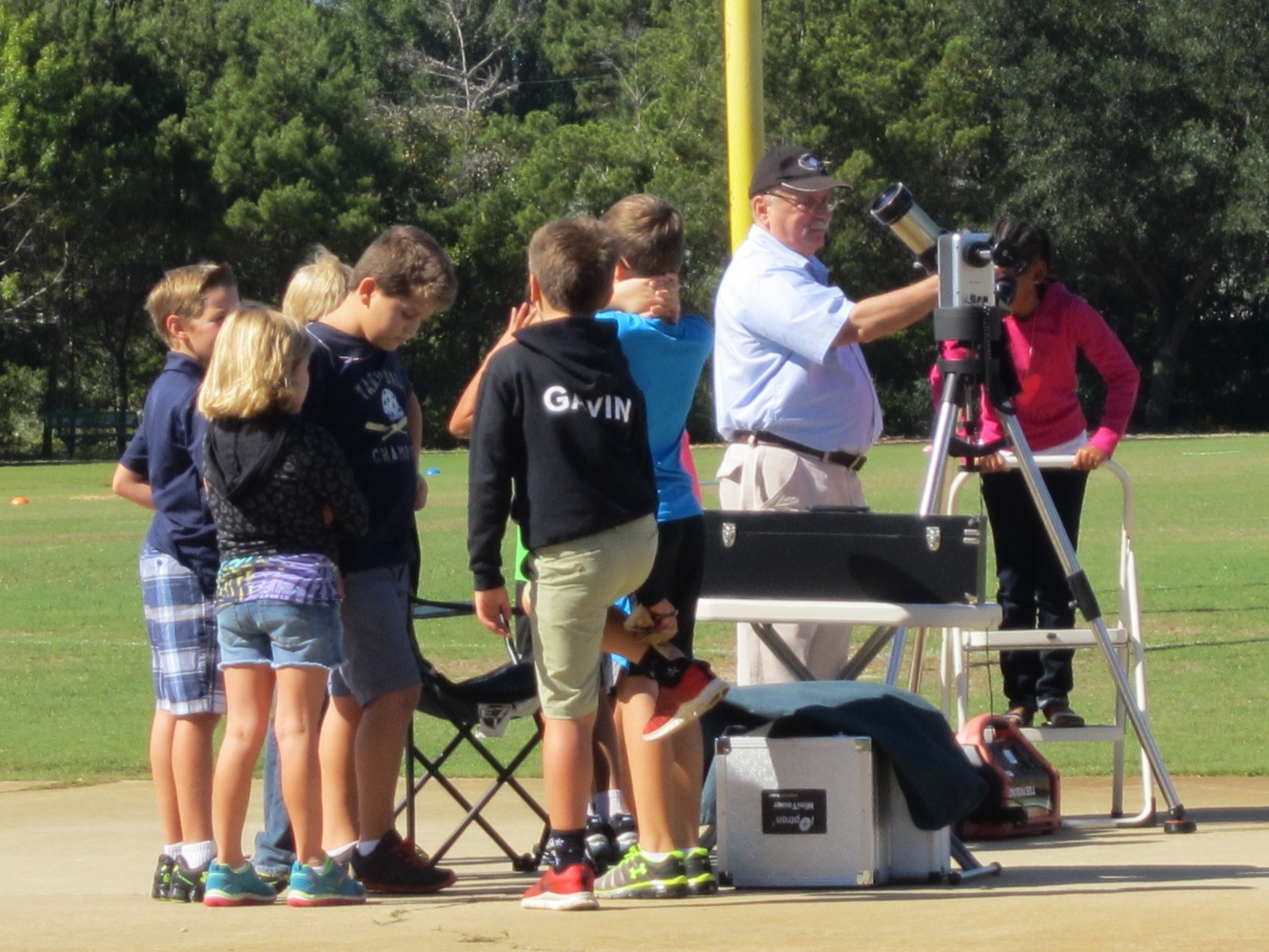
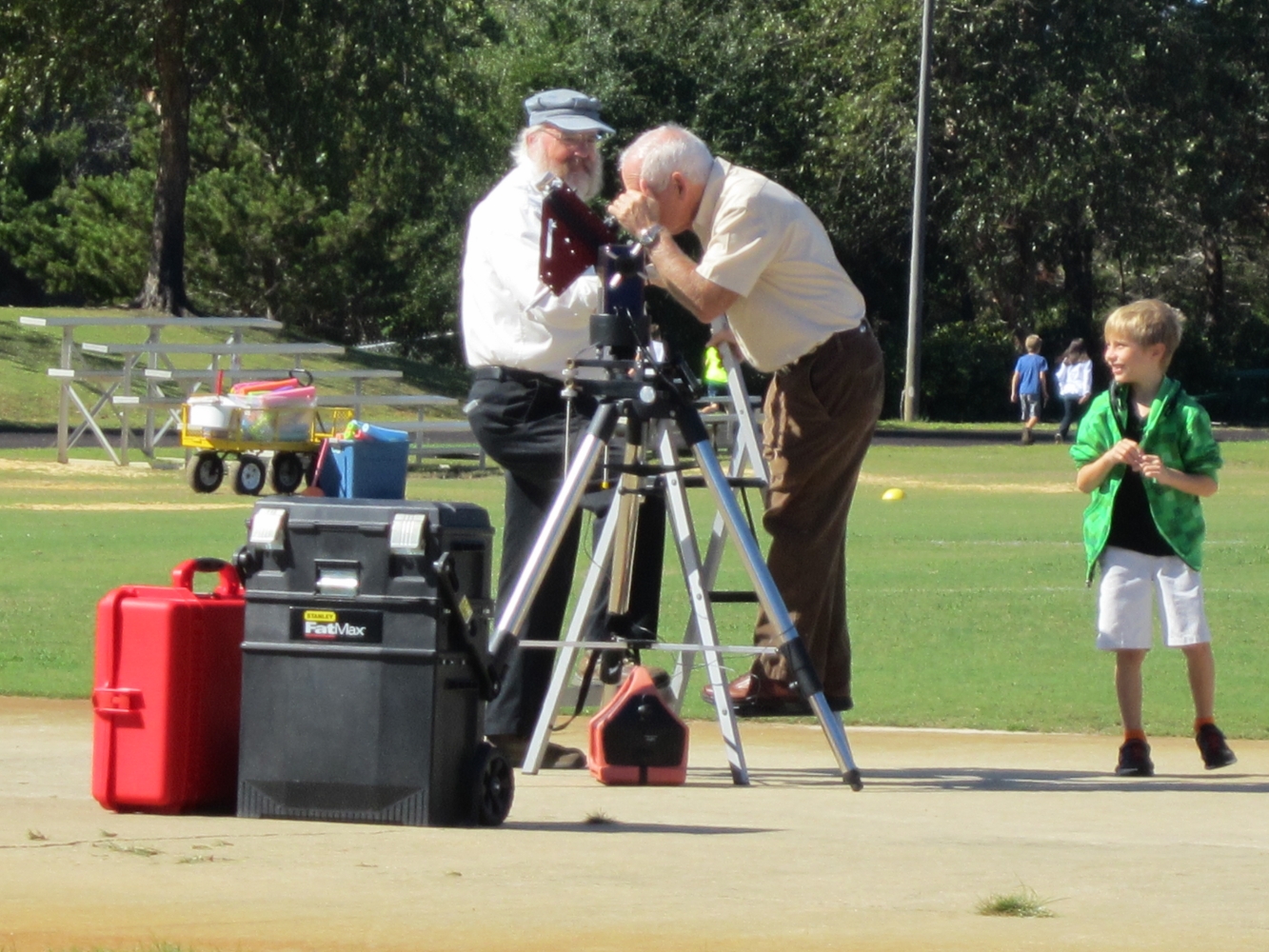
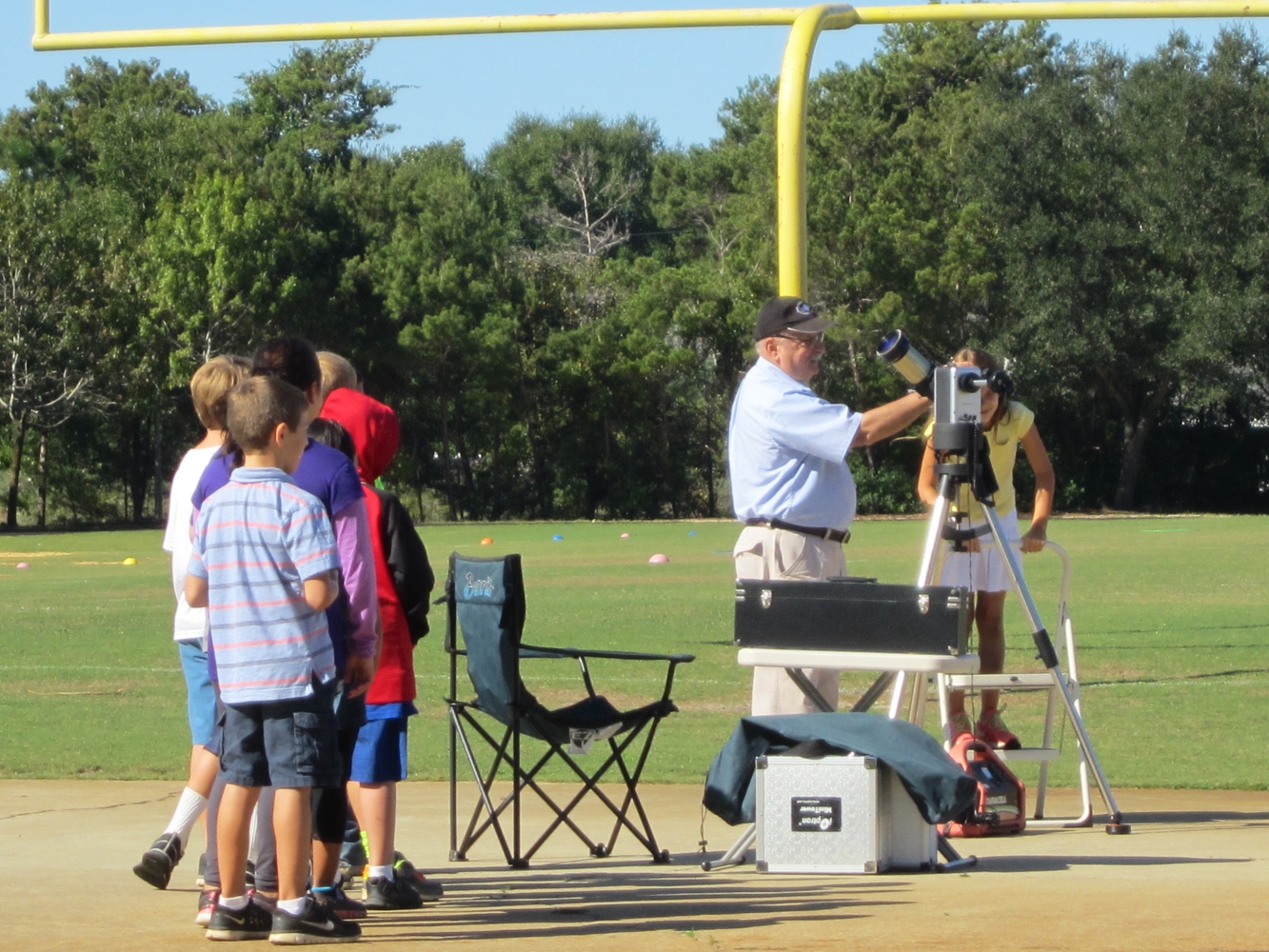
The 2016 Pack 52 tiger growl star gaze was a major success. As always, the skies above Spanish Trails Scout Reservation were very dark and we had a large group of very enthusiastic guest observers and their leaders/parents.

Club members Dave Halupowski, Tom Haugh, Dennis Hausch and Ken Leone all brought scopes. Tom Haugh and Dennis Hausch started off the afternoon with solar equipment. This was poor planning on our part since the 4th of March was a Friday and our guest observers were still in school. As the sky darkened the solar scopes were put away and the nighttime equipment was brought to bear. Club member James Dubbin joined the group and provided running commentary and constellation identification to those waiting for their chance at the eyepiece.

As you would expect, Sirius was the first nighttime object to come into view. This meant that Orion was well placed as the sky darkened. The stars of the Trapezium are quite easy to see before the sky darkens enough to bring the surrounding nebula into view. Star clusters M41 and M44 were targeted as well as many other celestial objects. Eventually, Jupiter and it’s moons climbed over the eastern treeline and provided a great view.

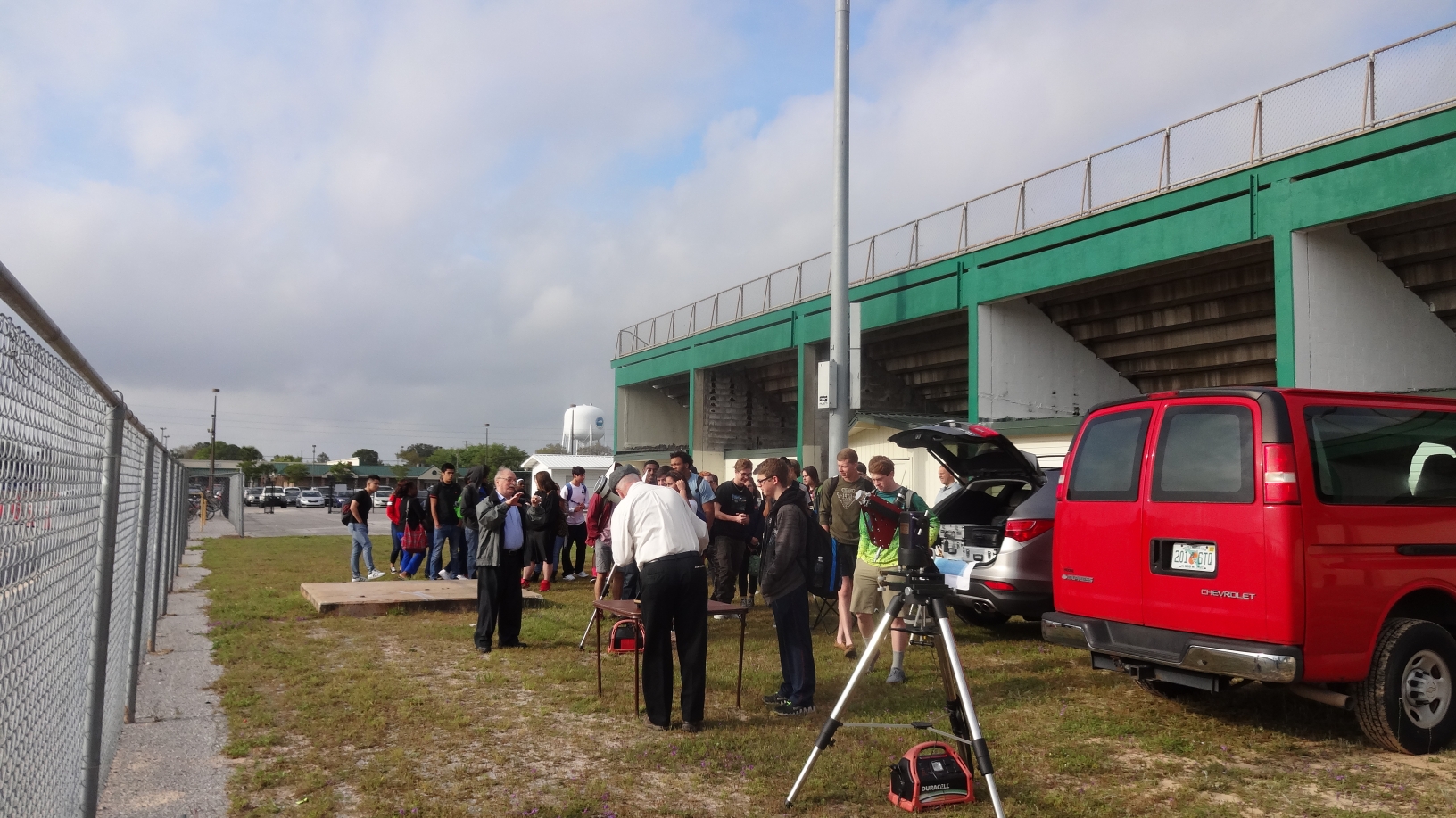
We had a continual stream of scouts/leaders/parents throughout the evening. Just before 10 PM the last group of scouts visited the observing field. These were the older Boy Scouts who were assisting the adult leaders with the large group of 1st grade Tiger Scouts (thanks guys). A lively discussion on the effects of time dilation ensued, but eventually, ‘time’ caught up with us and we had to wrap up the evenings activities.

 Posted by at 10:37 am
Dec 282015
 

On the 20th of November we added a third state park to our theater of operations after being invited to hold a sky view at Eden Gardens State Park.

We expected a lot of trees and a reconnaissance visit verified that prediction. The tree line is high enough that it made a solar viewing session untenable. There would just be too much time waiting between the Sun dropping behind the trees and the Sun actually setting. But a high tree line will not stop a star gaze.

Due to the park’s location we expected a dark sky which resulted in a great turnout by club members:

  • Frank Atchison
  • Dean Covey
  • Bob Gaskin
  • Dave Halupowski
  • Tom Haugh
  • Dennis Hausch
  • Chuck Lynch

The assembled members were not disappointed as the dark sky prediction was very accurate.

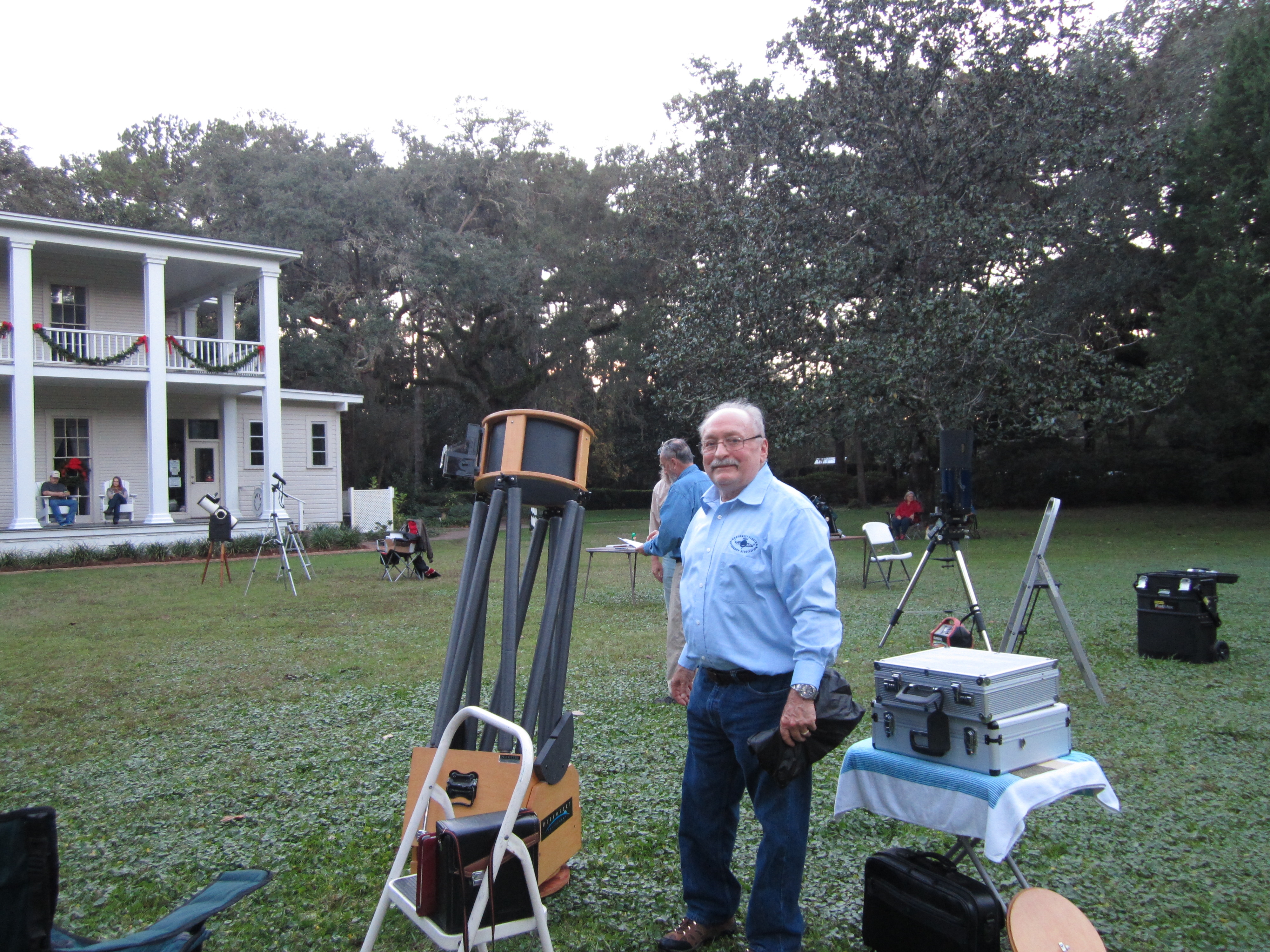
Dennis and his 12" dob.

Dennis and his 12″ dob.

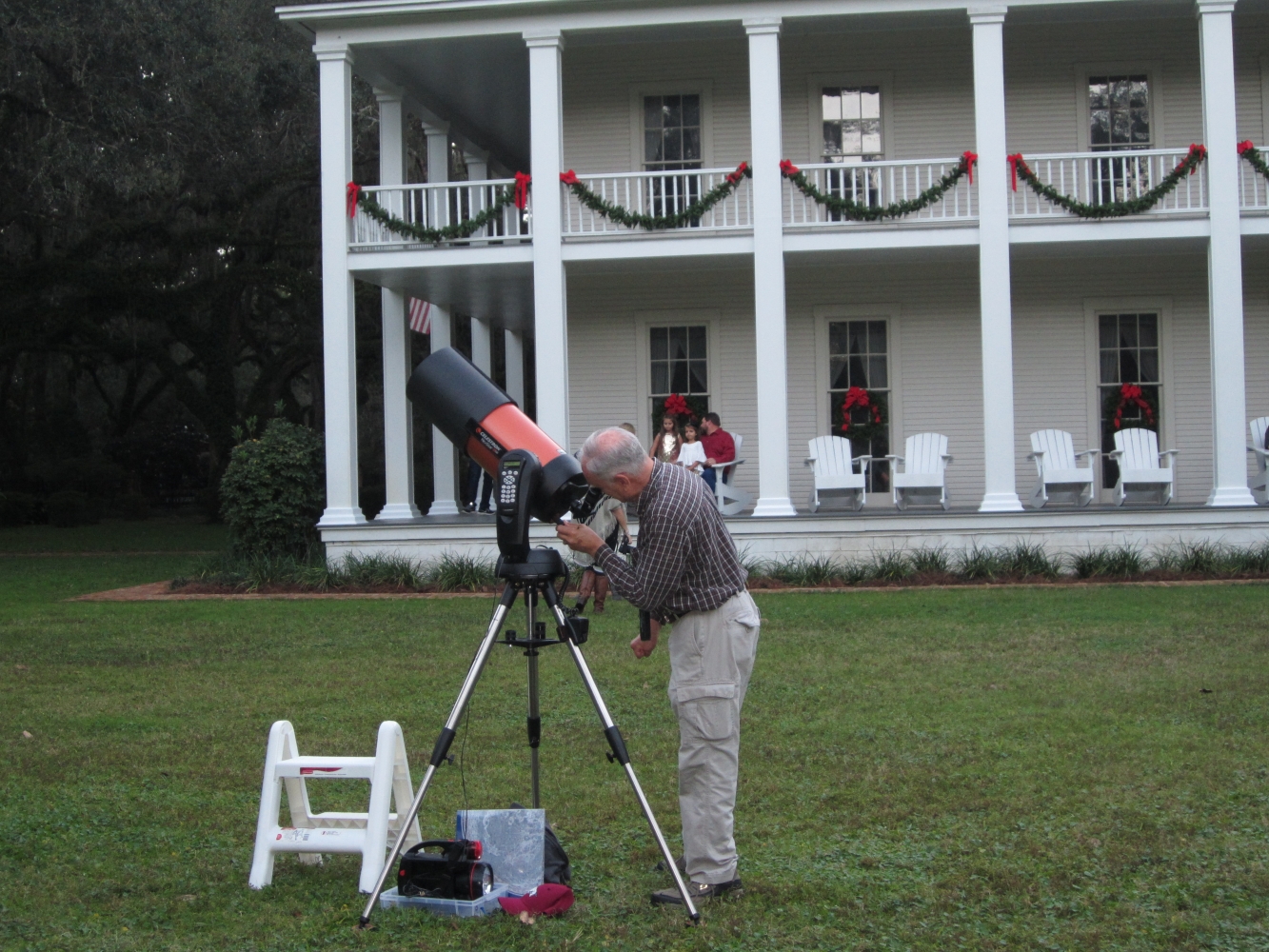
Dean in front of the Wesley house all decorated for the holidays.

Dean in front of the Wesley house all decorated for the holidays.

Since this was the park’s first star gaze we only had a moderate turn out of guest observers. But there were enough to keep all the scopes busy without any waiting lines. We even had a group of cadets attend from Eglin AFB’s Composite Squadron of the Civil Air Patrol. All were treated to some great views of deep sky objects as well as a bright meteor that crossed the sky from tree line to tree line. Another transient visitor was the Air Force’s X-37B space plane, easily visible as it passed overhead.

“Can you take a photo through a telescope with a {insert your favorite phone name here}?” has become a very common guest observer question at our events. The answer is “Yes”, so there were several smart phone pictures taken through scope eyepieces during the event. Also during the evening, Frank Atchison attached his Canon camera to his 8″ Meade and demonstrated some of the advantages of CCD observing.

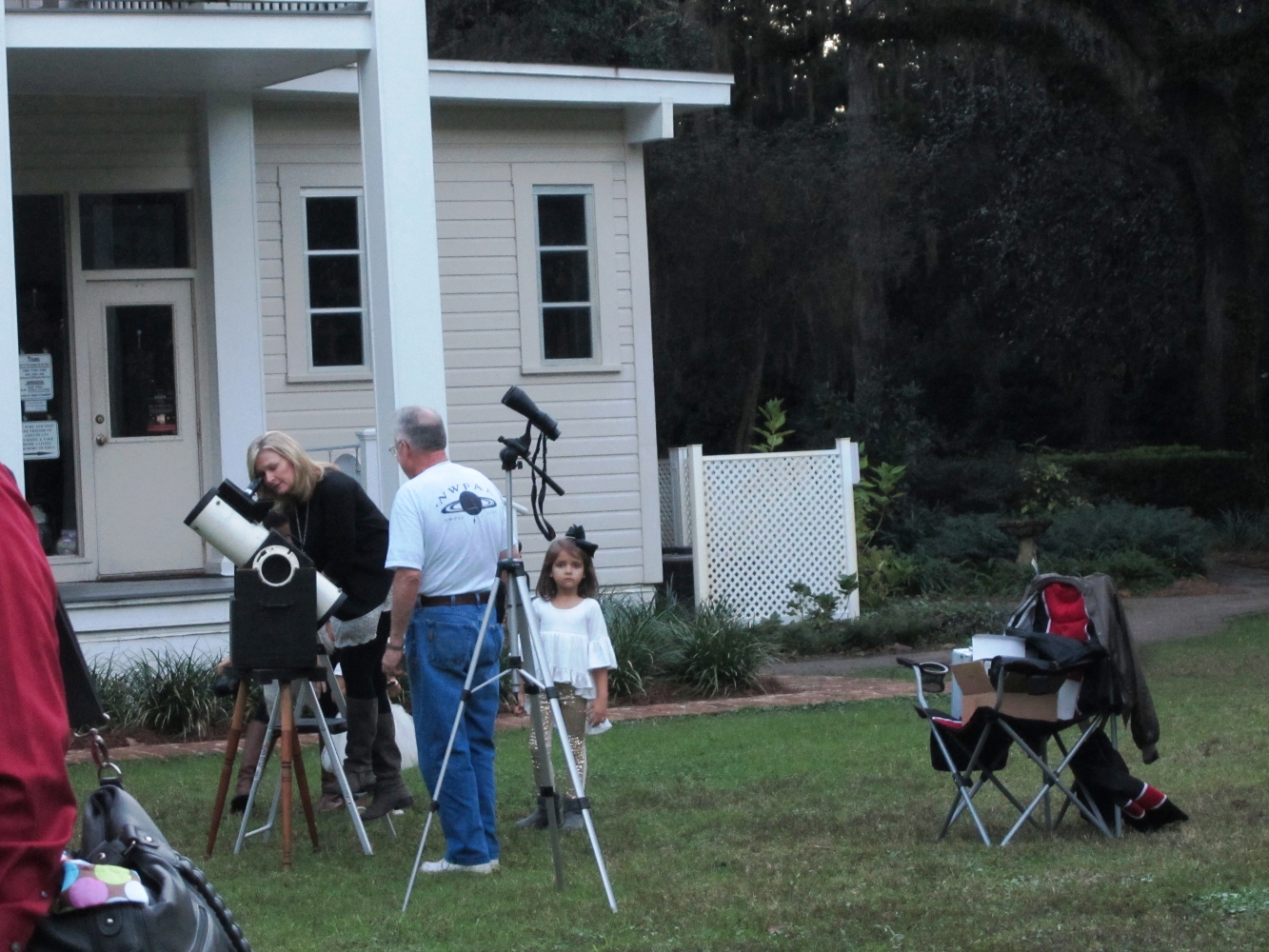
Chuck and his guest observers.

Chuck and his guest observers.

Dave supervises his wooden dob.

Dave supervises his wooden dob.

This picturesque location as well as the dark sky will make Eden Gardens State Park a favorite location for the NWFAA. We look forward to returning to the park in 2016.

 Posted by at 12:07 pm
Dec 282015
 

Our first visit to the Seaside School to support their “Night Under the Stars” was a moderate success. Security and safety lights were a constant annoyance but, to start with, the skies were clear. Without any bright planets visible and with the Moon already set, we had to concentrate on deep sky objects.

Club members Dave Halupowski, Dennis Hausch and Tom Haugh were able to support the event. To start off, Tom’s 8″ Meade concentrated on the multiple star system Epsilon Lyrae and Dave’s small Dobsonian displayed the colorful duo of Alberio. But the ‘star’ of the show was Dennis’ 12″ Dob. Even with the bright ambient lighting, the scope was able to show a nice bright Ring Nebula.

However, is wasn’t long before some high thin clouds started to appear and ultimately thickened enough to shut us down.

All our guest observers were able to view the few celestial objects that the conditions allowed, and we received many favorable comments and interest in the club. We hope our next visit to Seaside School will be cloud free allowing a longer list of observed targets.

 Posted by at 10:35 am
Dec 122015
 

The NWFAA made its first trip up to the Laurel Hill School on Friday the 6th of November to support their Science night. As usual we set up just before dusk and while we waited for the sky to darken took part in the school’s spaghetti dinner fund raiser. We are hoping for more star gaze invitations based on the spaghetti dinner alone.

Dean Covey, Tom Haugh and Chuck Lynch each brought telescopes for our guest observers to view the sky through. Since neither the Moon nor any bright planets were visible we had to rely on deep sky objects for our targets. The Great Hercules Cluster (M-13), the Ring Nebula (M-57) and the Andromeda Galaxy (M-31) were all visible as well as numerous other celestial targets. For the school’s first event, the turnout was outstanding keeping each telescope in constant use. The guest observers were enthusiastic and asked plenty of intelligent questions.

We were quite amazed at the darkness of the Laurel Hill sky. Even though there were a couple of annoying security lights bright enough that we cast shadows, the Milky Way was plainly visible crossing the sky.

Spaghetti dinner and a dark sky; you can’t do any better than that.

 Posted by at 5:17 pm
Dec 092015
 

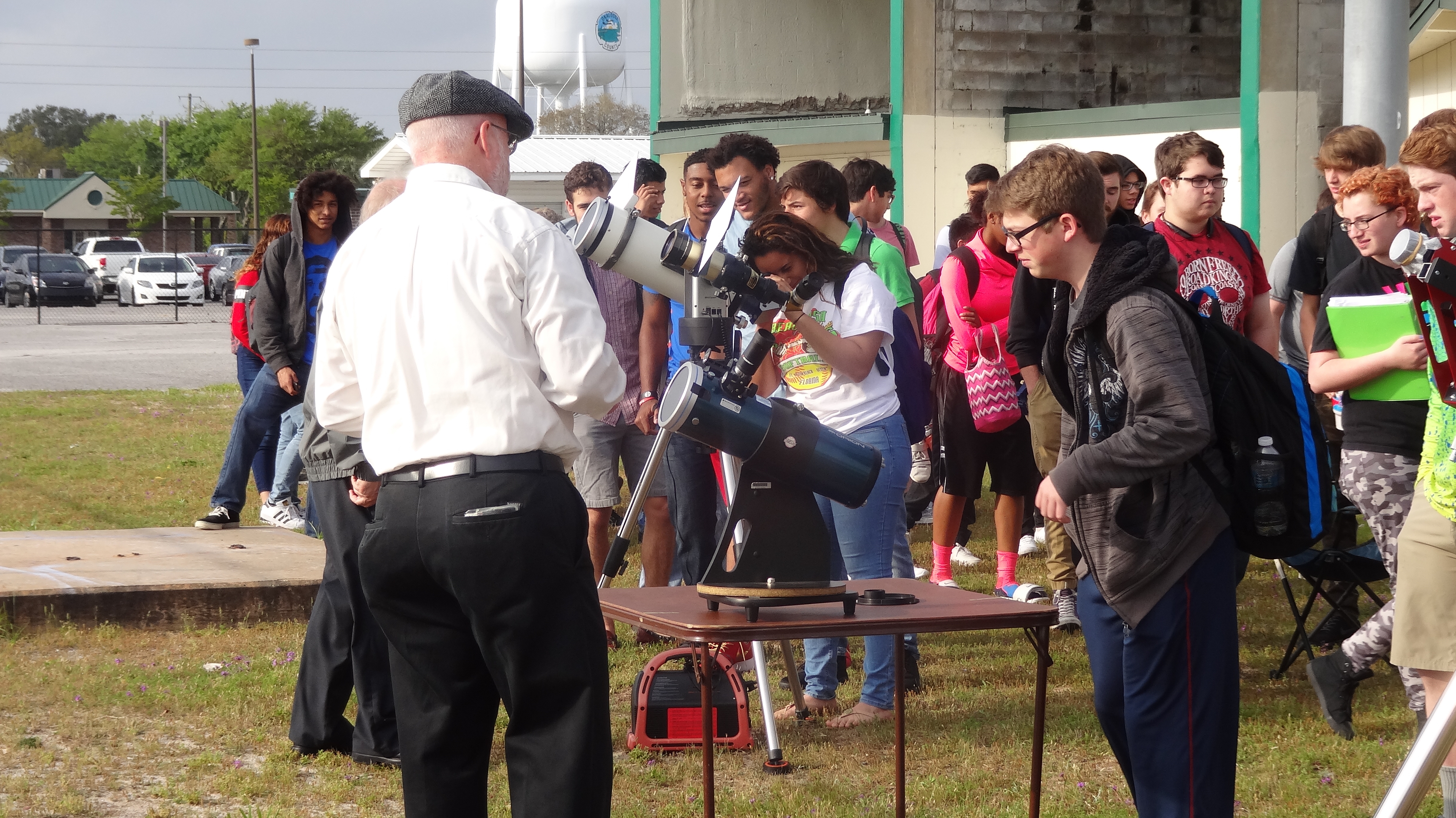
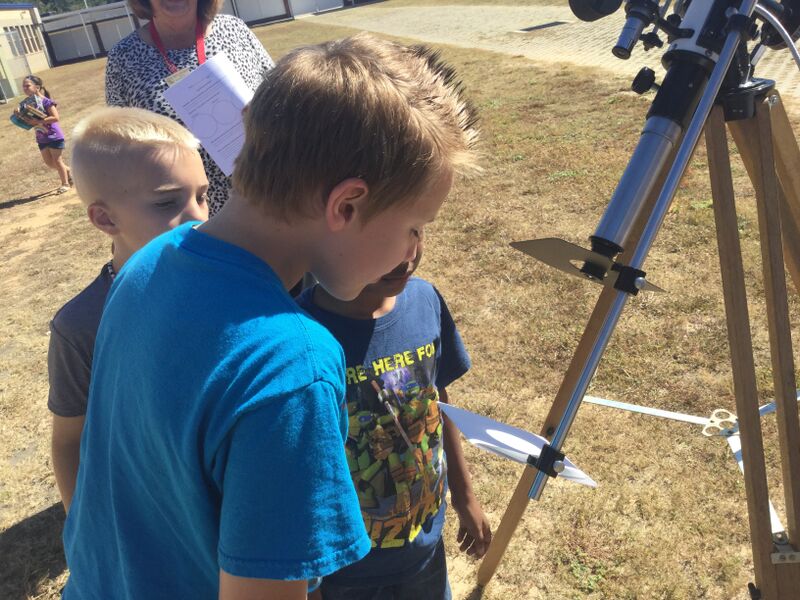
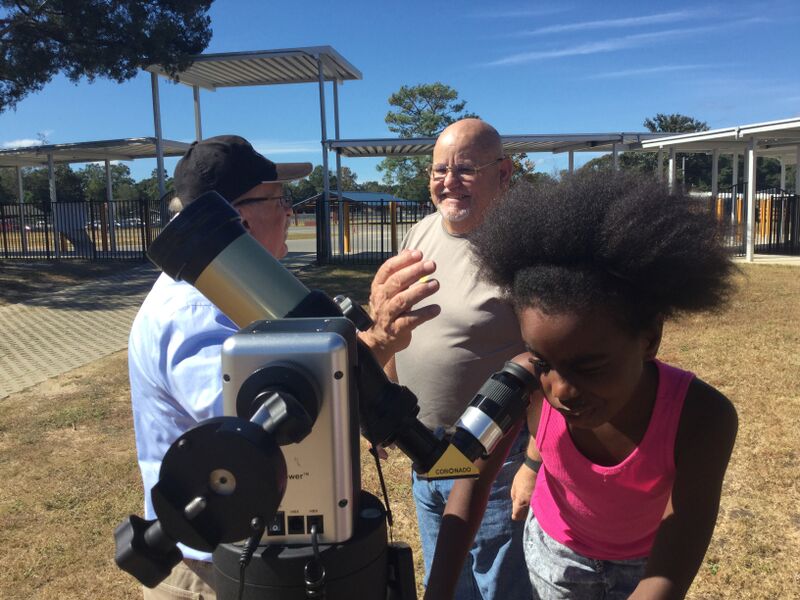
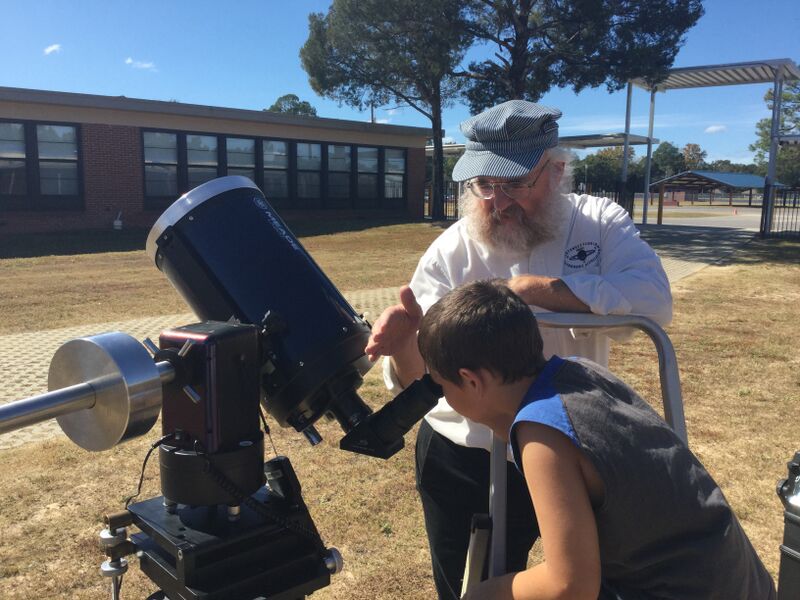
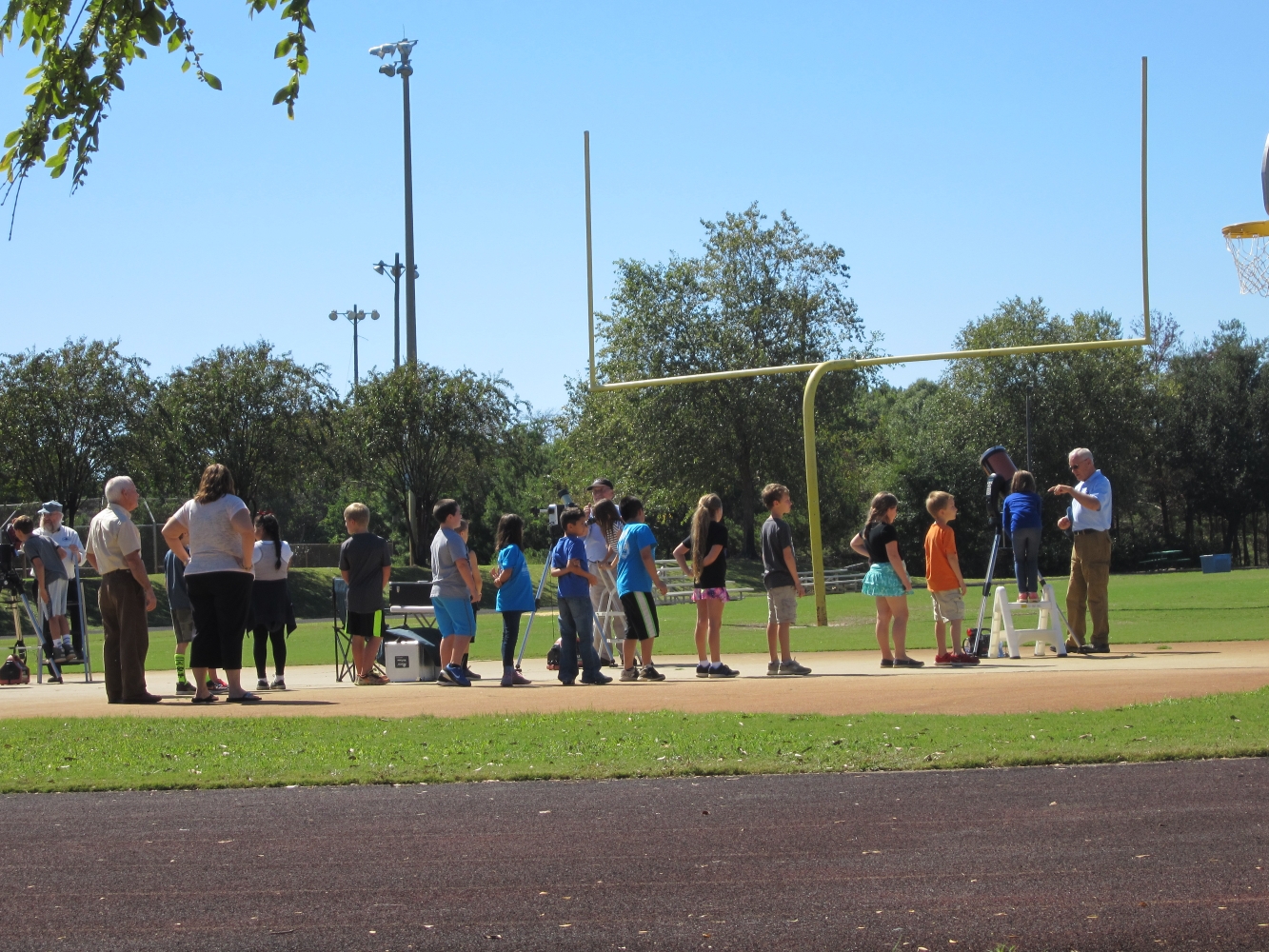
The NWFAA was once again invited by the Northwood Elementary School 3rd grade to setup telescopes and talk about the Sun. Dave Halupowski, Dennis Hausch and Tom Haugh were able to make the trek way up north to Crestview.

telescope3 Dave brought his ancient and honored Unitron refractor to demonstrate the classic method of Solar projection. Sunspots were plainly visible on the projection screen.
Dennis’ Coronado provided a Hydrogen Alpha view showing a nice prominence starting off the morning. telescope4
telescopes1 Tom’s filtered 8″ Meade rounded out the telescope array with a white light view.

 
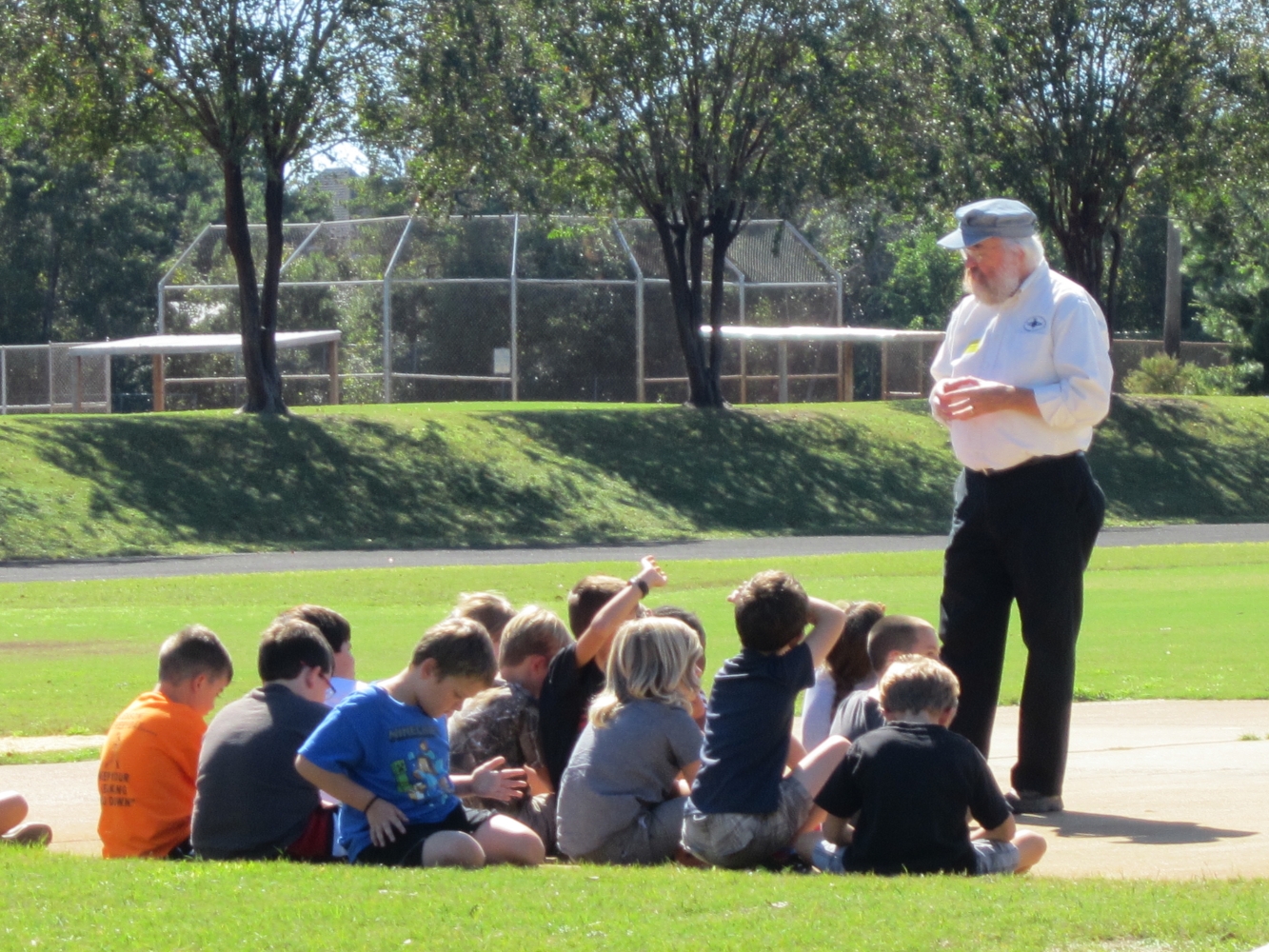
The students attended the NWFAA solar presentation, then afterwards, came out the to telescope lineup class by class to view the Sun in a perfectly clear sky. We want to thank the Northwood Elementary School staff and students for the invite and warm welcome. We look forward to next years solar event.

 Posted by at 5:03 pm
Nov 202015
 

The 3rd grade students and staff of Destin Elementary school were treated to excellent skies for their daytime sky view on the 14th of October. Dean Covey set up his white light filtered Celestron and Dennis Hausch set up his Coranado H-alpha scope while Tom Haugh was inside giving the club’s solar presentation to half of the 3rd grade students. After the presentation the classes came out, in turn, to the observing field and viewed the Sun. After the first briefing, Tom quickly set up his solar spectroscope and provided a third view of the Sun.

Dean explains the view in his white light filtered Celestron.

Dean explains the view in his white light filtered Celestron.

Dennis' H-alpha scope in action.

Dennis’ H-alpha scope in action.


After a lunch break, the second half of the 3rd grade students went through the same process. Throughout the day the skies were clear and the Sun provided just enough solar activity to make the views through the scopes interesting.
Principal Gardner examines the solar spectrum.

Principal Gardner examines the solar spectrum.

Examining solar prominences.

Examining solar prominences.

Dean wins the contest for the longest line.

Dean wins the contest for the longest line.

While waiting for their turn Tom answers guest observer questions.

While waiting for their turn Tom answers more guest observer questions.


We would like to thank Destin Elementary school for the invitation to share our passion for the science of Astronomy. We also thank the staff for lunch; it was greatly appreciated. And finally, we thank Marietta Hausch for her support and photography.

 Posted by at 11:16 am
Nov 132015
 

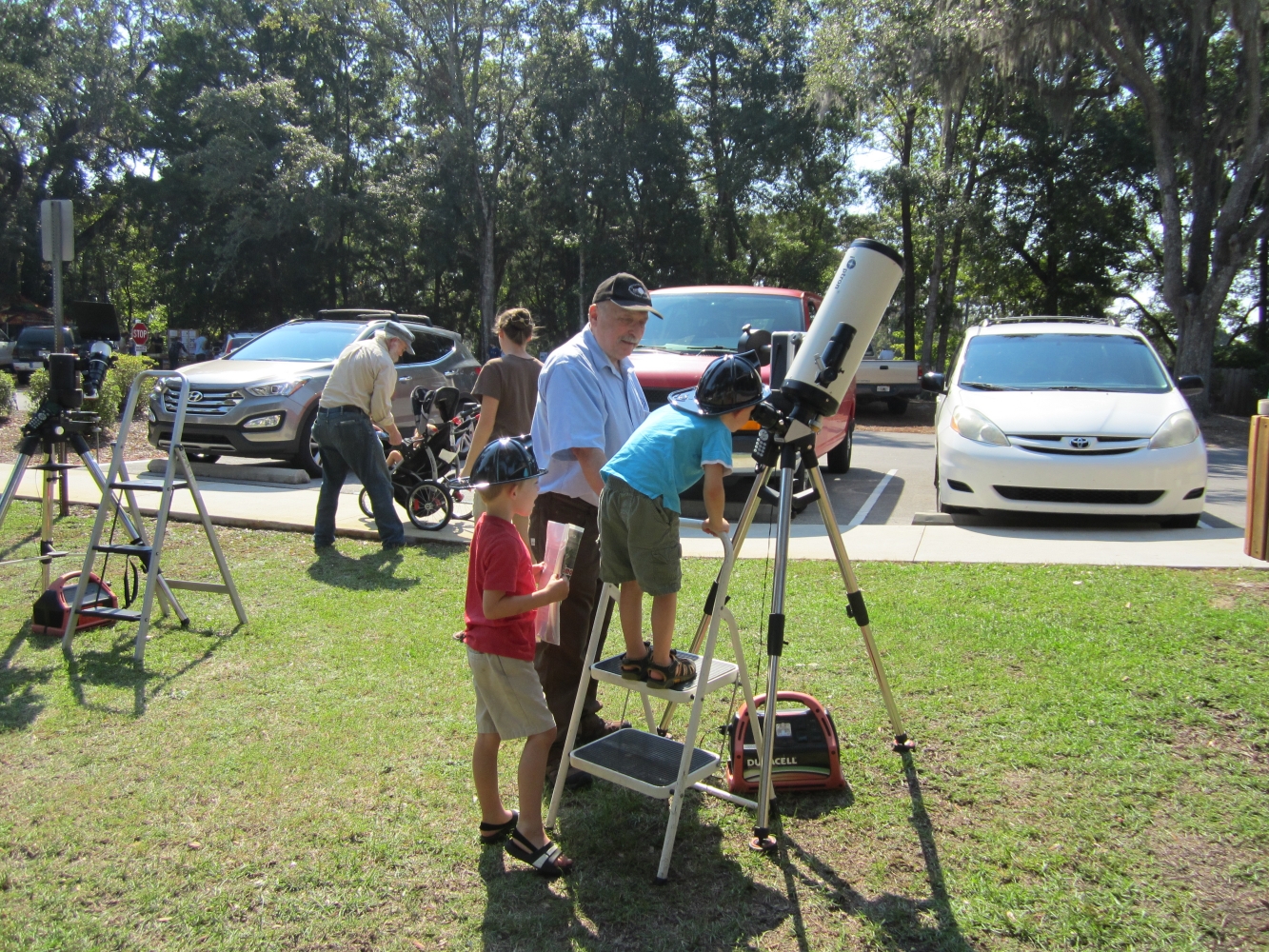
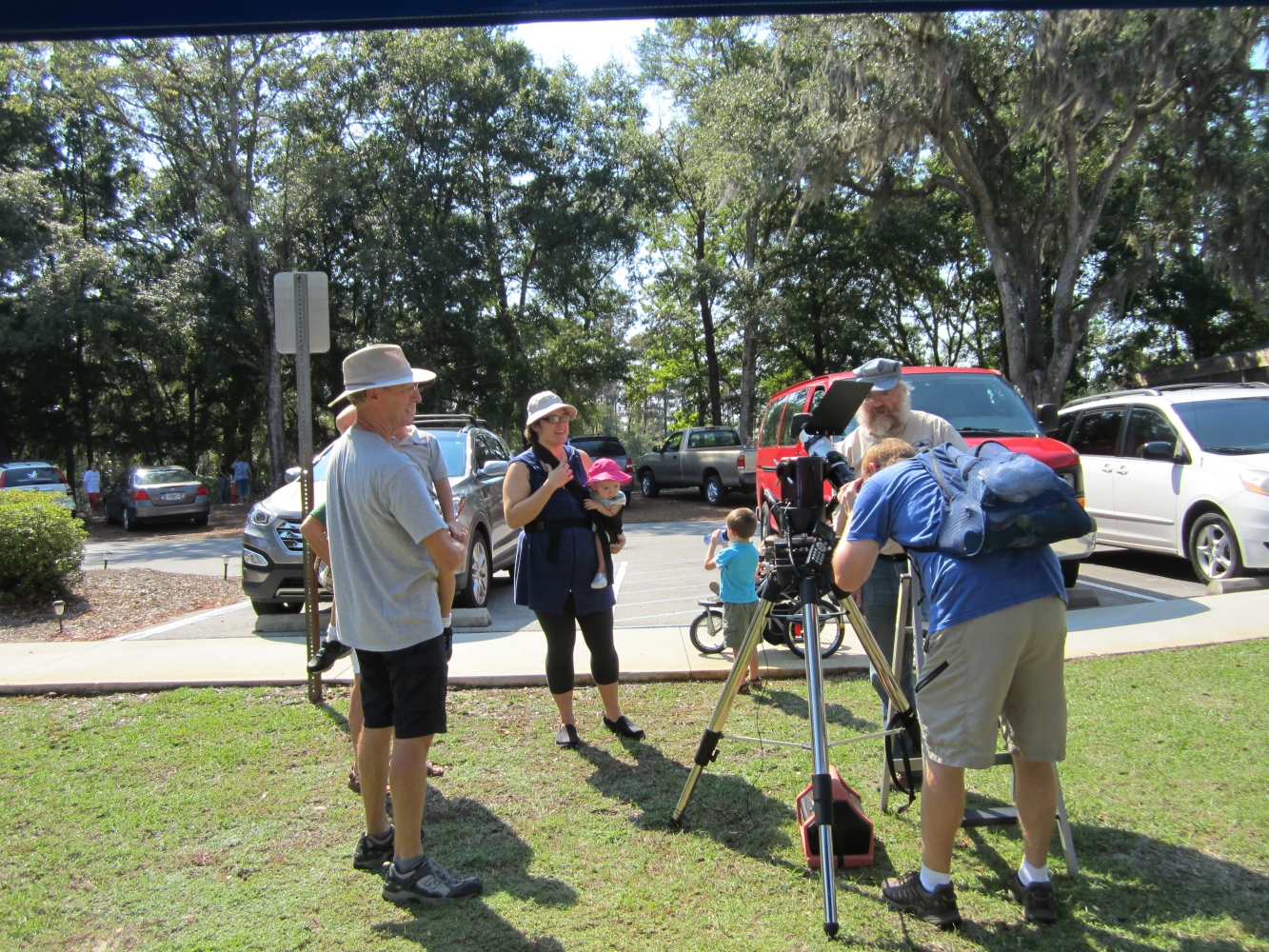
Once again, the NWFAA supported Walton Outdoor’s Explore the Outdoors Festival. This year we returned to Live Oak Landing. The trees here limit our location to the same place every year. Luckily, it puts us right on the walking path from parking to all the other outdoor exhibits. This means we get a constant flow of guest observers throughout the event and two chances to offer them a look through our equipment.
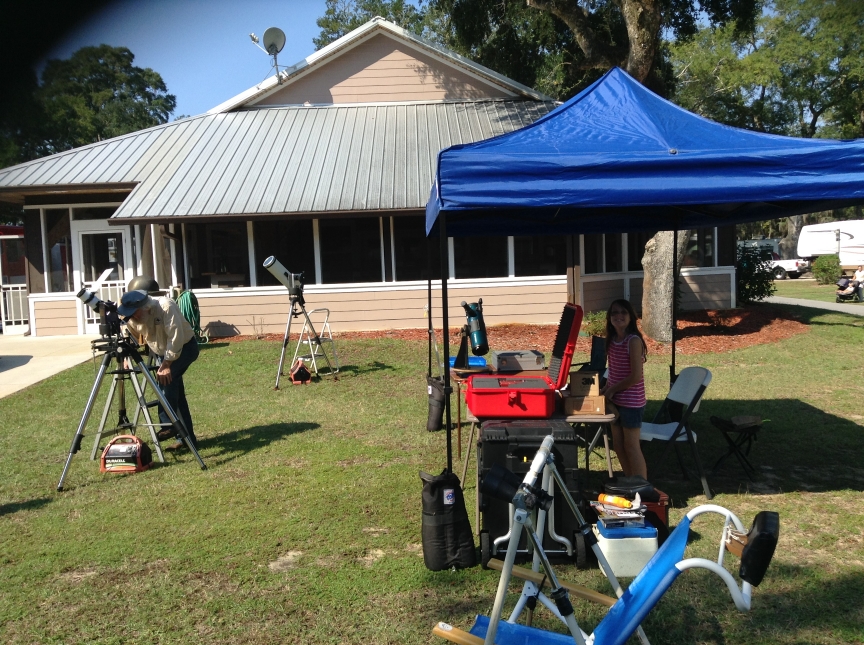
Young Miss Kennedy mans the booth early in the event.

Young Miss Kennedy mans our booth early in the event.


Dave Halupowski brought his ever popular binocular chair, Dennis setup his iOptron Maksutov with a white light filter and Tom Haugh setup his Lunt H-alpha refractor. The skies were cloudless and the Sun cleared the trees to our east just before the event opened to the public.

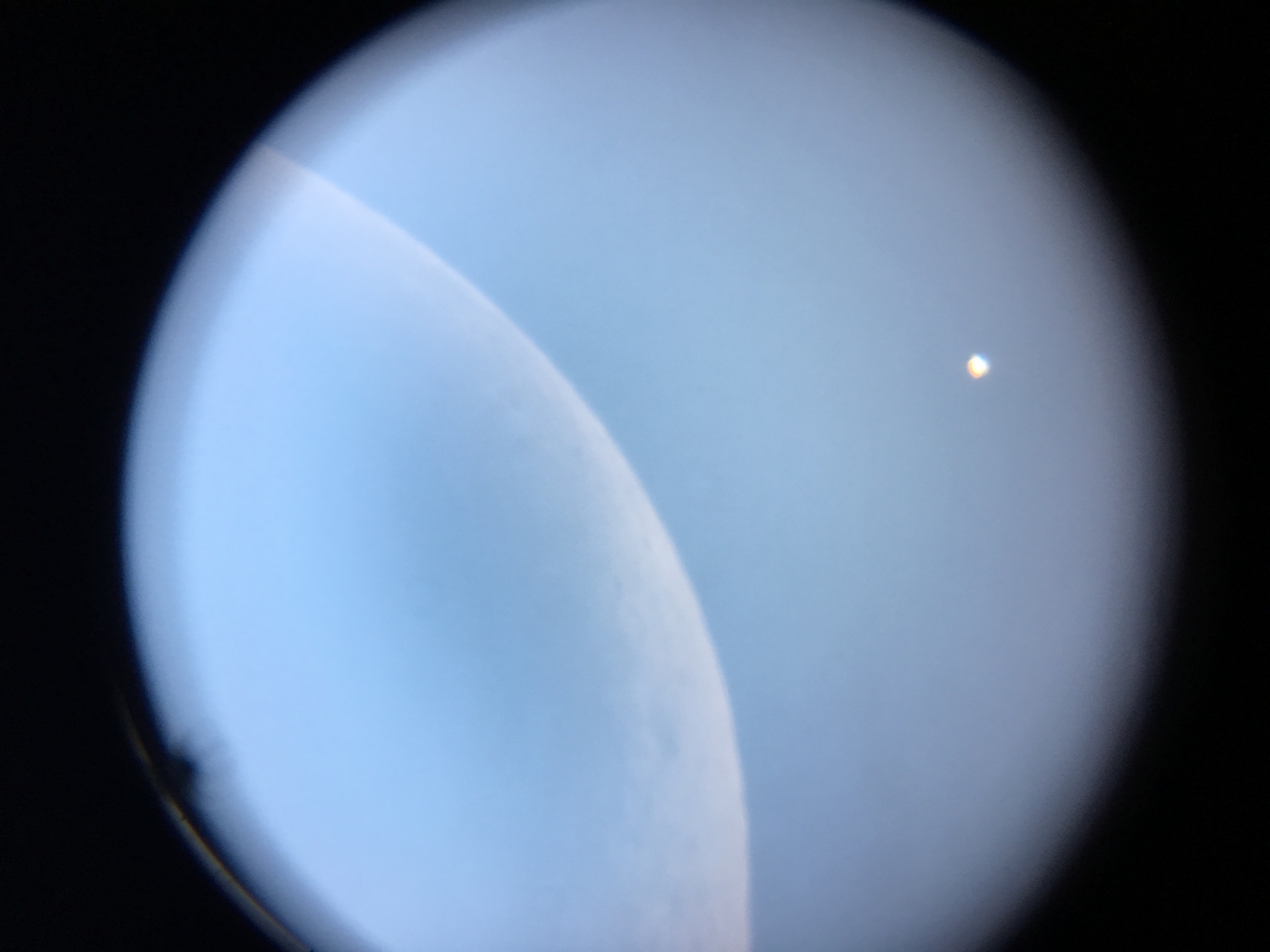
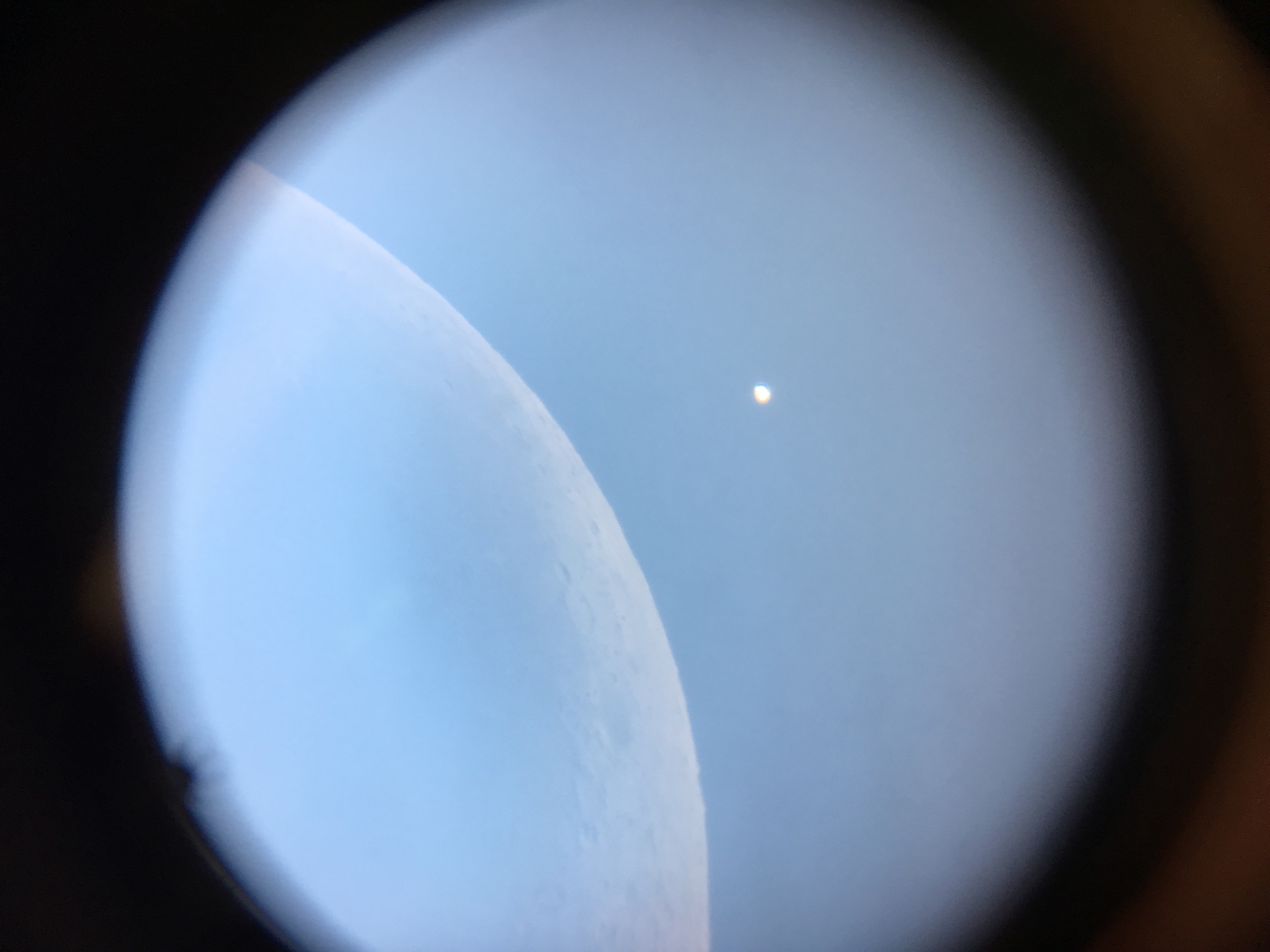
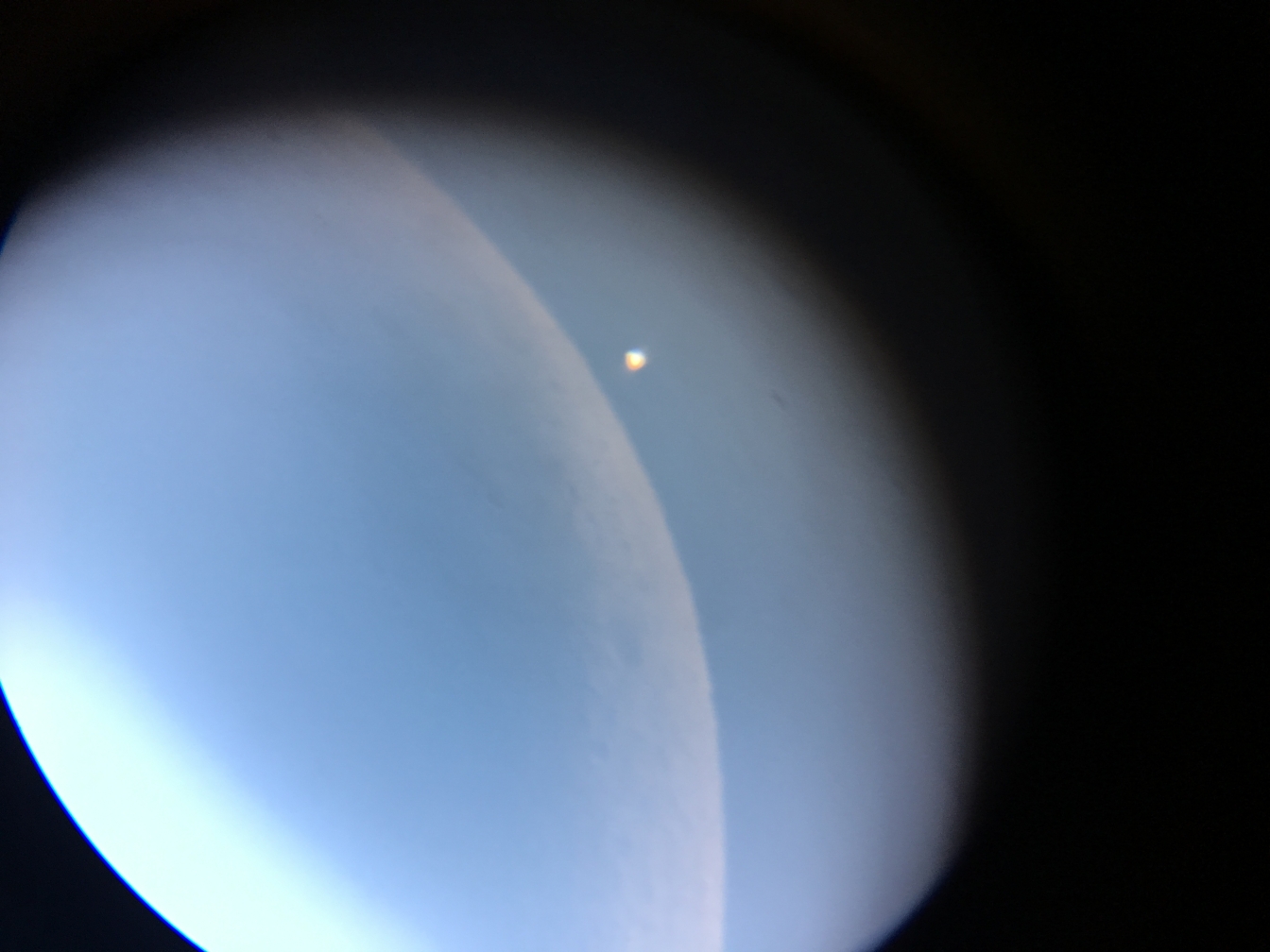
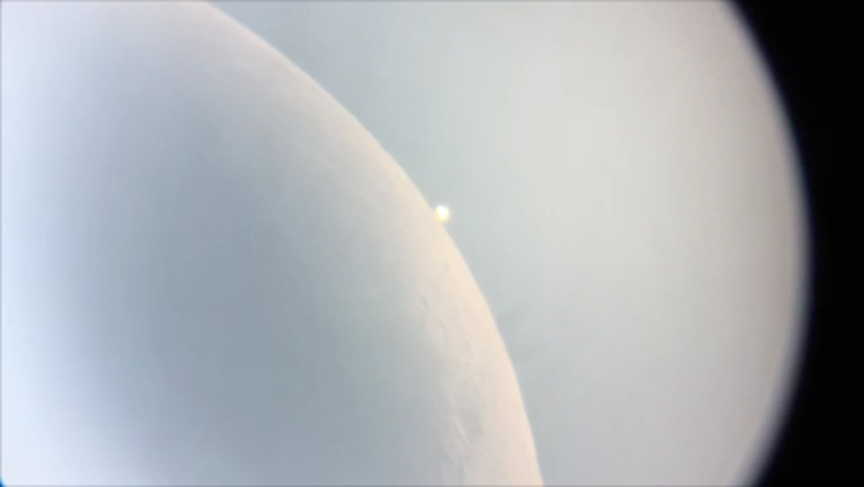
In white light the Sun was very quiet. There were no appreciable sunspots visible and after a couple of hours of explaining what a sunspot would look like (if there was one) Dennis decided to change tactics. His alignment was good enough that he was easily able to find Venus in the daytime sky and for the rest of the event, that was the target in the Mak. The planet was deep in a crescent phase and provided a very ‘teachable’ moment to the public observers.
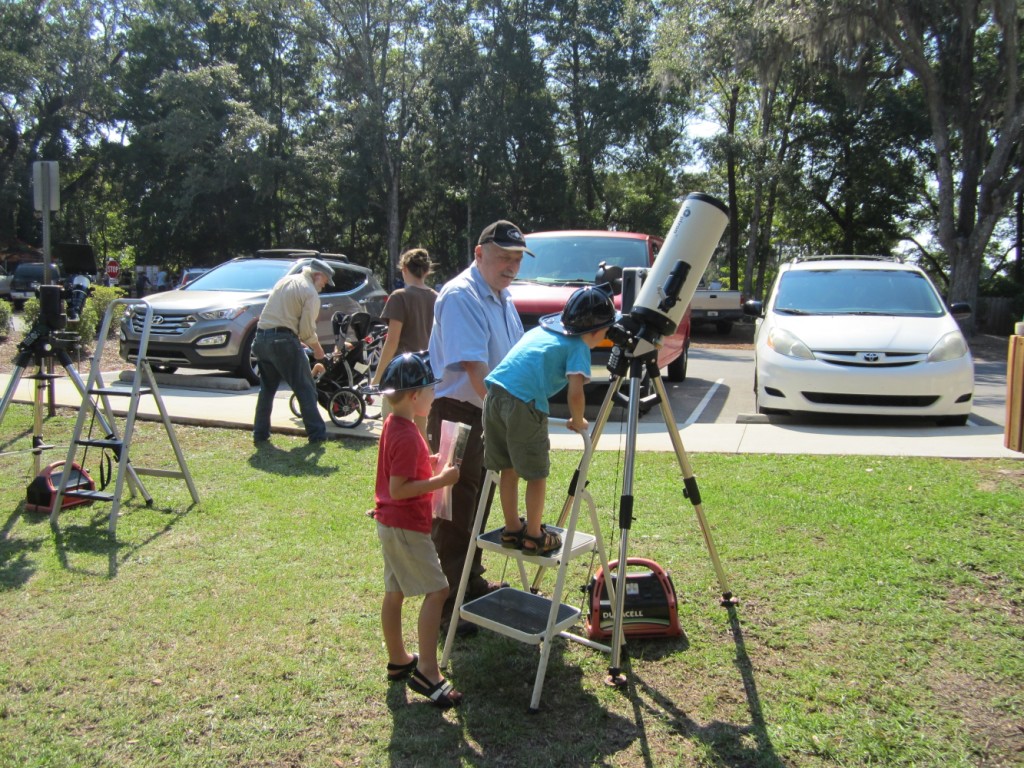
By now, Dennis targets the daytime crescent Venus.

By now, Dennis targets the daytime crescent Venus.


Thankfully, there was a sizable prominence visible on the Sun’s limb, so there was at least one solar target of interest in the Ha scope. Additionally, there was a couple of minor filaments visible.
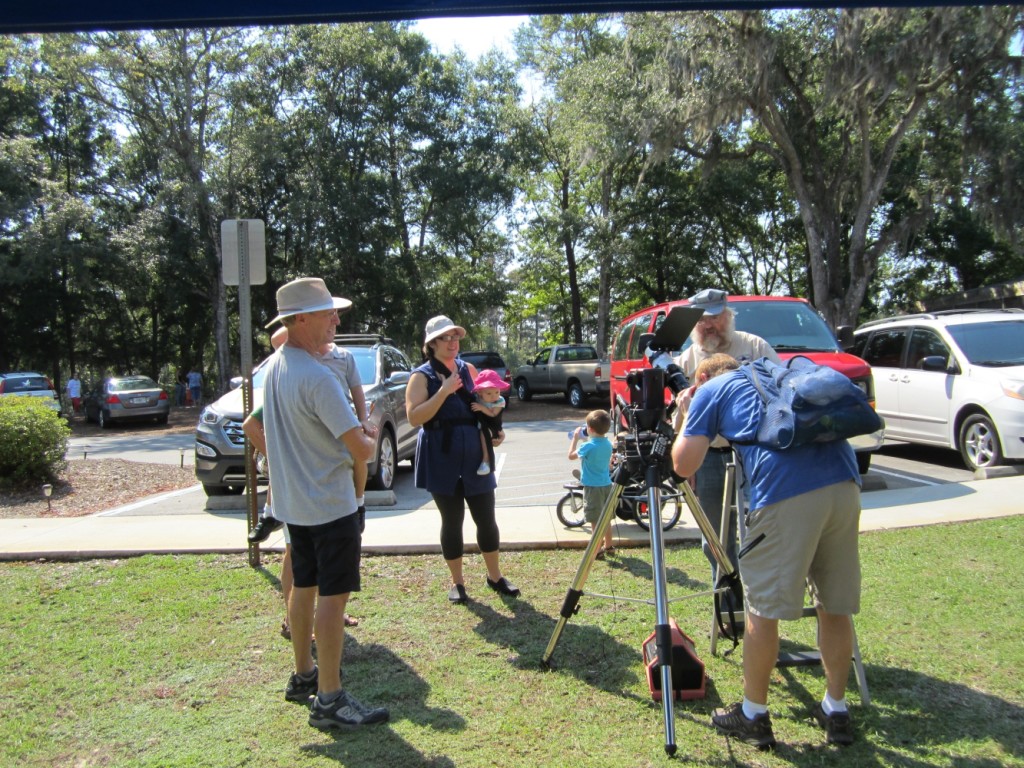
Guest observers view the Sun in Hydrogen-Alpha light.

Guest observers view the Sun in Hydrogen-Alpha light.

We handed out plenty of club flyers and sky charts and had a great time showing the daytime objects to the crowd. The Explore the Outdoors Festival is one that we all enjoy supporting and we have already been invited back to next years event on Oct 15, 2016. We will be there.

 Posted by at 10:39 am
Oct 182015
 

The last public sky view at Topsail Hill was coincidentally the 2015 International Observe the Moon night as well the 2015 fall National Astronomy Day. Tom Haugh arrived early to setup his H-alpha telescope and provide early guest observers with a safe view of the Sun. There was a small prominence and a small filament visible on the otherwise quiet surface.

Chuck Lynch arrived with his tripod mounted binoculars and his Dobsonian mounted telescope. One of the guests took pictures of Chuck’s mount as he was contemplating resurrecting a long neglected hand ground mirror. Since this was Observe the Moon Night Chuck’s first target of the evening was the Moon.

As the sky darkened, Tom dismounted the solar scope and mounted his 8″ SCT. His first object of interest was Saturn. Low on the southwestern horizon, the planet provided the highlight of the evening. Over the next two hours M 13, M 6 and 7 were viewed as well as binocular views of the Andromeda galaxy. Ultimately, Lyra moved off the zenith and M 57 and the double double were also viewed.

By 8:30 PM all the guest observers had left, making it an early night. Overall there were about 25 guest observers making this one of our better attended Topsail Hill sky views.

 Posted by at 6:50 pm
Sep 292015
 

Threatening weather did little to thwart the August Henderson Beach State Park sky view. We had to delay setting up the solar telescopes for a short time due to a light mist, but once it stopped we pressed on. To the West was a large thunderhead that, although threatening, never came toward the park and eventually dissipated.

Solar observing started with Dean Covey, Dennis Hausch and Tom Haugh. The weather kept all but a couple of solar observers from stopping by. As the Sun set the day shift was joined by Frank Atchison, Robert Sutphen, Dave Halupowski, Chuck Lynch and Ken Leone all bringing optical equipment to bear. Sky charts were handed out and instruction on how to use them was provided to the growing crowd. Jupiter started the night time show as it was viewed setting right after the Sun. Saturn, as usual, was the ‘star’ of the evening, although there were plenty of other bright objects in view. The great Hercules cluster, the Ring Nebula (M 57) and the famous multiple star system Epsilon Lyrae to name just a few.

The weather kept the count of guest observers lower than normal; we estimated about 70. Just before we started to disassemble the equipment a couple of the park rangers stopped by in order to take a look for themselves. We took the opportunity to thank them, once again, for hosting our events.

 Posted by at 7:10 pm