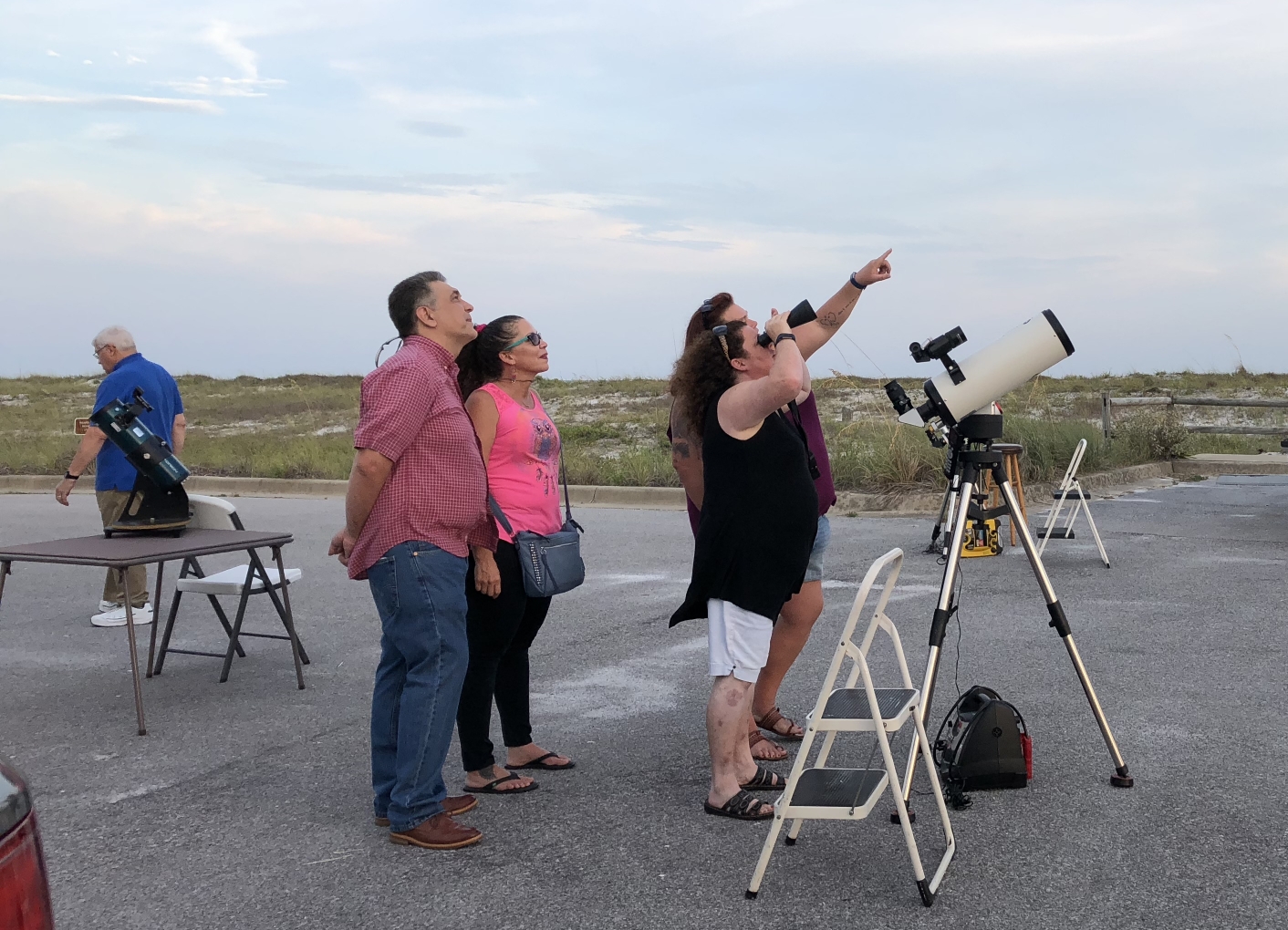
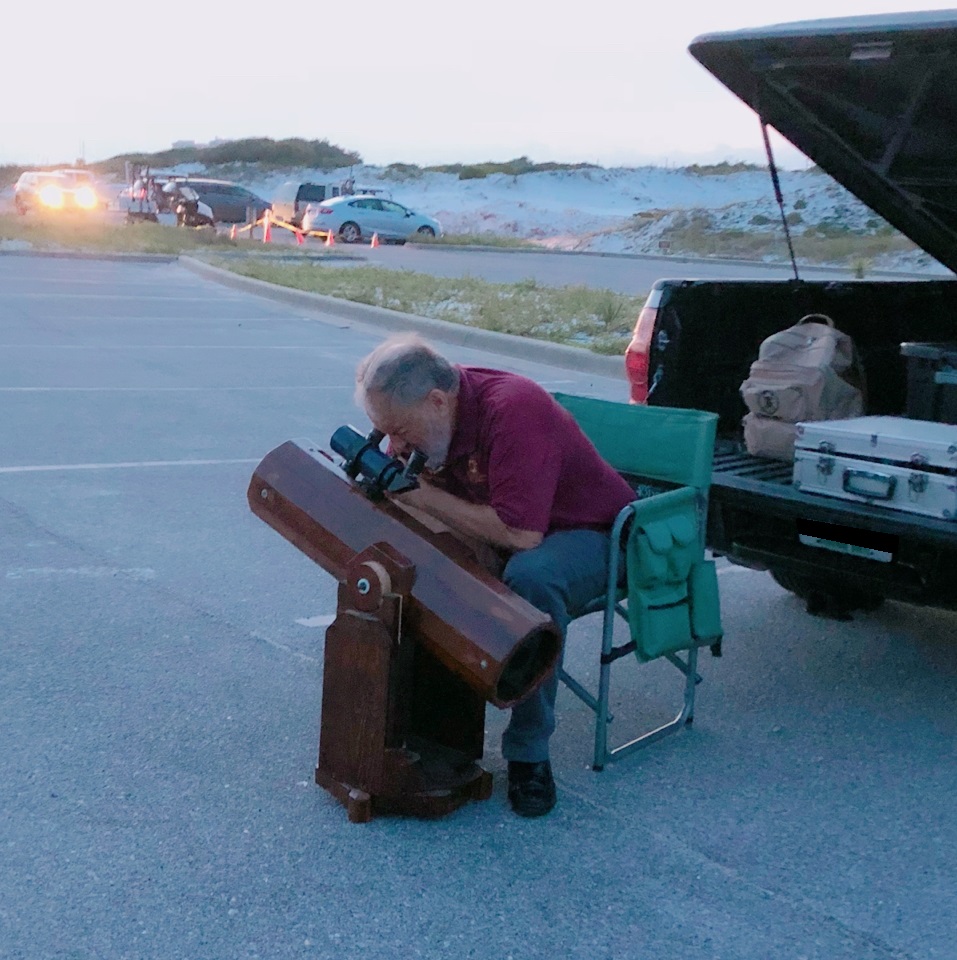
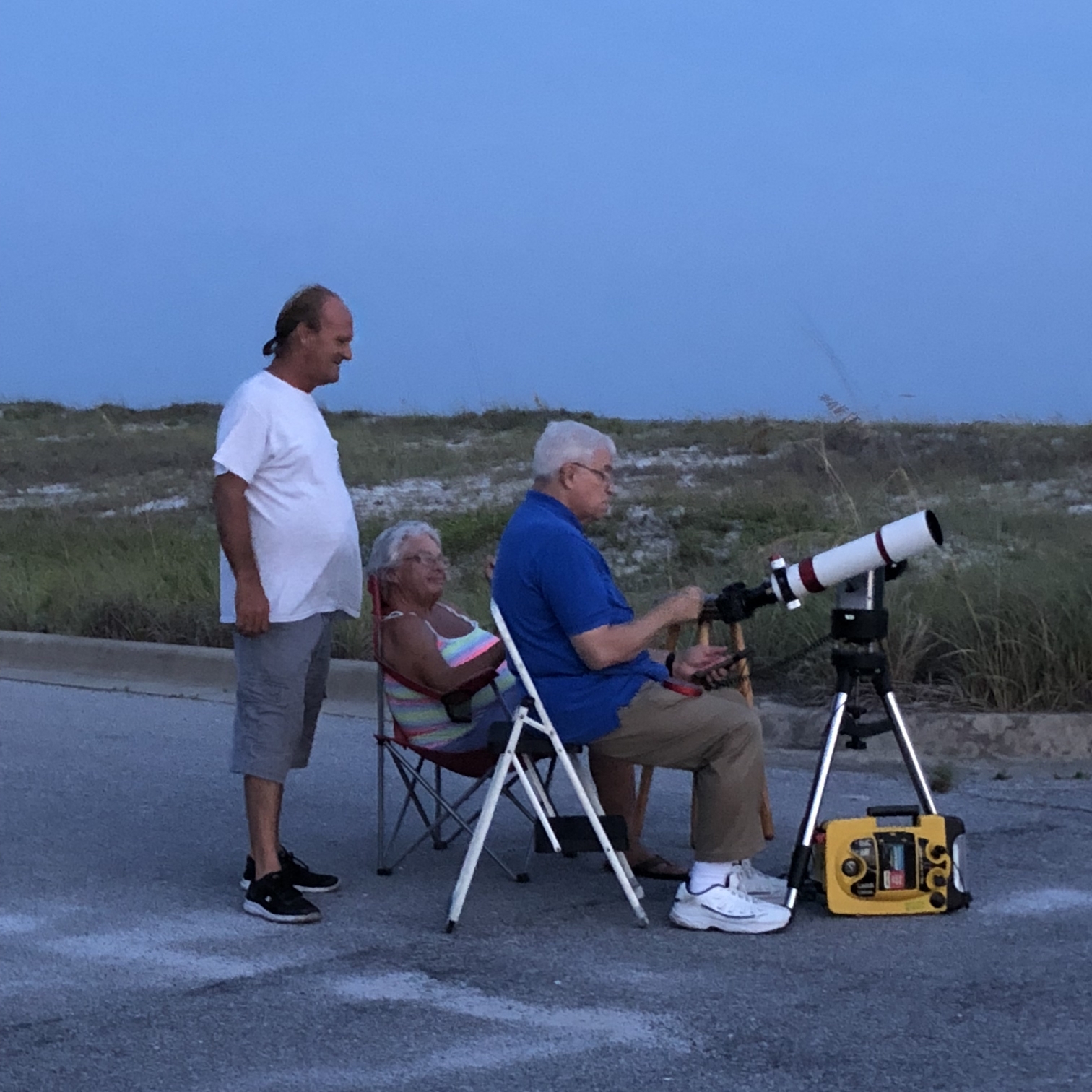
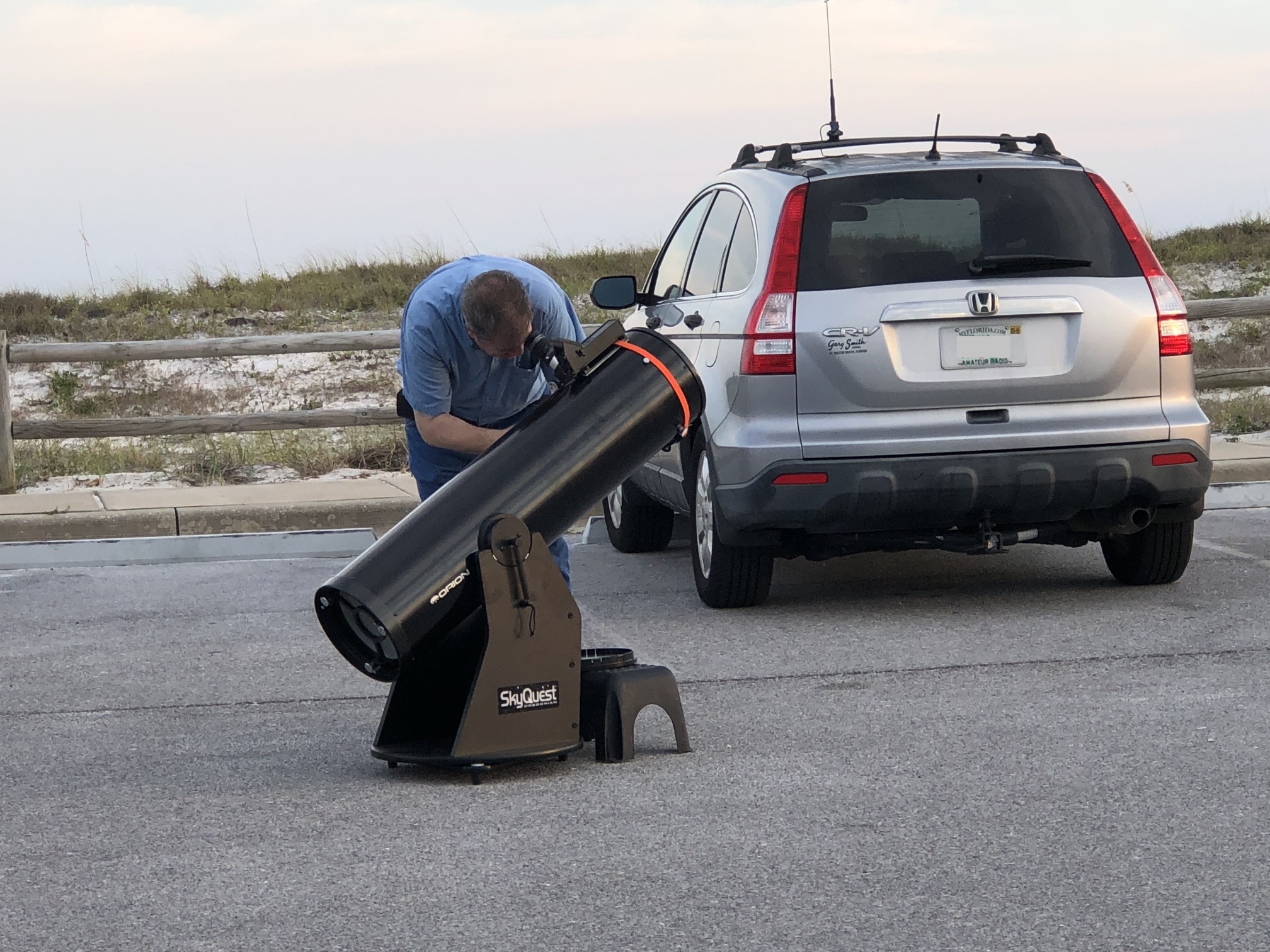
Several members of the NWFAA joined forces to observe the Perseid meteor shower on the night it was predicted to peak. We converged on the dark sky site that we share with the EAAA near Munson, FL. The skies started out with heavy clouds to the southwest but they continued moving to the southwest and cleared before sunset. What was left was a very high layer of wispy clouds.
The first objects to come into view once the Sun set were the lineup of planets strung out along the ecliptic. From west to east Venus, Jupiter, Saturn and Mars were all plainly visible. New NWFAA member John Walker had brought along his Celestron C-11 and everyone took turns viewing the planets in turn. What was nice to see was the atmosphere of Mars finally starting to clear of the planet wide dust storm. Martian surface detail was faintly visible.
The meteor count started fairly slow but noticeably picked up around 01:00 AM. The one thing that we did have plenty of were mosquitoes. The skies continued to clear as the night progressed but every once in a while a high wispy cloud would pass over.
A few of our group were keeping a count of the meteors observed. The others were there to enjoy the show. By the time we decided to pack it in (0300) the final counts were:
- Dave Halupowski (103)
- Dennis Hausch (85)
- Tom Haugh (69)
In addition to visually watching the skies, Frank and Dave set up still cameras and took extended exposures in attempts to capture some of the action. Dave was able to catch a couple.
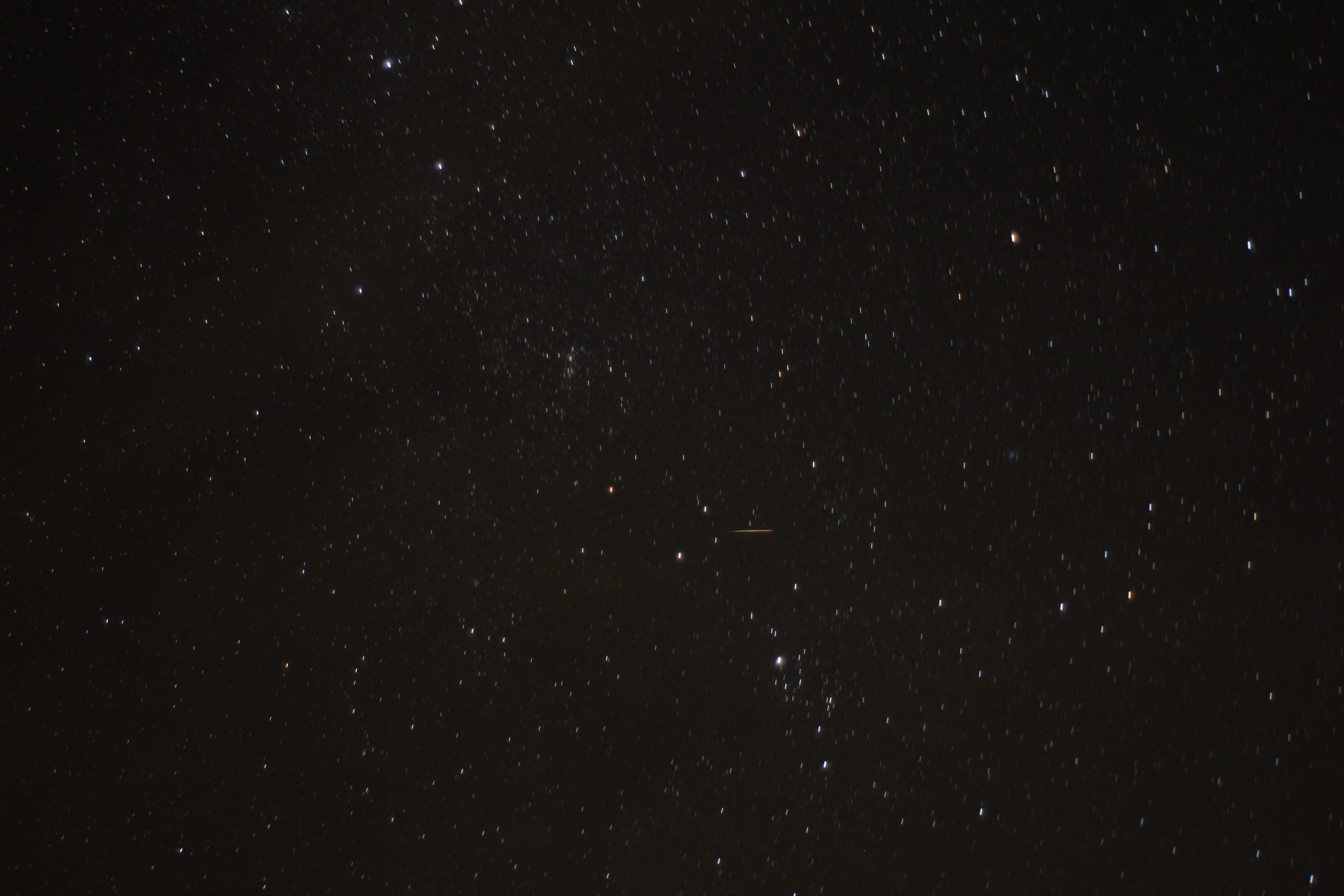
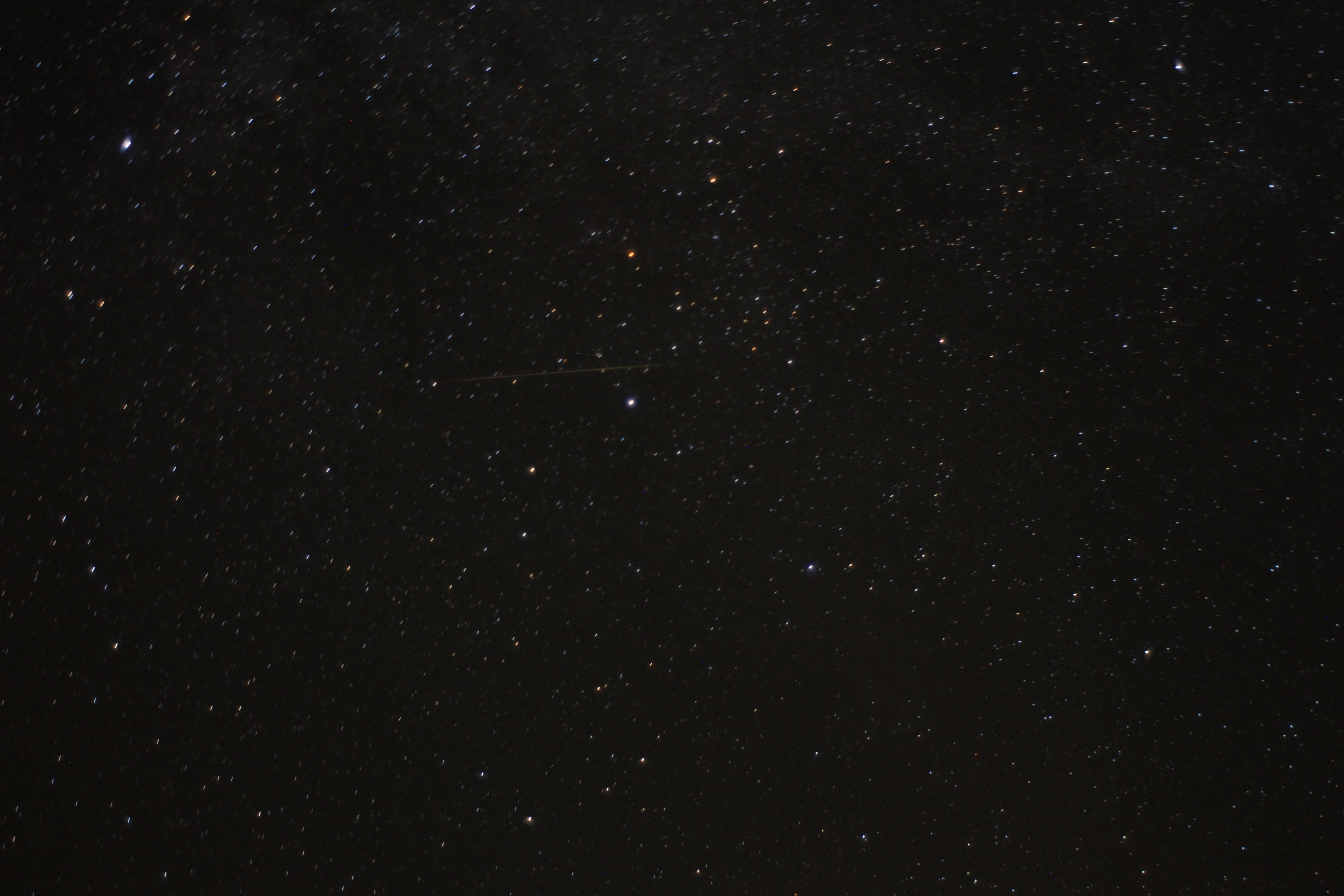
Below are copies of the meteor images with annotations showing the constellations, major stars and deep space objects identified. The image fields of view are quite large leading to the annotations being somewhat misaligned as you move away from the center of the picture.
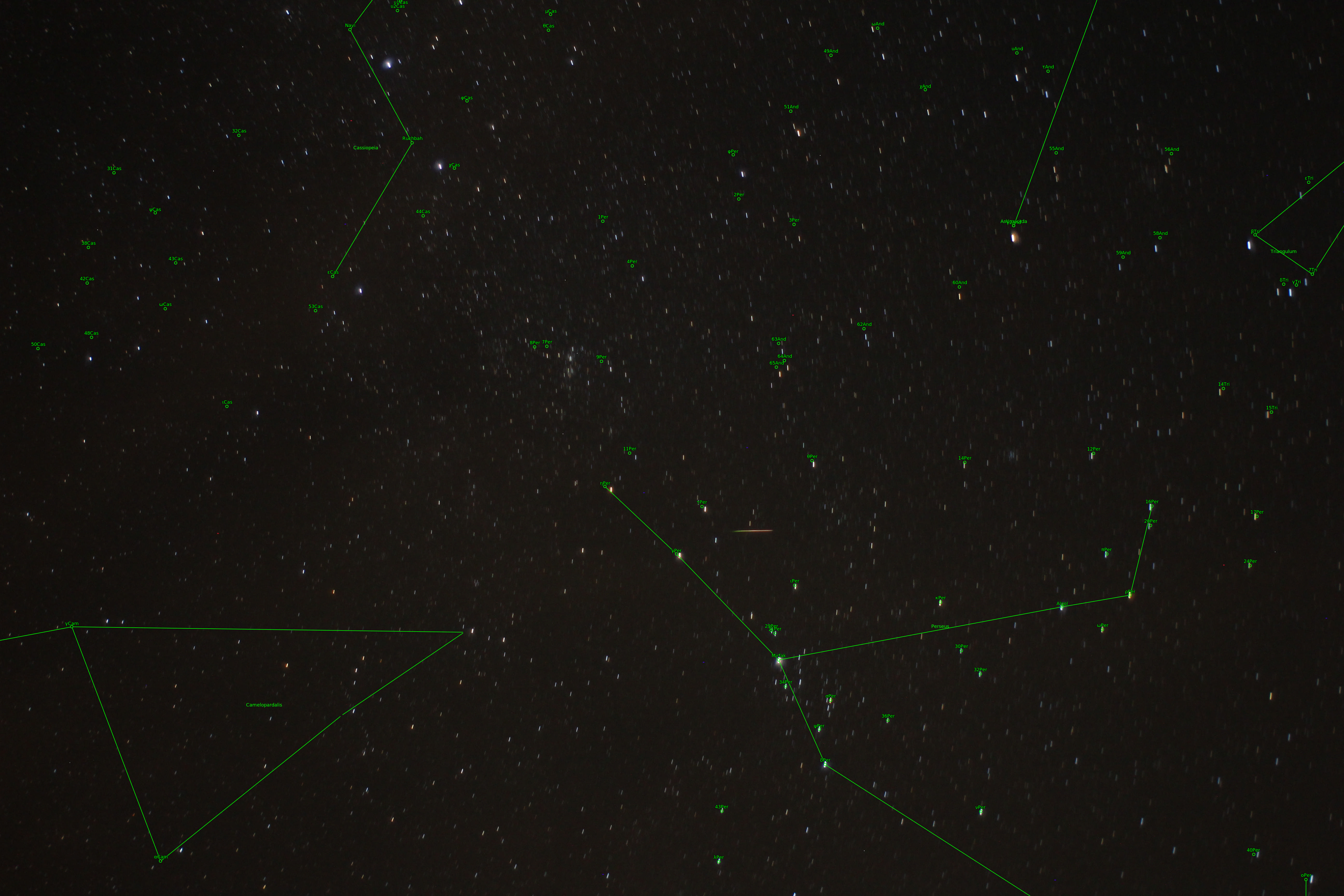
|
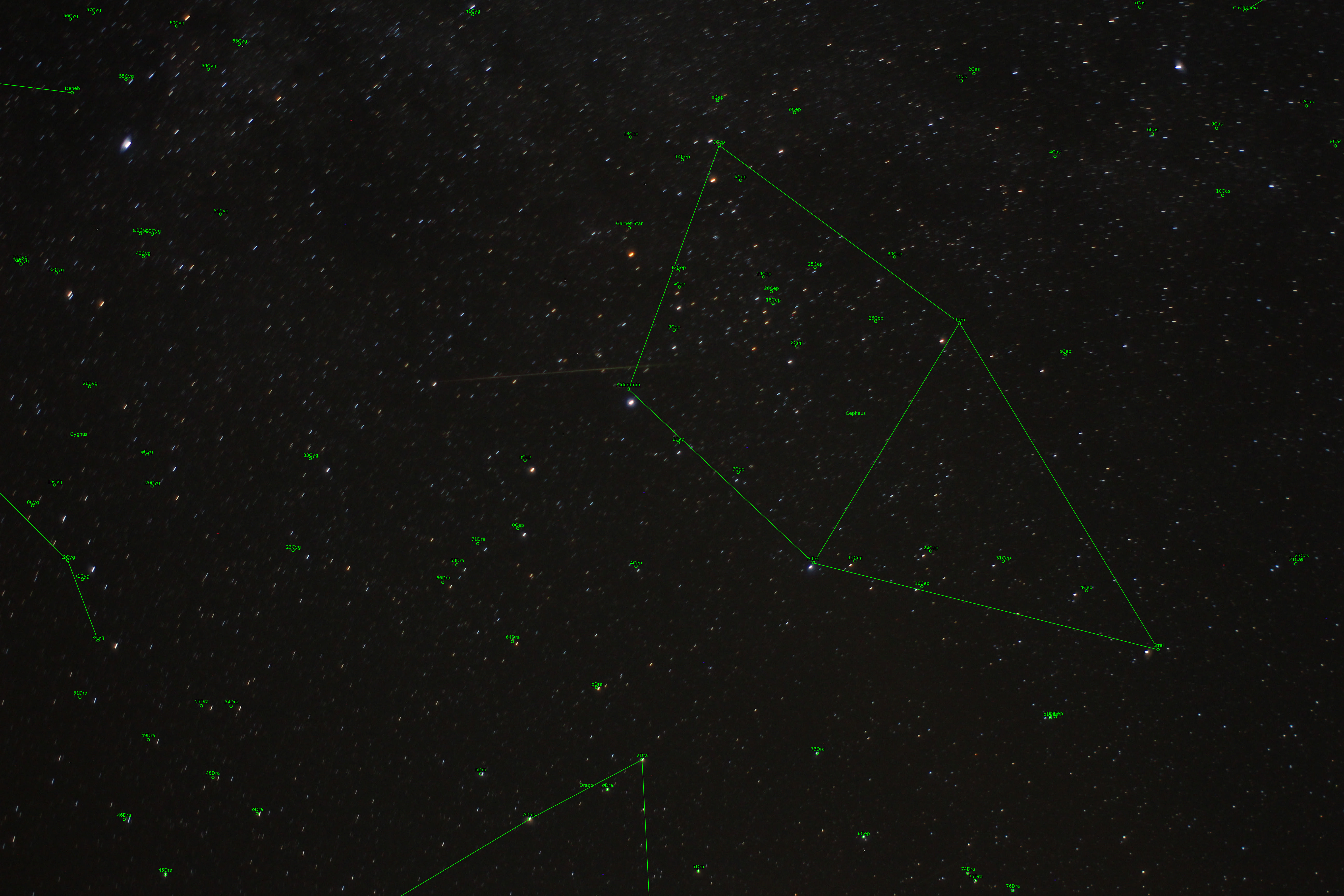
|
Tom set up an all-sky camera and took a continuous series of 10 second images. Assembled into a time-lapsed video several meteors can be seen. Unfortunately, more aircraft were viewed than meteors.