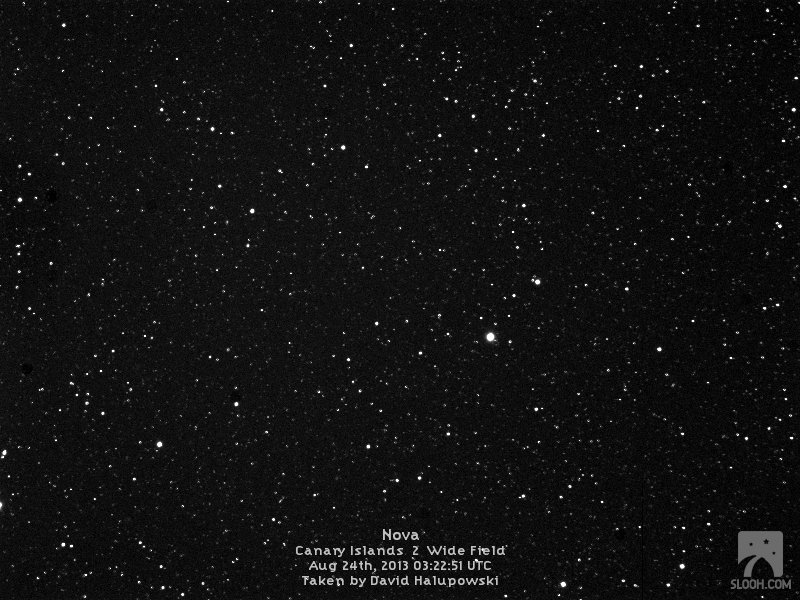
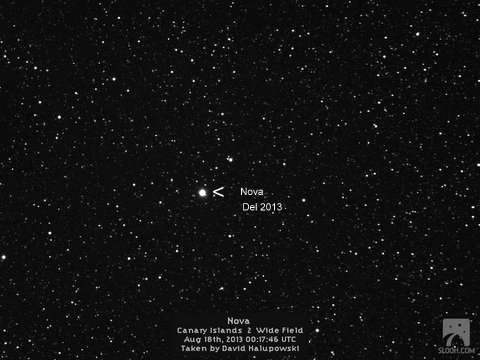
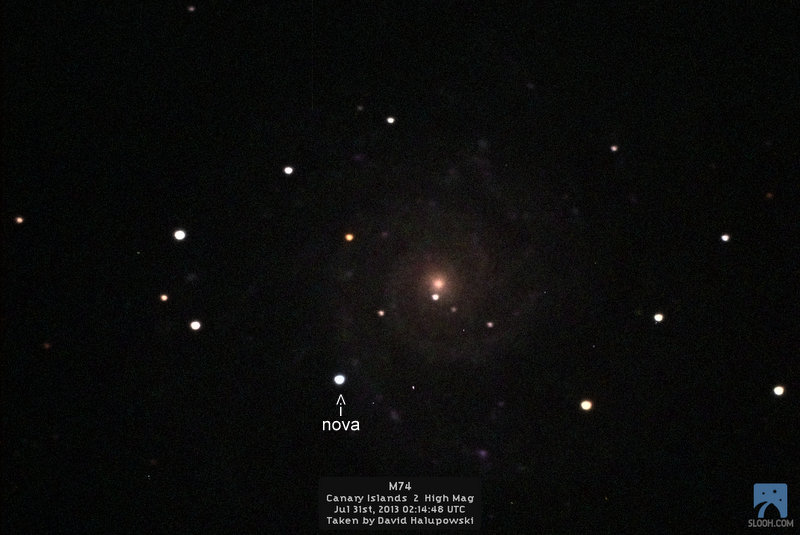
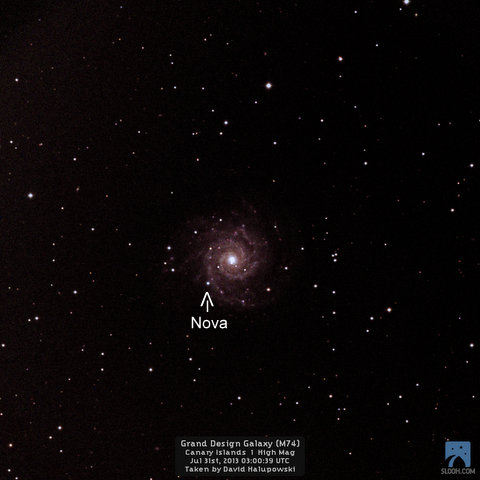
- Telescope : SLOOH (Canary Islands)
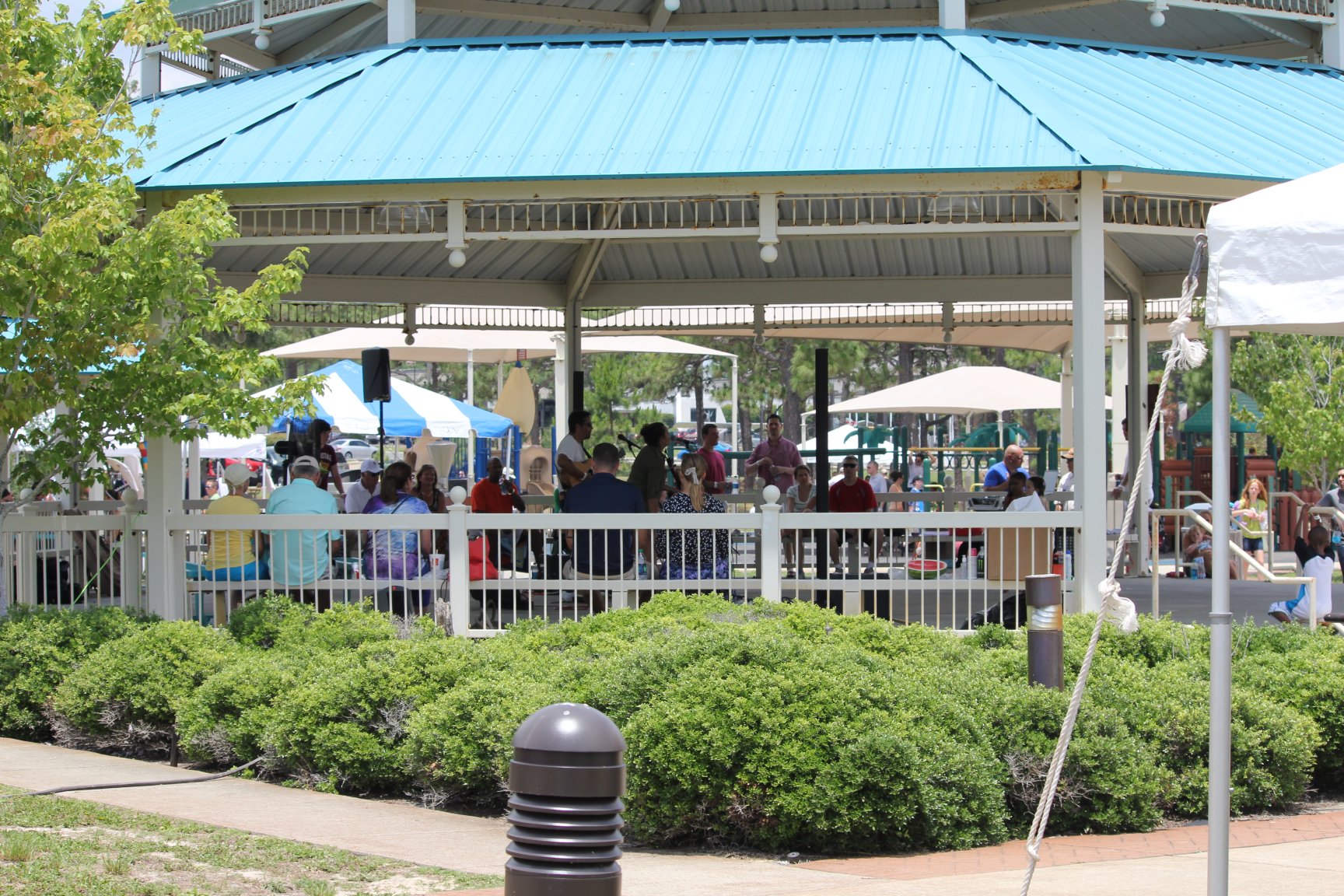
Luckily, rain did not hamper the first moon walk on July 20, 1969. However, it did put a damper on Hurlburt Field Library’s celebration of the first moon walk on the 20th of July this year. So a re-schedule was in order and on the 3rd of August we tried again. Although rain once again threatened, the library was successful this time.
Club members Dean Covey, Dennis Hausch, Chuck Lynch, Tom Haugh, Ken Leone and Bob Schritter were on hand to support the library.
During setup the thunderheads were well north of the base and did not appear to be a problem as the sun was well clear of them. But, by the time the attendees started to arrive the sun was solidly hidden. Tom gave a quick briefing on the NWFAA members, their scopes and what should have been visible if the sky was clear. So while the solar viewing was on hold, the guest observers adjourned to the soda bottle rocket launch facility. Unfortunately, the rockets were not the only things that started falling from the sky. Covers were quickly placed on the scopes.
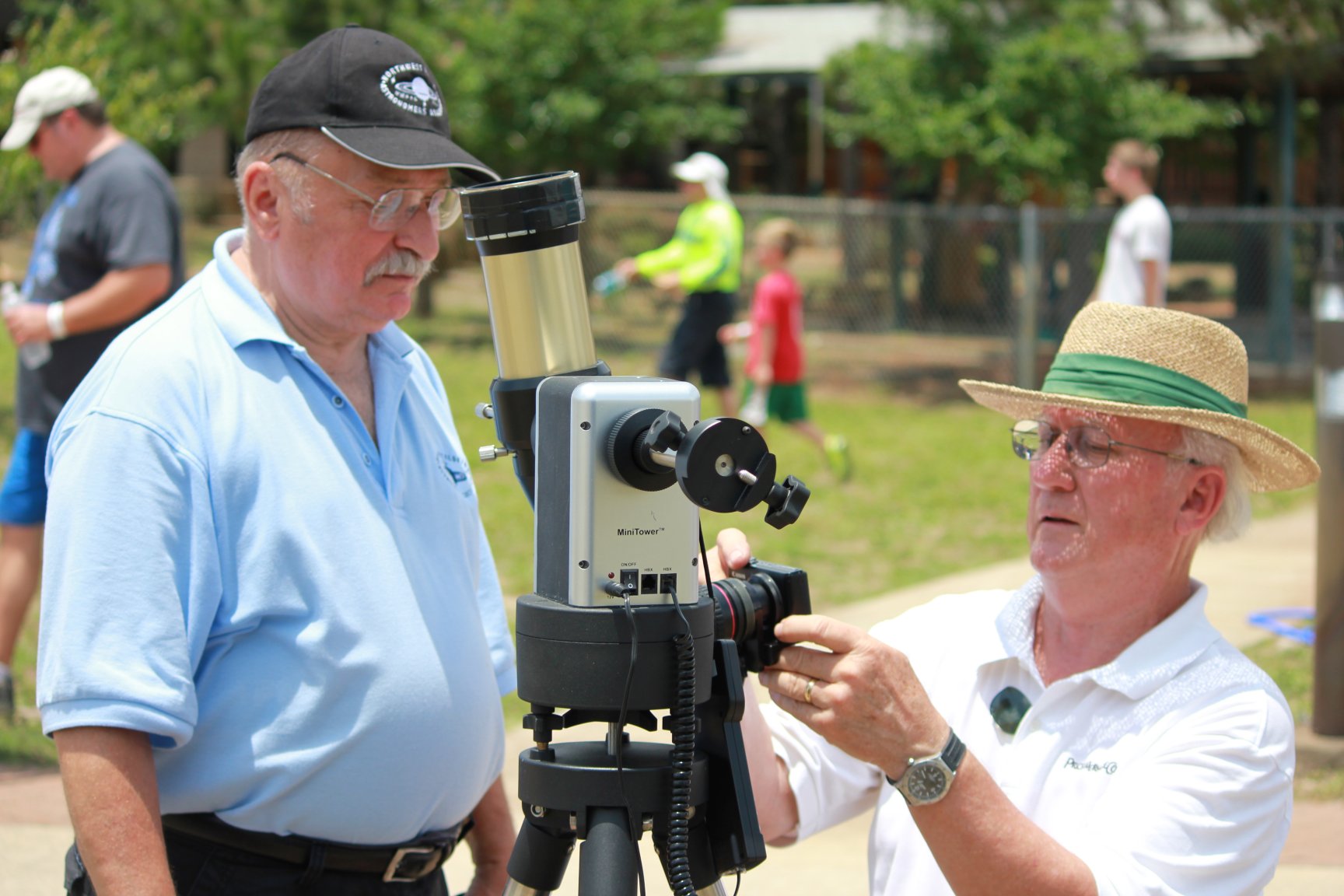
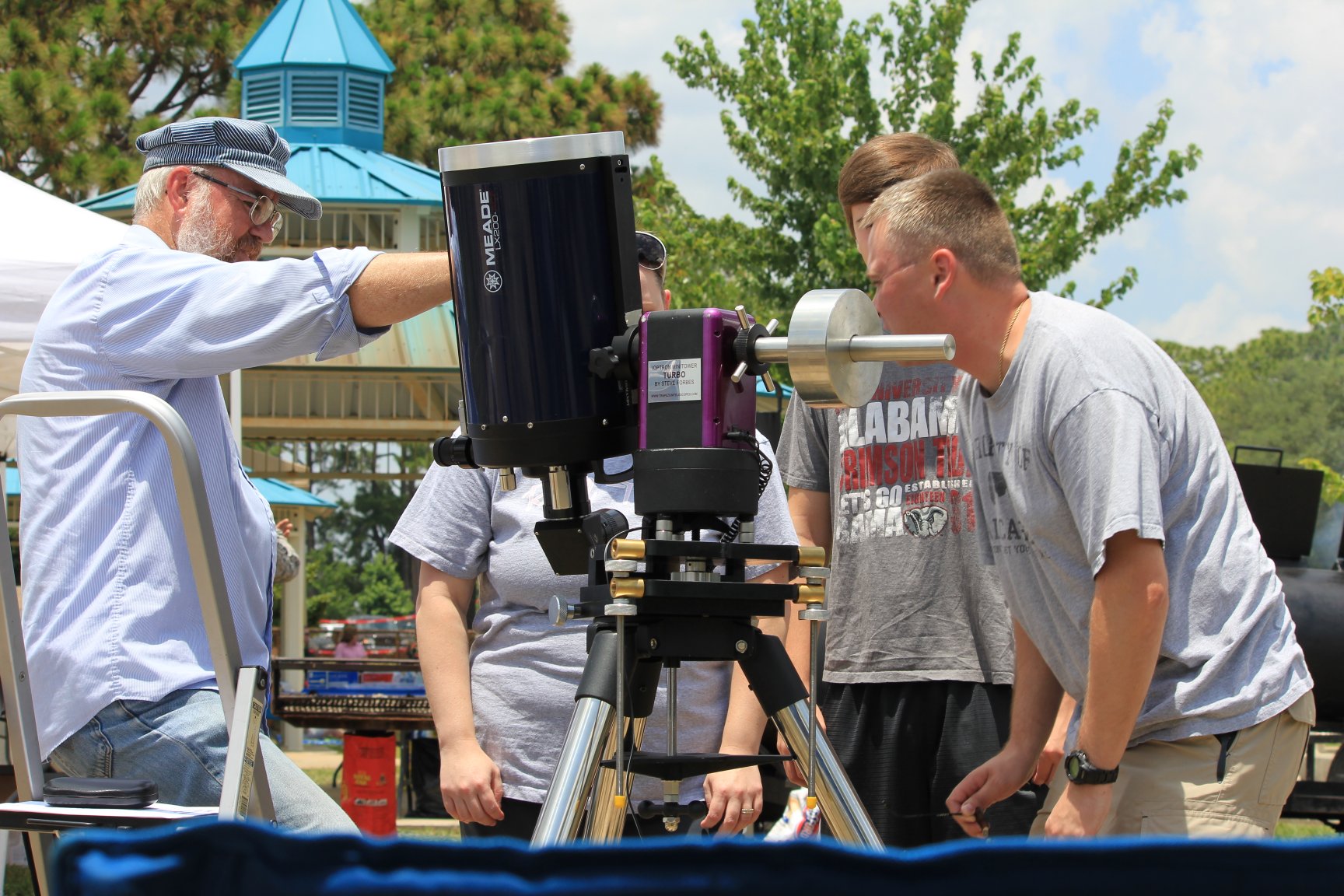
The rain did not last very long and by the time all the additional festivities were over, the clouds thinned, the covers came off and the sun was now in view. The guest observers then made the rounds and viewed the sun. Ken and Bob provided white light views, while Dean and Dennis brought H-alpha scopes. Tom debuted his L-200 spectroscope.
There were a couple of small sun-spots visible in white light and a couple of faint but large prominences were visible on the solar limb in Ha.
Thanks to our library POC Sabrina for the invitation and for the photographs.
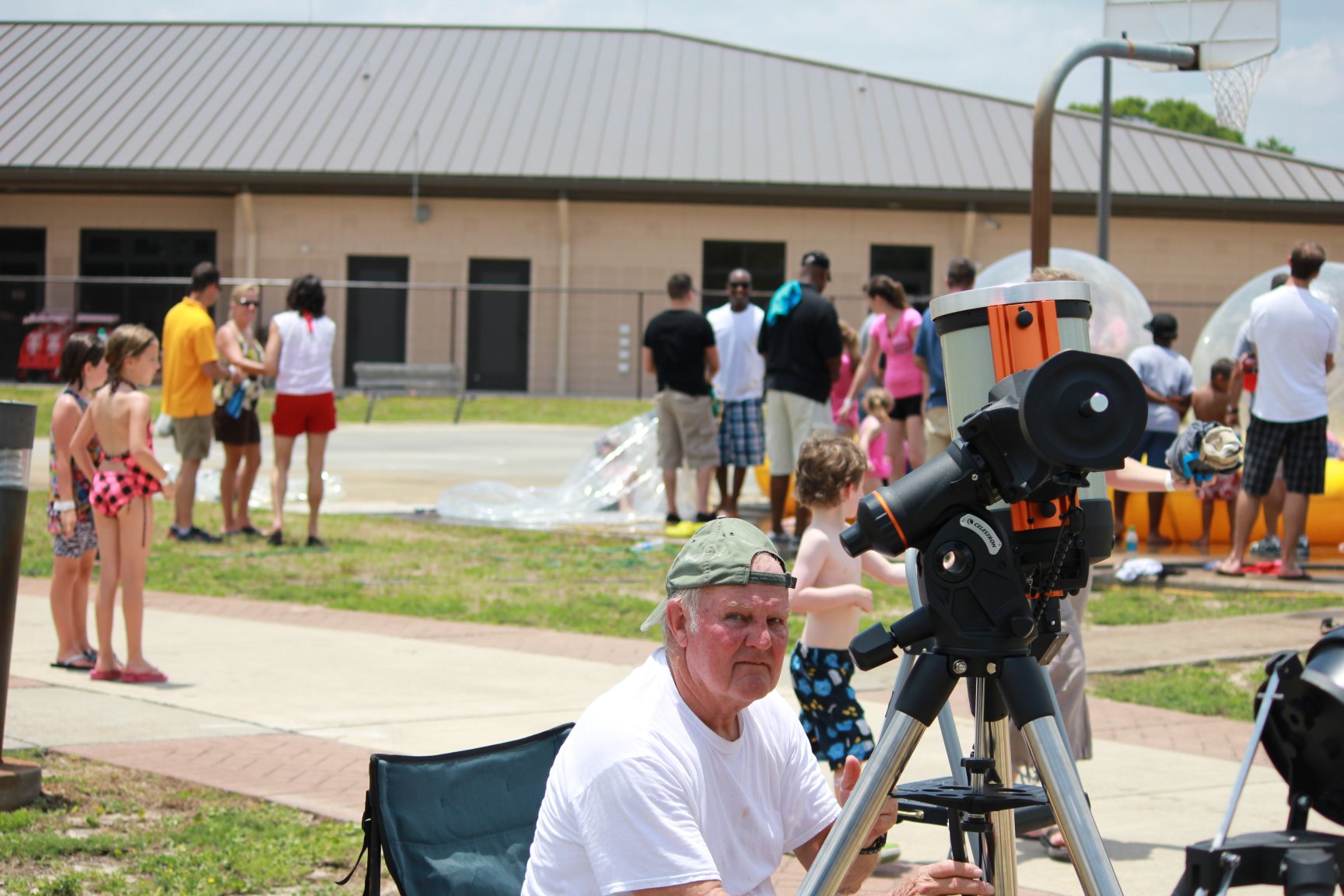
Most of the time NWFAA members do their observing at night. Even when we setup early for solar observing at our public star gazes it is usually late afternoon. So a start time of 10:00 AM was a little early for some of us. But we had plenty of telescopes pointed into the bright sky for Hurlburt Field’s annual family picnic.
The day started out clear and warm. It proceeded to get a little cloudy and hot – really hot. The clouds were quite broken so when they did intervene, the break from the sun was very welcome. Did I mention that it got hot? Luckily we were in between some of the food vendors and one of the water attractions so we had a constant stream of guest observers.
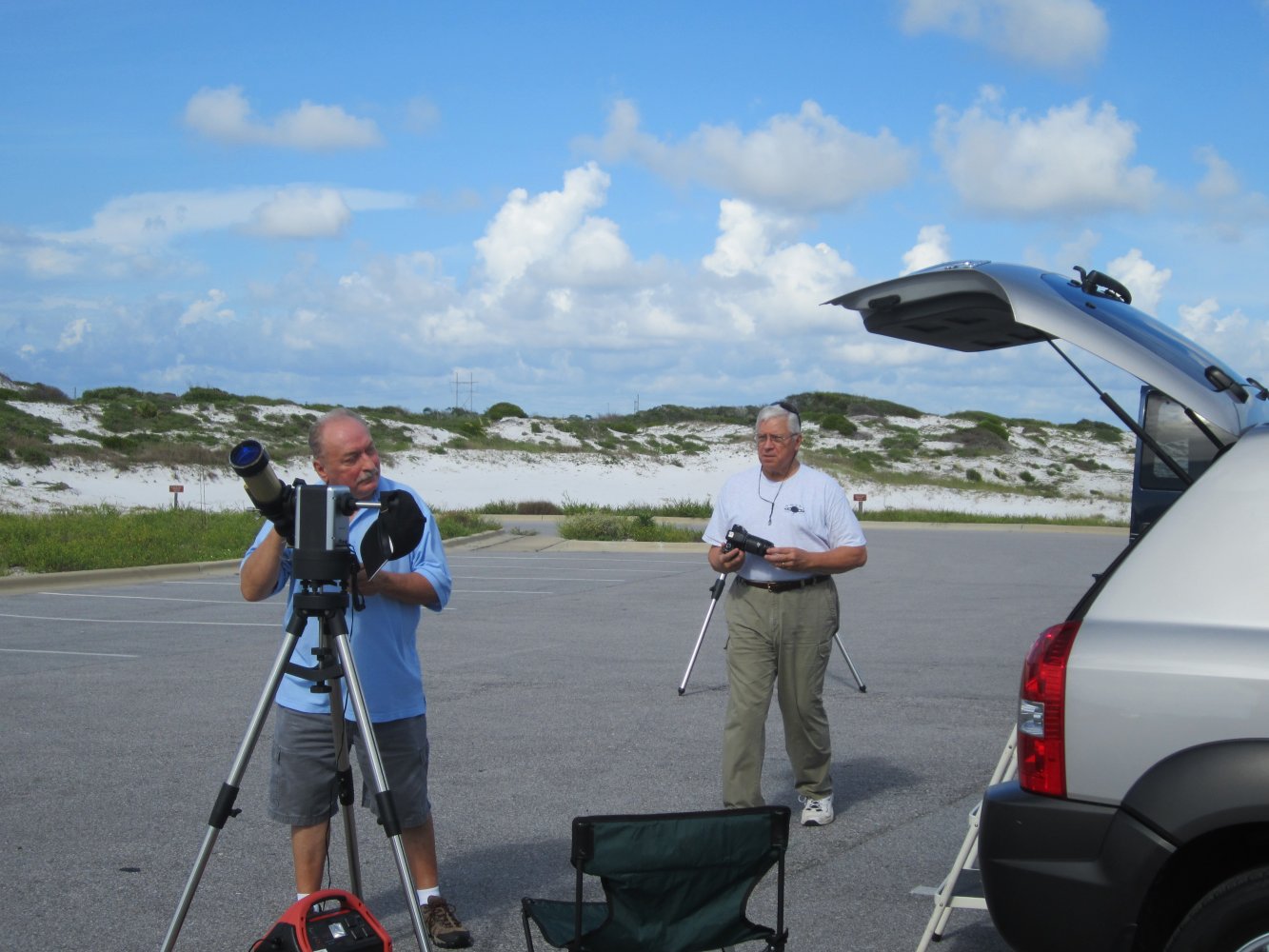
Dennis Hausch, Frank Atchison, Bob Schritter, Tom Haugh and Ken Leone provided the troops with views of the solar disk and several sunspot groups. Dennis brought his Hydrogen-Alpha scope and everyone else displayed white light views of varying magnification. Chuck Lynch rounded out our participation and took over a scope when someone needed a break. Did I mention is was hot?
This was just a standard summer family picnic: hot dogs, balloons, music, military parachutes filling the skies and all the kiddies watching to see who’s Dad would assemble his M-16 the quickest. We would like to thank the base for inviting us to share our passion for astronomy. We were honored to participate in the bases annual family picnic. Thanks to Frank for the pictures.
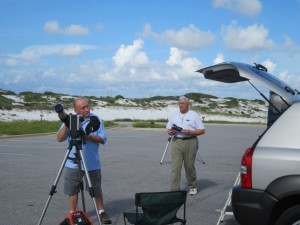
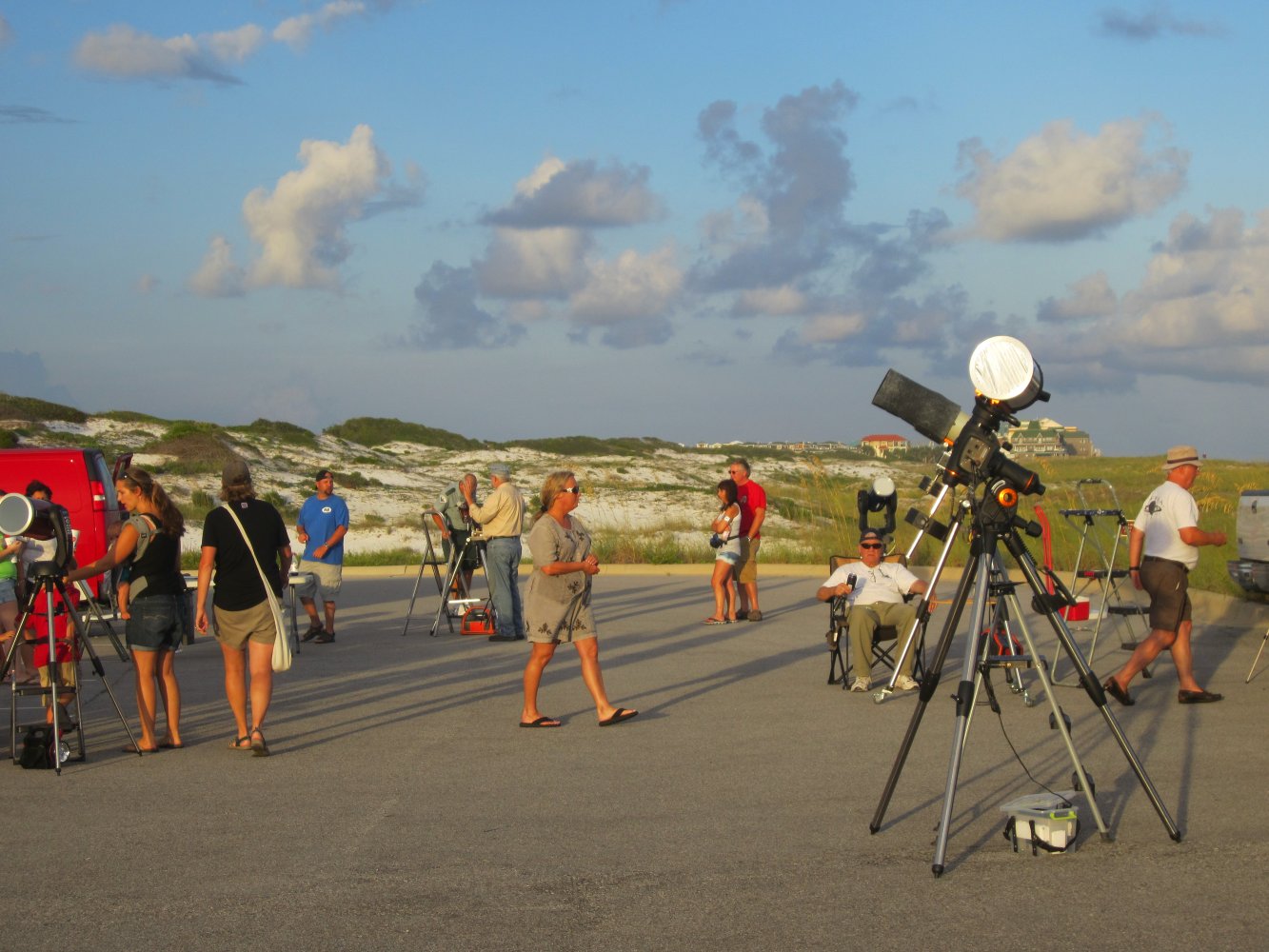
The 7th of June edition of the Henderson Beach State Park Sky View was the first to formally include solar observing. We set up telescopes three hours prior to sunset to allow the public a safe view the sun. Tom Haugh and Dennis Hausch were the first to arrive and setup with Dean Covey arriving soon after. We had a sparse but steady stream of guest observers as we viewed the Sun through ever increasing gaps in the clouds. Dennis and Tom provided white light views while Dennis and Dean offered H-Alpha views as well.
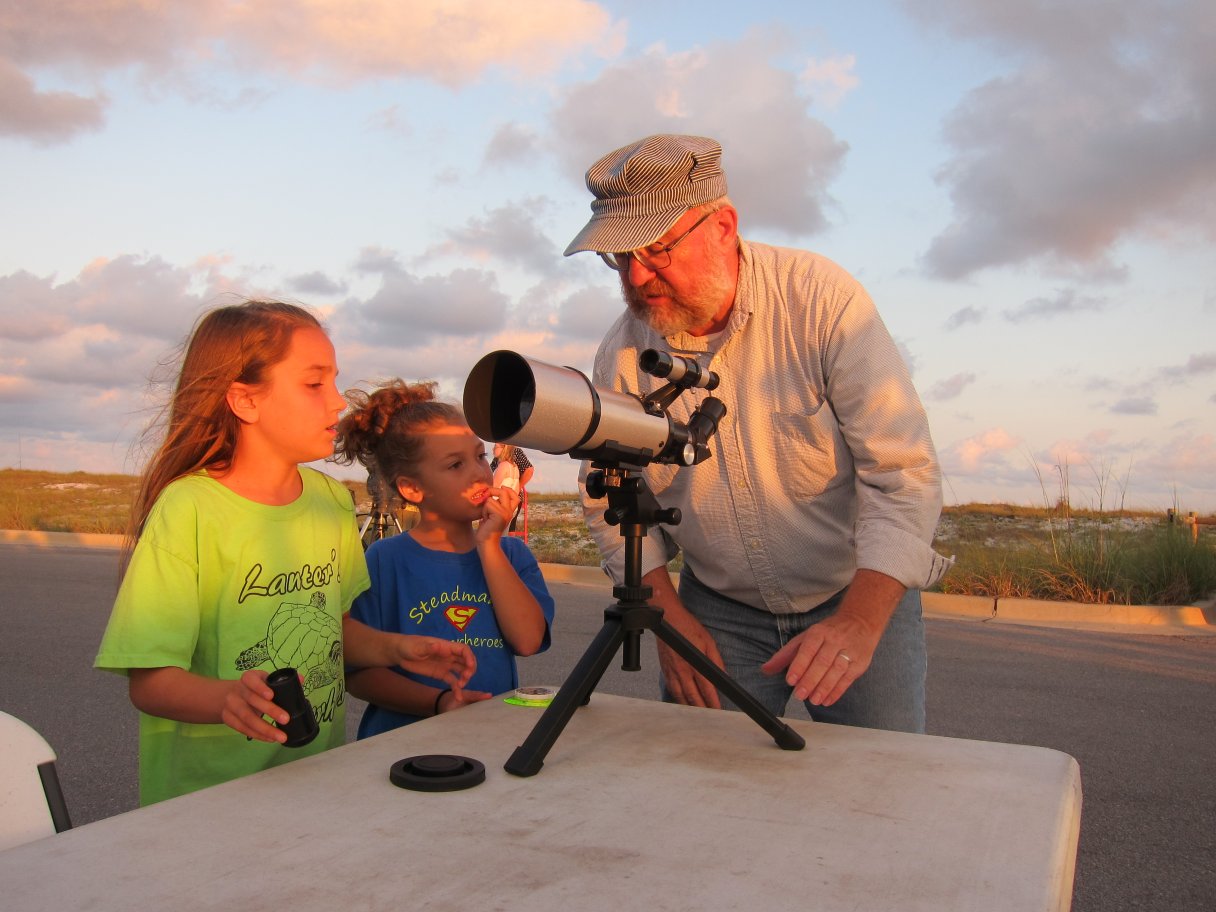
The NWFAA has always invited the public to bring their own equipment to the star gazes. We had two young astronomers take advantage of our invitation and brought along their refracting telescope. They were having problems finding what they were looking for and needed a little help. We explained the importance of aligning the finder to the telescope and helped get their alignment a bit better than it was.
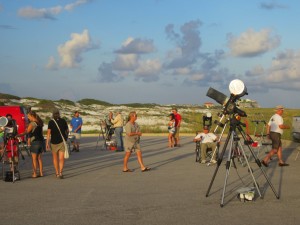
As the sun set and the sky darkened, the crowd continued to grow. Luckily, the clouds did not. They steadily diminished and by the time the sky was fully dark, there were no clouds to hamper the view. As the crowd grew so did our selection of telescopes. Frank Atchison, Ken Leone, Tony Russo, Bob Schritter and Stephen Forbes each added their telescopes to the sky pointing arsenal.
The evening viewing started with Venus and Mercury high in the western twilight. This was the first time a lot of our guest observers had ever viewed Mercury with or without a telescope.
Saturn, high overhead, was a crowd favorite (as usual). Antares was visible low in the south, Arcturus high overhead, and Vega was following in the east. M 13 was able to compete with the gulf haze although the Ring Nebula was just barely visible. The guests were treated to several bright Messier objects as well as the Alcor/Mizar pair in Ursa Major.
As is usual for Henderson Beach we had more than 100 guest observers. Once again, the NWFAA would like to thank the rangers of Henderson Beach State Park for hosting the sky view and allowing us to share our passion of the night sky with their guests.
Once again, Camp Kolomoki provided clear and dark skies for the Girl Scouts. The site is a club favorite, so we had plenty of scopes set up for the guest observers to take advantage of the view. Tom Haugh handed out sky charts and gave a quick safety briefing prior to sunset. The first group of girls then adjourned to have supper. The second group of scouts then arrived and received their charts and briefing. Meanwhile Frank Atchison and Dennis Hausch set up and aligned their personal scopes. Professor Russo brought NWFSC’s 12″ Dobsonian.
Just as the sun set, dinner arrived for the astronomers. They were treated to a baked chicken dish that was excellent. Just as we finished dinner the first set of girls rejoined the throng.
Since Alberio was not visible Dennis zeroed in on Iota Cancri as an example of disparate stellar colors. By then Tom had finished alignment of his scope and started the guest observers at his telescope with M 41. Other objects presented included Jupiter (just before it set into the western trees), Saturn, Alcor and Mizar with a host of Messier objects rounding out the itinerary. Frank had a constant line of scouts at his Meade 8″ SCT. In between objects Professor Russo provided briefings on several constellations configuration and historical lore.
One by one the guest observers adjourned to their camps and we wrapped up the evening with another successful Camp Kolomoki star gaze.
This was our first participation in the Choctawhatcee Estuary Family Festival. The event was held in Rocky Bayou State Park. For those of you who have never visited it you are missing a great little park. It has a lot of trees….a lot of trees. But, during a recon visit several weeks ago we were able to find an area with a view of the sky free of the trees.
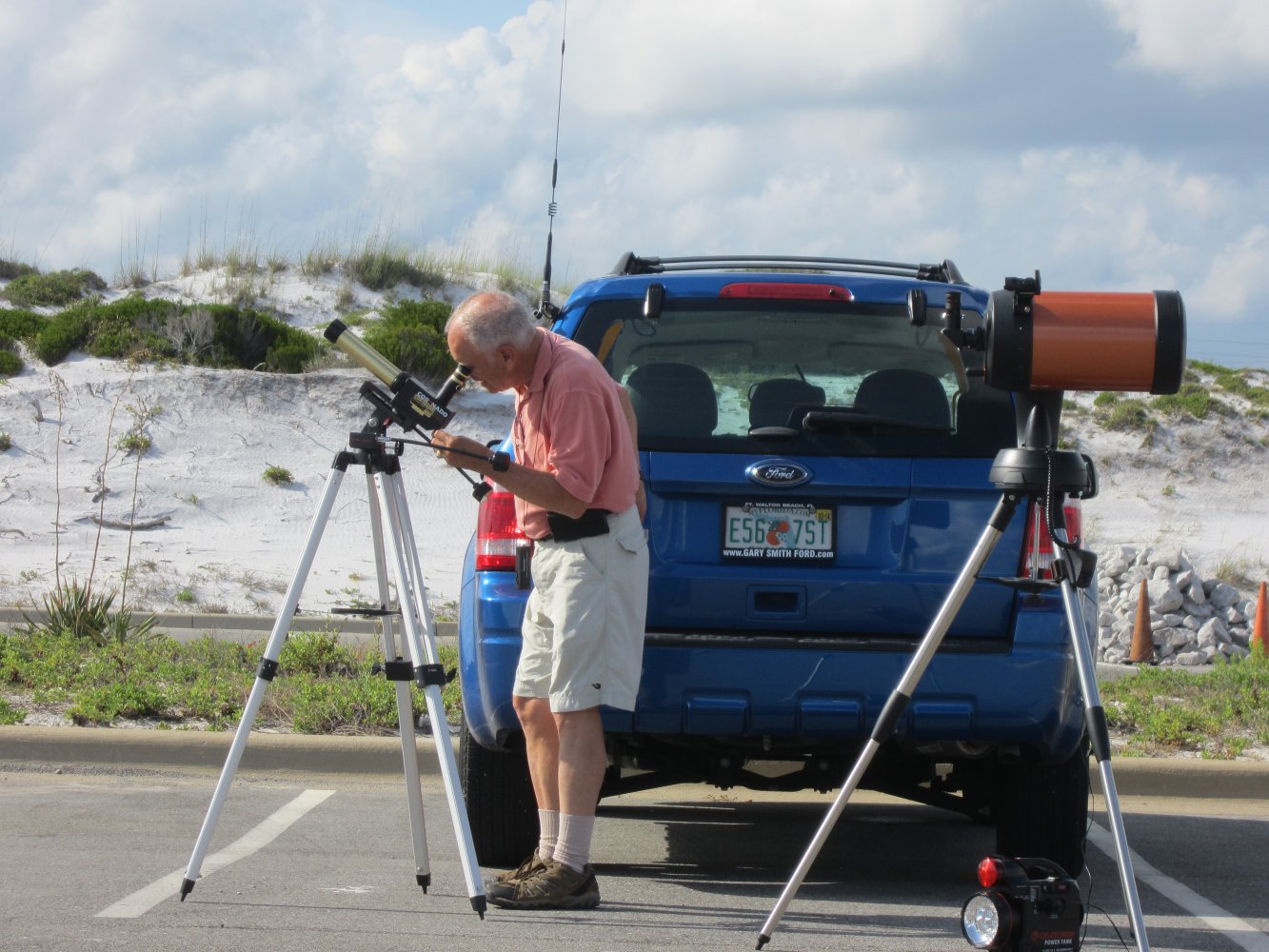
We arrived as early as the park would let us in and setup the pop-up for shade and started setting up telescopes for a day of solar viewing. Frank Atchison, Bob Schritter and Tom Haugh set up scopes with white light filters, while Dave Halupowski and Dennis Hausch tag teamed Dennis’ H-alpha scope. The sky was solid clear and the weather was perfect. There were a couple of sunspot groups; not as prominent as the week before, but still a good view. There were also several prominences visible in the H-alpha scope.
The tree free area was just outside of the main festival area and in the direction of some of the parking so we had a steady stream of guest observers throughout the day. The event sponsors were also running a scavenger hunt of sorts and we had decided to participate. That meant the contestants came looking for us. It proved a fortuitous choice, as the sun ended up totally blocked from view; it just wasn’t the trees.
About 11:00 some clouds were visible to the west and by 12:00 the sky was overcast. But the attendees kept coming to get their scavenger card stamped. We met a lot of new people, handed out every one of our club flyers, made a bunch of new friends and met some possible new members.
We would like to thank the Department of Environmental Protections Fred Gannon Rocky Bayou State Park, the Friends of the Emerald Coast State Parks, Inc. and the Mattie M. Kelly Cultural & Environmental Institute of Northwest Florida State College for inviting us to their festival. Even though the sun was blocked by clouds most of the day, we consider this a successful event and we had a lot of fun. We will be looking forward to next years festival.
This year the spring National Astronomy Day coincided with Walton County’s Earth Day celebration at Topsail Hill State Park. In 2011 we supported the Earth Day celebration with a night time star gaze. Last year we attempted a day time event but were clouded out. This year we planned both a daytime and nighttime event and were successful in both. The weather cooperated all day. The wind was a little blustery during set up, but there were no appreciable clouds.
The sun provided several sunspot groups with the largest being an S-shaped chain of small spots centrally located on the disk. Frank Atchison and Tom Haugh brought telescopes with white light filters. Chuck Lynch showed up early and provided valuable relief duty while waiting to use his tripod mounted binoculars for nighttime viewing.

Matt Spidell and Dennis Hausch brought Hydrogen Alpha tuned telescopes. The sun provided the specialized targets for these telescopes as well as several obvious prominences on the solar limb were visible. We were glad to have all those scopes as the constant flow of people kept us busy. We handed out our club flyer as well as the April edition of the Evening Sky Map.
We were honored by a visit by one of the Earth Day ambassadors. A local rescue group brought a large gopher tortoise that had been injured and nursed back to health. He seemed to know he was the guest of honor. He showed no fear of the human participants. He viewed our display for a few minutes then proceeded off to the other exhibits.
The sun was not the only object visible during the daytime event. The Walton county event also coincided with the last reunion of the surviving members of the famed Doolittle Raiders. The top secret mission’s training was held at one of the outlying fields on nearby Eglin AFB and the base and surrounding communities have always been proud of their small contribution to the effort. Five restored WWII B-25 Mitchell bombers were brought in for the reunion. The planes were visible throughout the day flying up and down the coastline.
Later in the afternoon, Ken Leone arrived to augment our night time arsenal with his 8″ SCT and Dennis swapped his Hα scope for a Dobsonian reflector. Down came the pop-up shade and the solar filters were removed as the emphasis became the night sky. As the sky darkened Jupiter was first to become visible.
With only a week between the Henderson Beach event and this one, the objects visible were all the same although the skies are slightly darker at Topsail Hill. The Great Orion Nebula, the Pleiades, M-41 (as well as other Messier objects) were all viewed and discussed. Ultimately, Saturn rose above the eastern tree line in time to cap off the day’s festivities.
The Walton County Earth Day event was a lot of fun, we talked to a lot of people, showed many people their first view of the sun and we look forward to participating again next year. We thank the “Friends of Topsail Hill Preserve State Park” for the invite and for a well run event. Thanks also go to Frank, again, for his pictures.