admin

May 172016
 

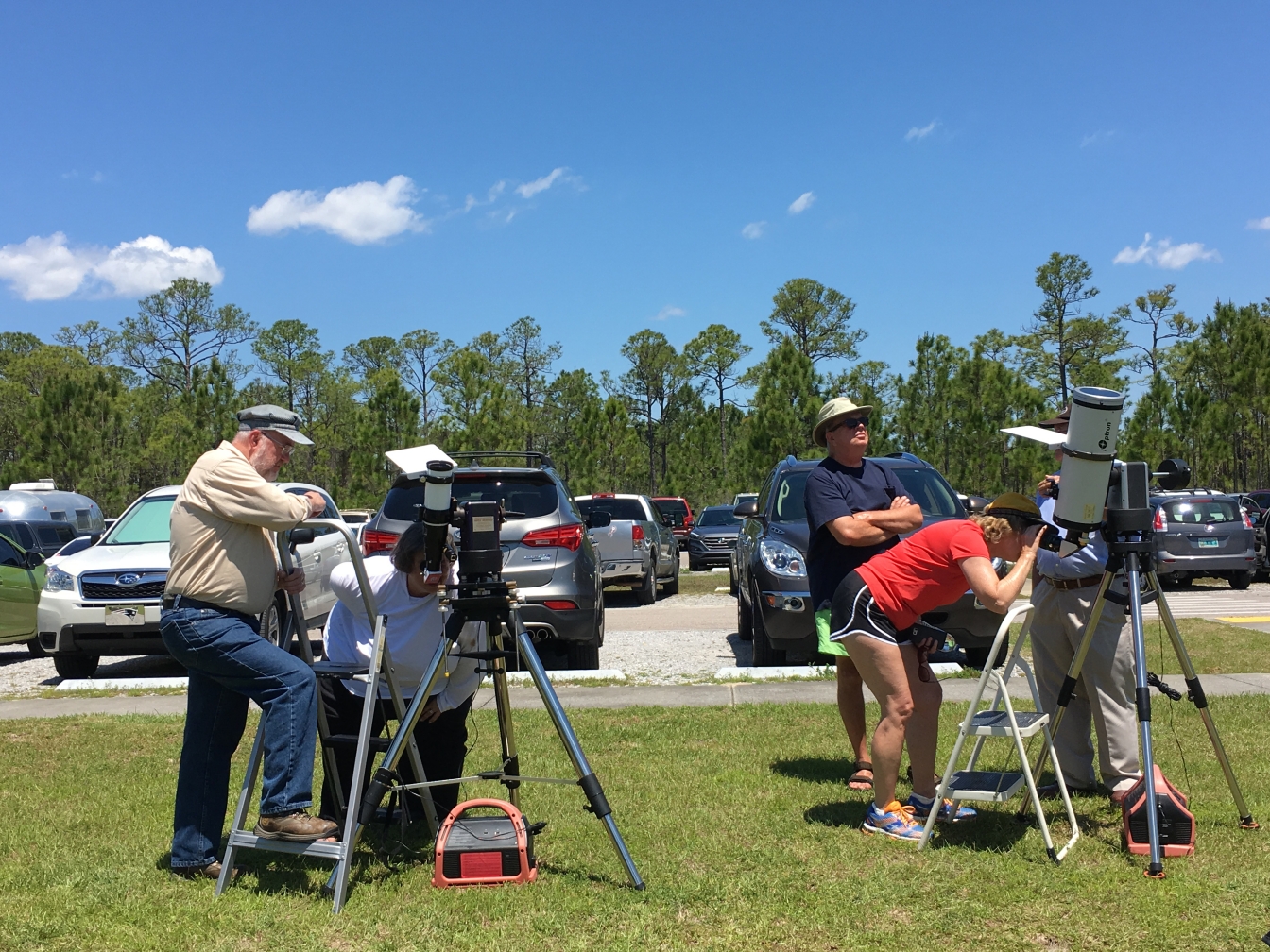
The last Mercurial transit visible on the gulf coast was in 2006. The next will be visible on November 11, 2019 and then not again for 30 years. Since we don’t know what the weather will be like in 2019 several members of the NWFAA braved a gloomy forecast, early morning clouds and set up their telescopes by 6:00 AM to make sure, if we had the chance, we didn’t miss this one. Frank Atchison, Dean Covey, Tom Haugh, Dennis Hausch, Chuck Lynch and Ken Sharpe assembled at Florida Park in Valparaiso and waited for the Sun to rise and the clouds to part.
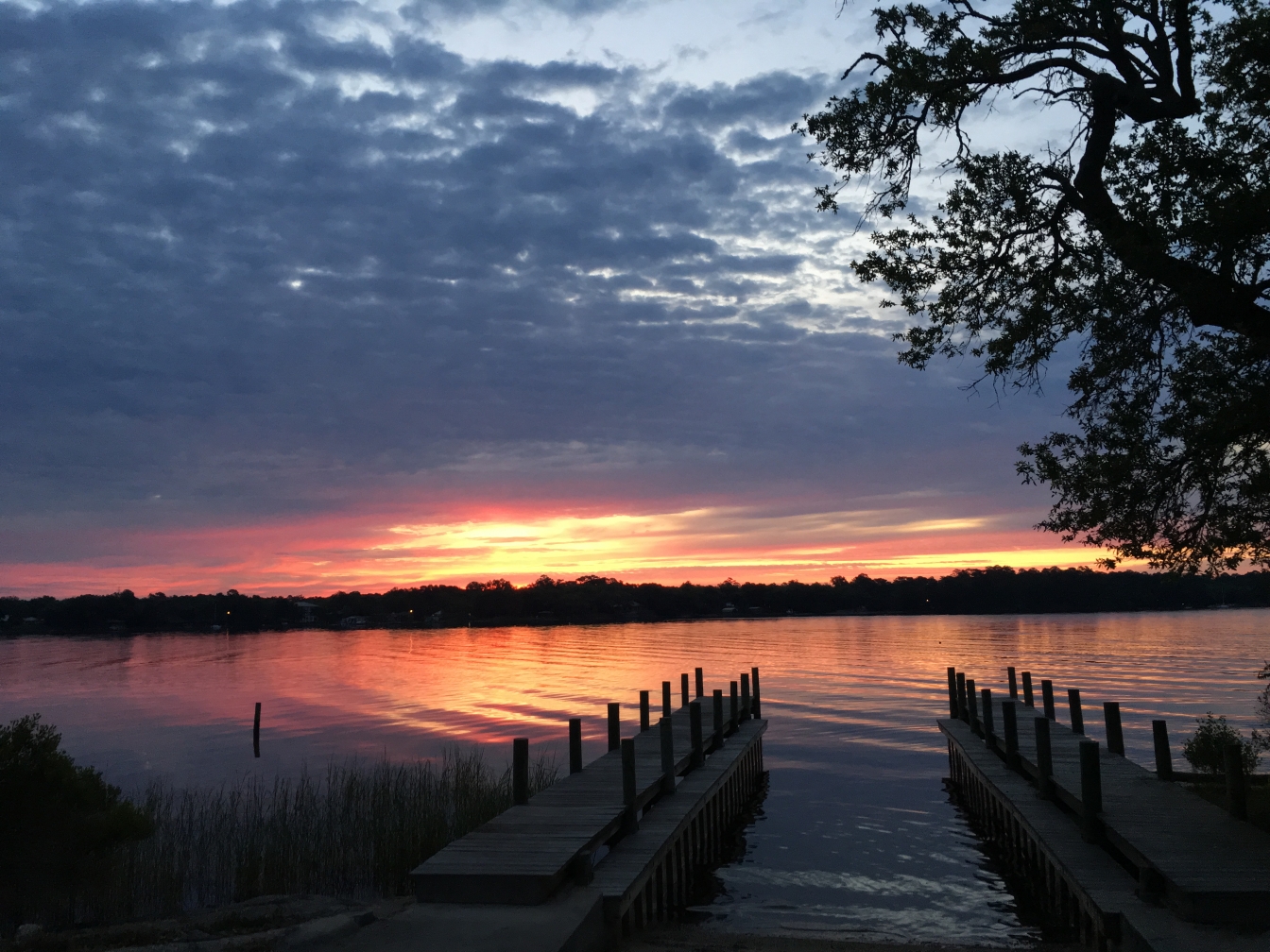
Beautiful sunrise as the transit begins.

Beautiful sunrise as the transit begins.

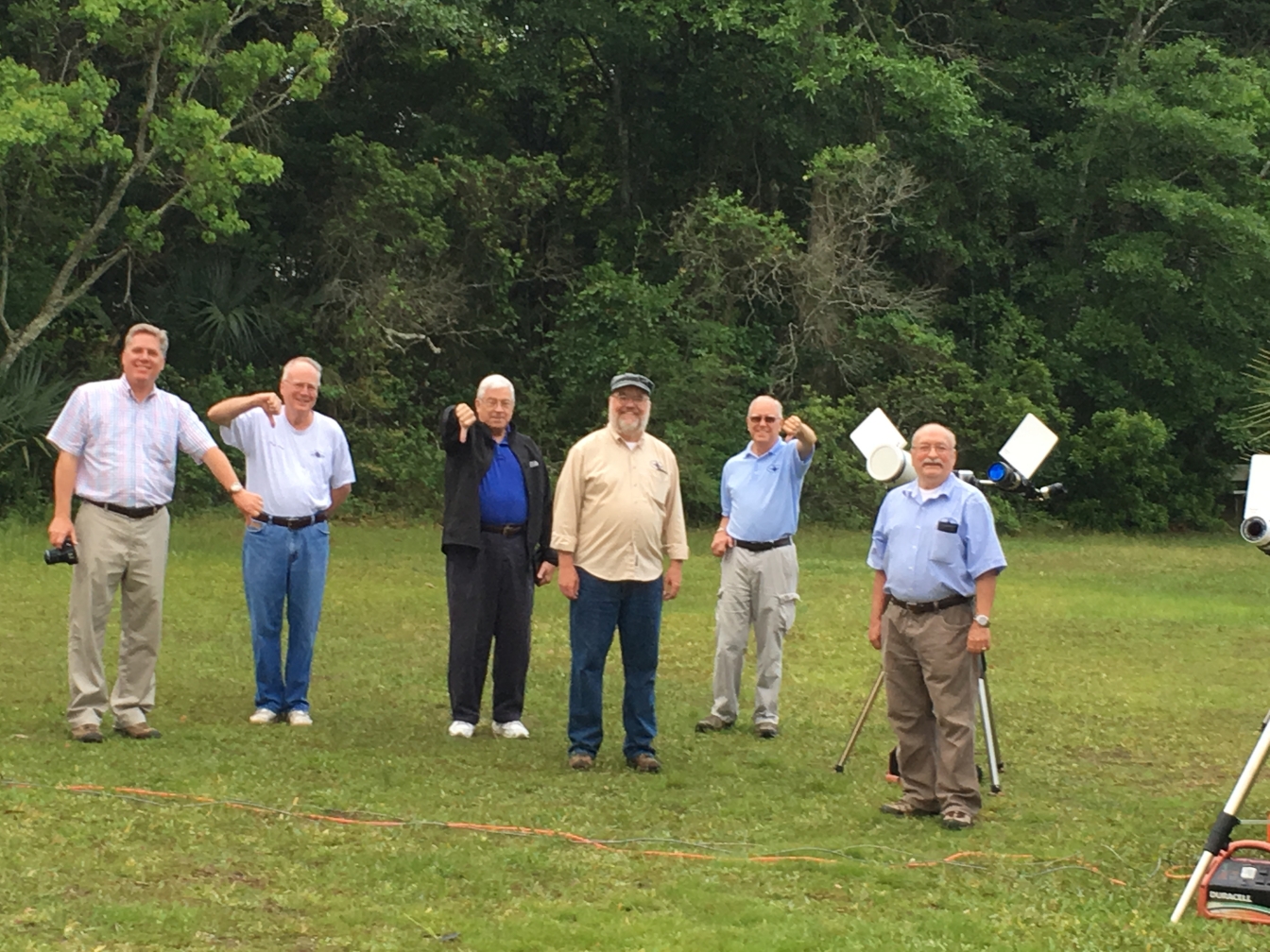
Club members indicating their displeasure with the beautiful sunrise as the transit begins.

Club members indicating their displeasure with the beautiful sunrise as the transit begins.

Except for breaks in the clouds that lasted mere seconds, we waited for awhile.
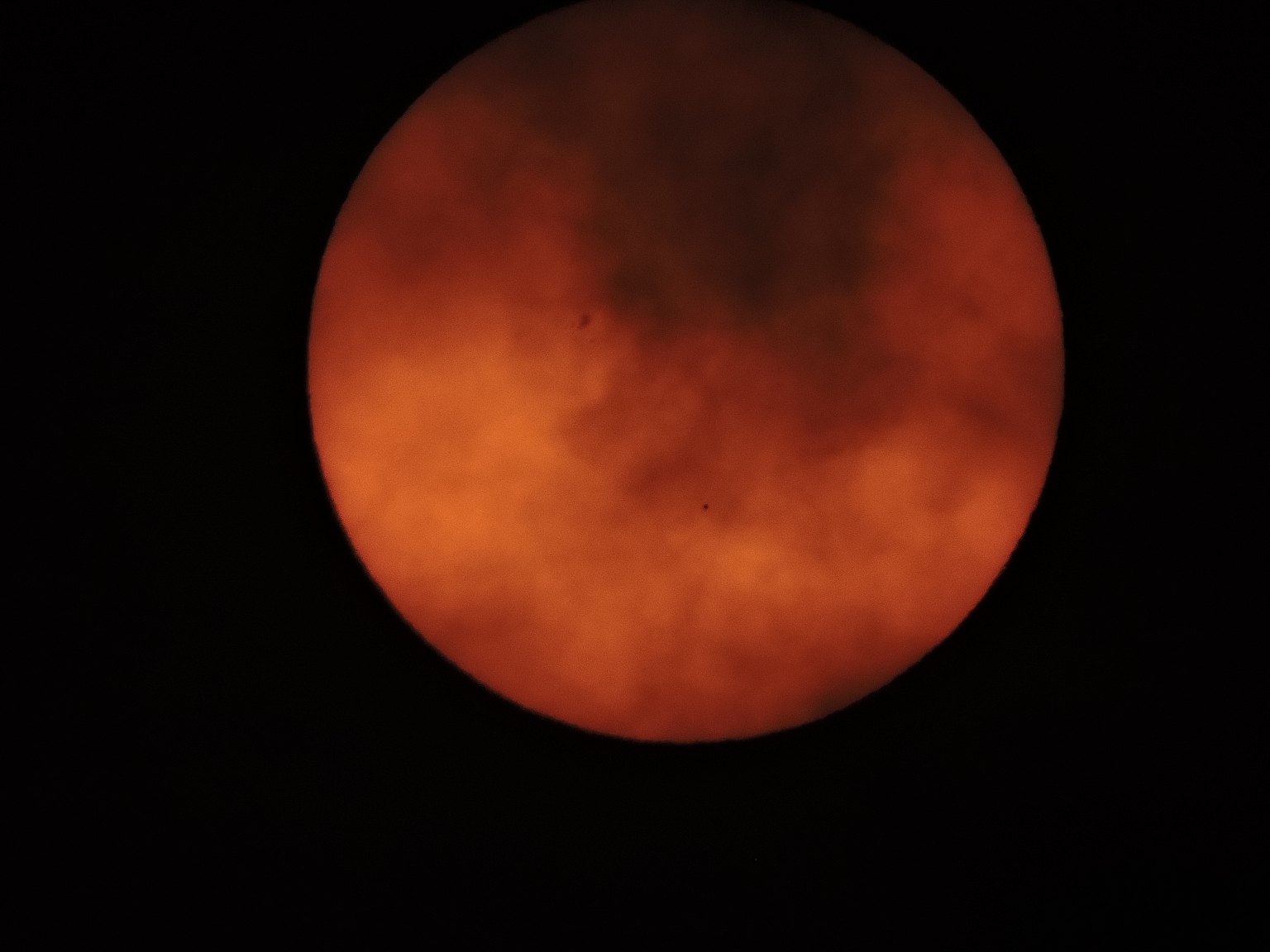
DSCN1638 3x3 Sun_Clouds 2x2

But our patience paid off and the later it got the bigger the holes were and towards mid-transit we had more clear sky than clouds. By mid-day club member Robert Sutphen made the drive from Crestview and joined the group. Overall, we had 13 additional guest observers view the transit. I think the questionable weather prevented others from viewing the event.
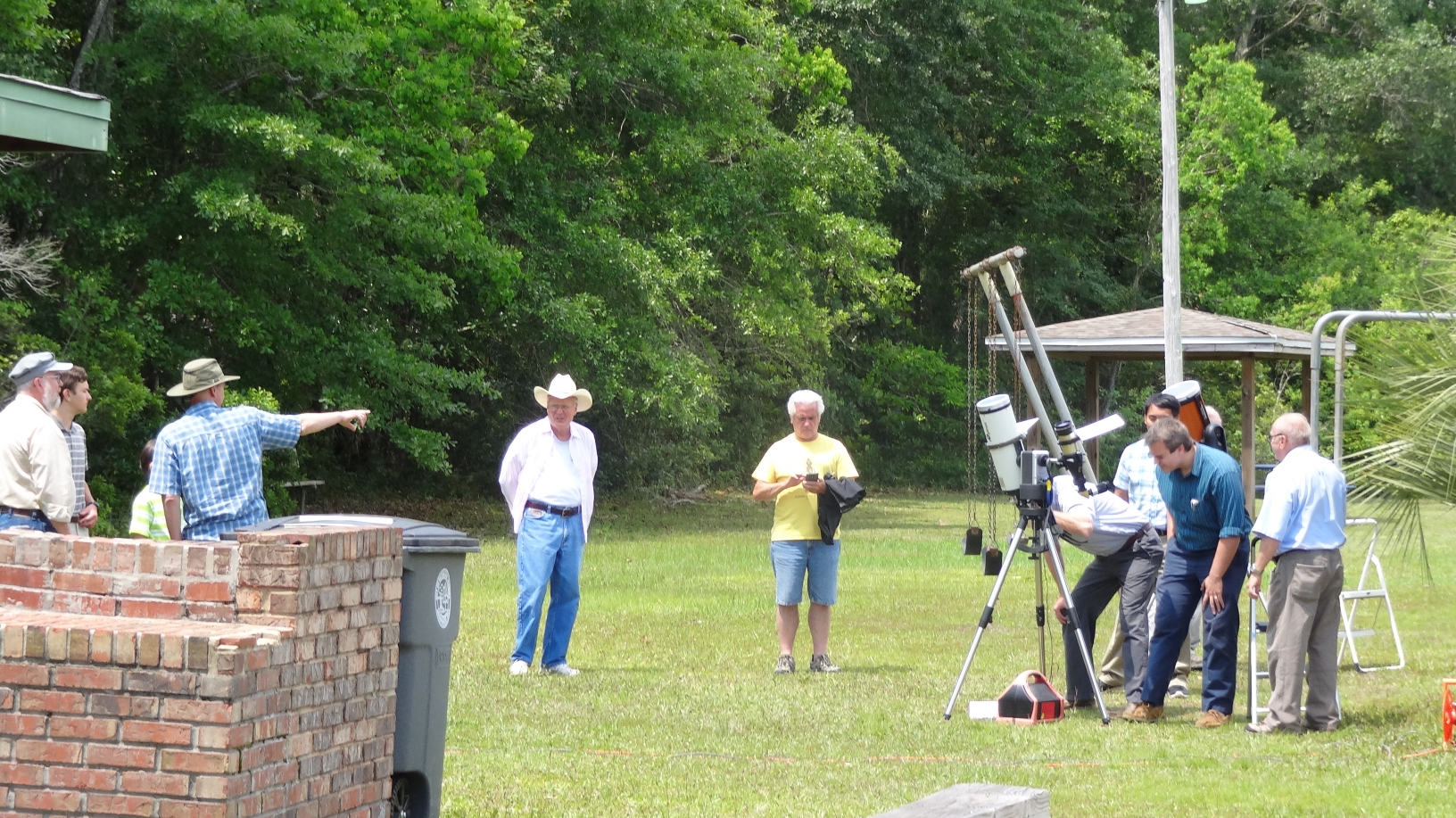
DSC02934 3x3

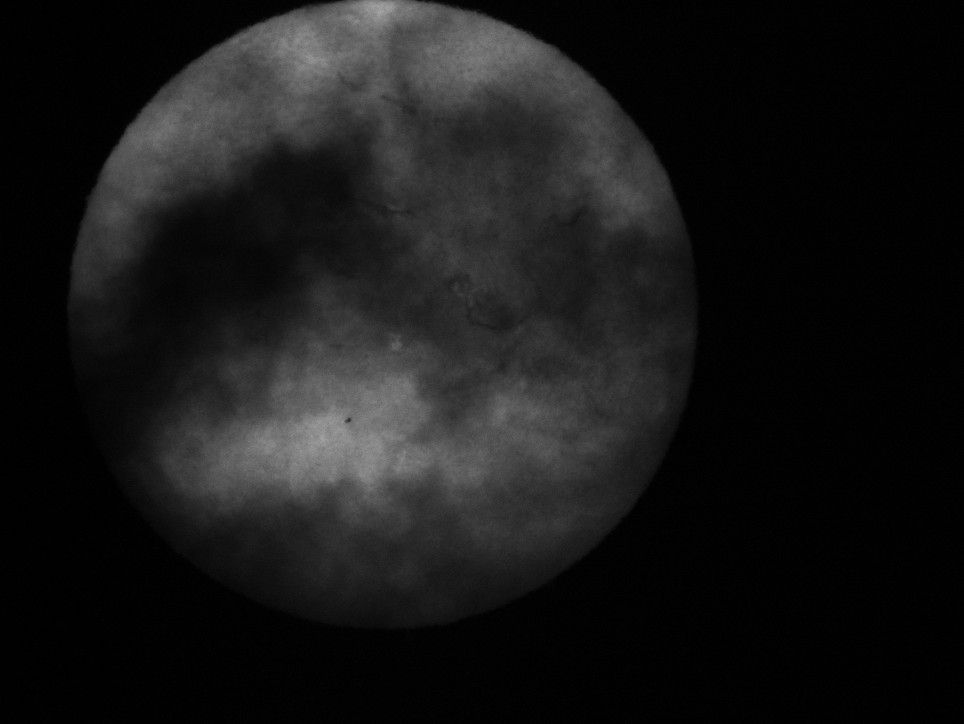
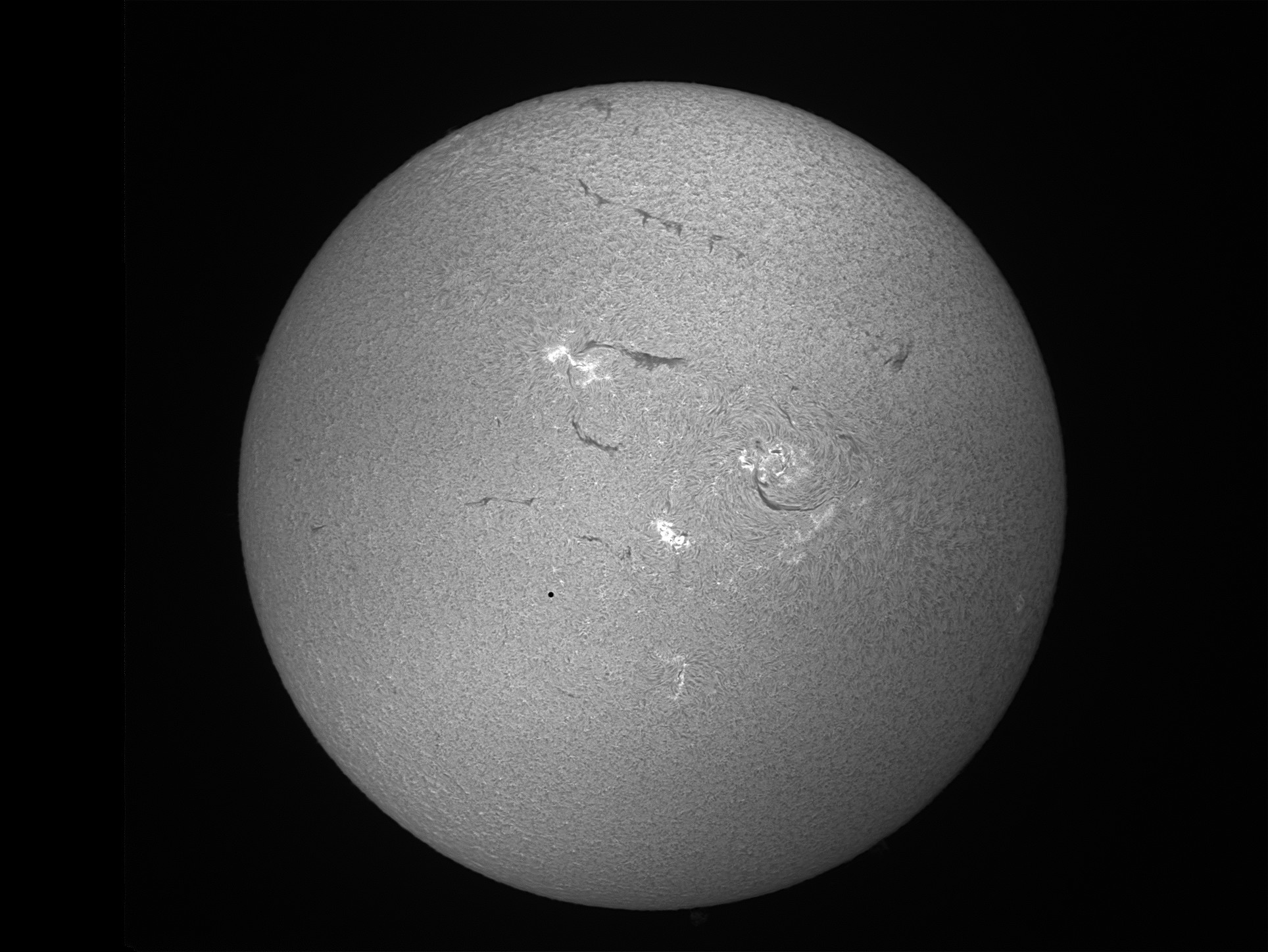
The silhouette of Mercury shared the Sun with a small sunspot group. In the images below, Mercury is the perfectly round dot on the lower half of the Sun. The sunspot is the irregular shaped blemish. Additionally, the H-Alpha image shows dark streaks (filaments) and bright areas (plages).
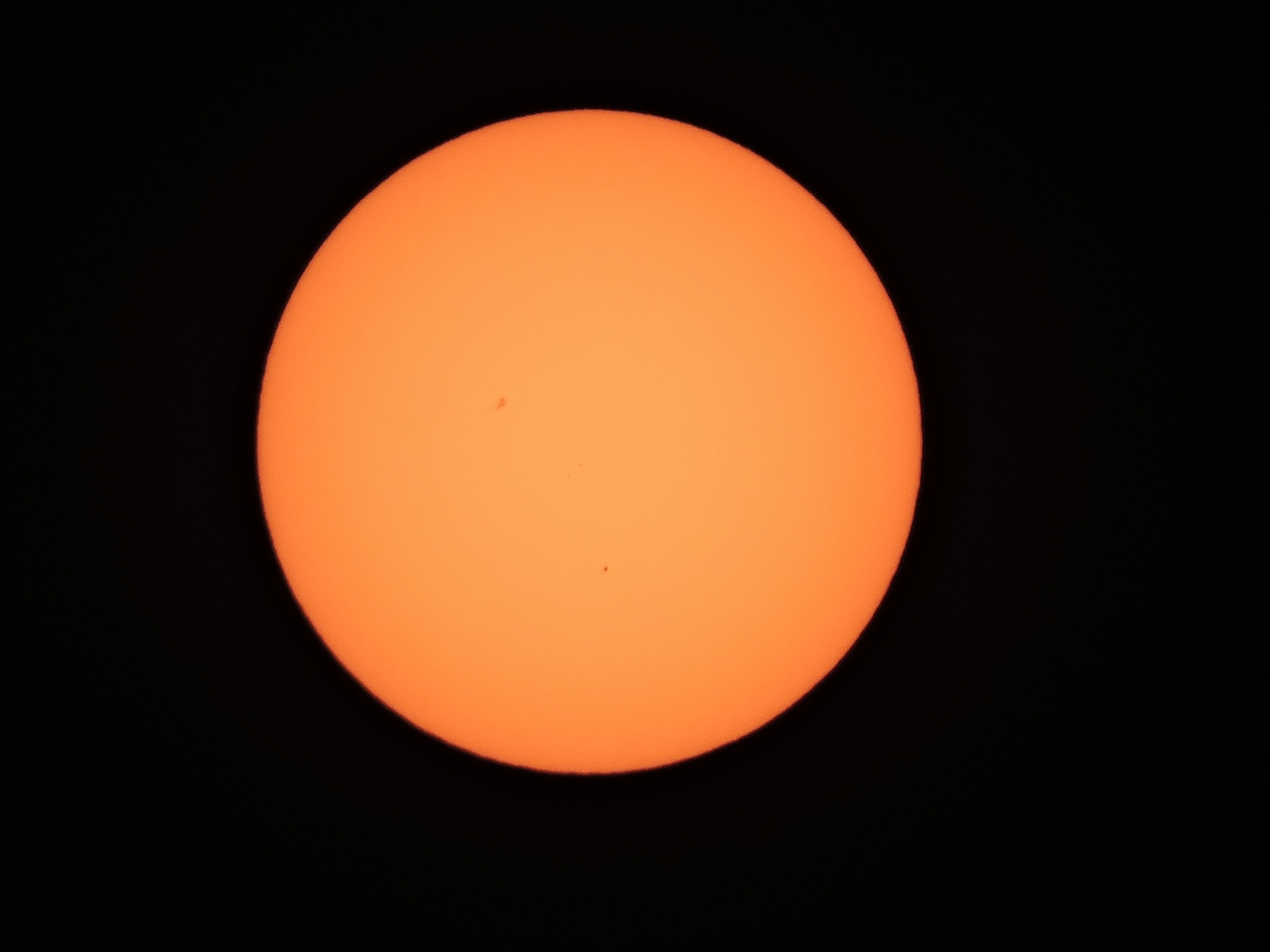
Dennis' white light image.

Dennis’ white light image.

Tom's H-Alpha image.

Tom’s H-Alpha image.

But the weather being what it is, as the event headed towards third contact, the clouds moved back in and the end of the transit was only marginally visible through the cloud gaps.

We need to, once again, thank our unofficial ‘official’ event photographer, Marietta Hausch, for the terrestrial photos.

 Posted by at 9:54 am
May 172016
 

Once again the Hurlburt Field Library hosted a star gaze for their patrons. They also advised local scout groups of the event and several scouts joined in the festivities.

Club members Dean Covey, Tom Haugh and Dennis Hausch started things off with their solar equipment. There was a small sunspot group visible in the white light filtered scopes, but the H-alpha view was fairly unimpressive with only the smallest hint of a solar prominence.

Dennis assists the scouts at Tom's H-Alpha scope.

Dennis assists the scouts at Tom’s H-Alpha scope.

Frank awaits the darkening sky.

Frank awaits the darkening sky.

By then club member Frank Atchison arrived and added his 8″ Meade SCT to the collection of telescopes pointed at the sky.

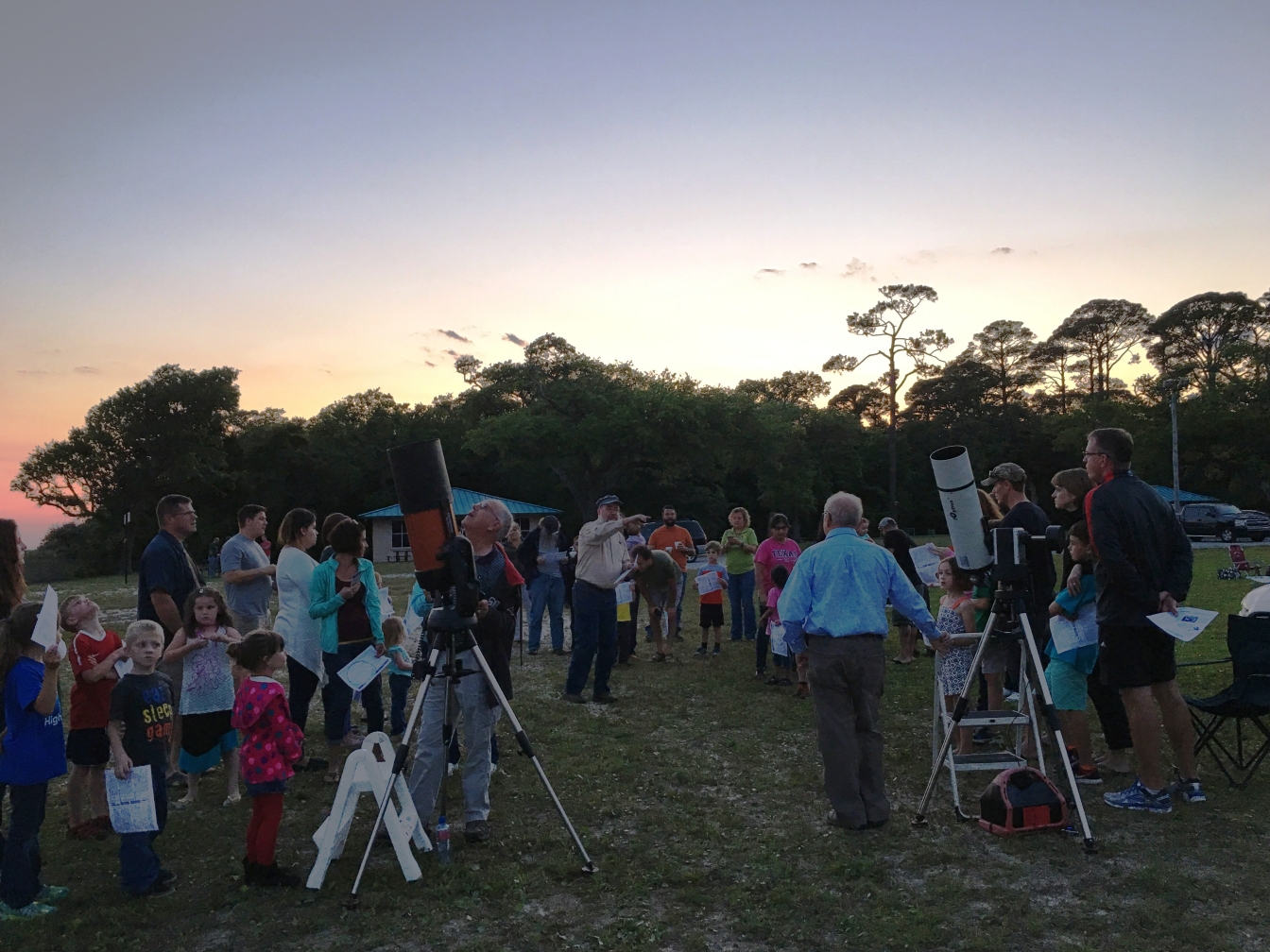
As the Sun started setting, the darkening sky brought Jupiter into view. As the line started to form at Dennis’ Mak-Cass Tom interrupted the growing anticipation and started briefing the crowd on star gaze etiquette, telescope safety and how to use the star charts that we routinely hand out at our events. Since the library brought their 4.5″ Newtonian reflector to the event, he explained the library’s telescope lending policy. But the King of Planets could no longer be held off and night time viewing started in earnest.

Tom briefs the growing crowd.

Tom briefs the growing crowd.

Look! Jupiter!

Look! Jupiter!

The rest of the evening, many celestial objects were targeted. In addition to Jupiter, the Alcor/Mizar pair, the Beehive Cluster and many others were presented to the guest observers.

We want to thank the library for the invitation to join them and we also want to thank the base airmen who volunteered to assist the library. Their help was much appreciated.

 Posted by at 8:39 am
May 112016
 

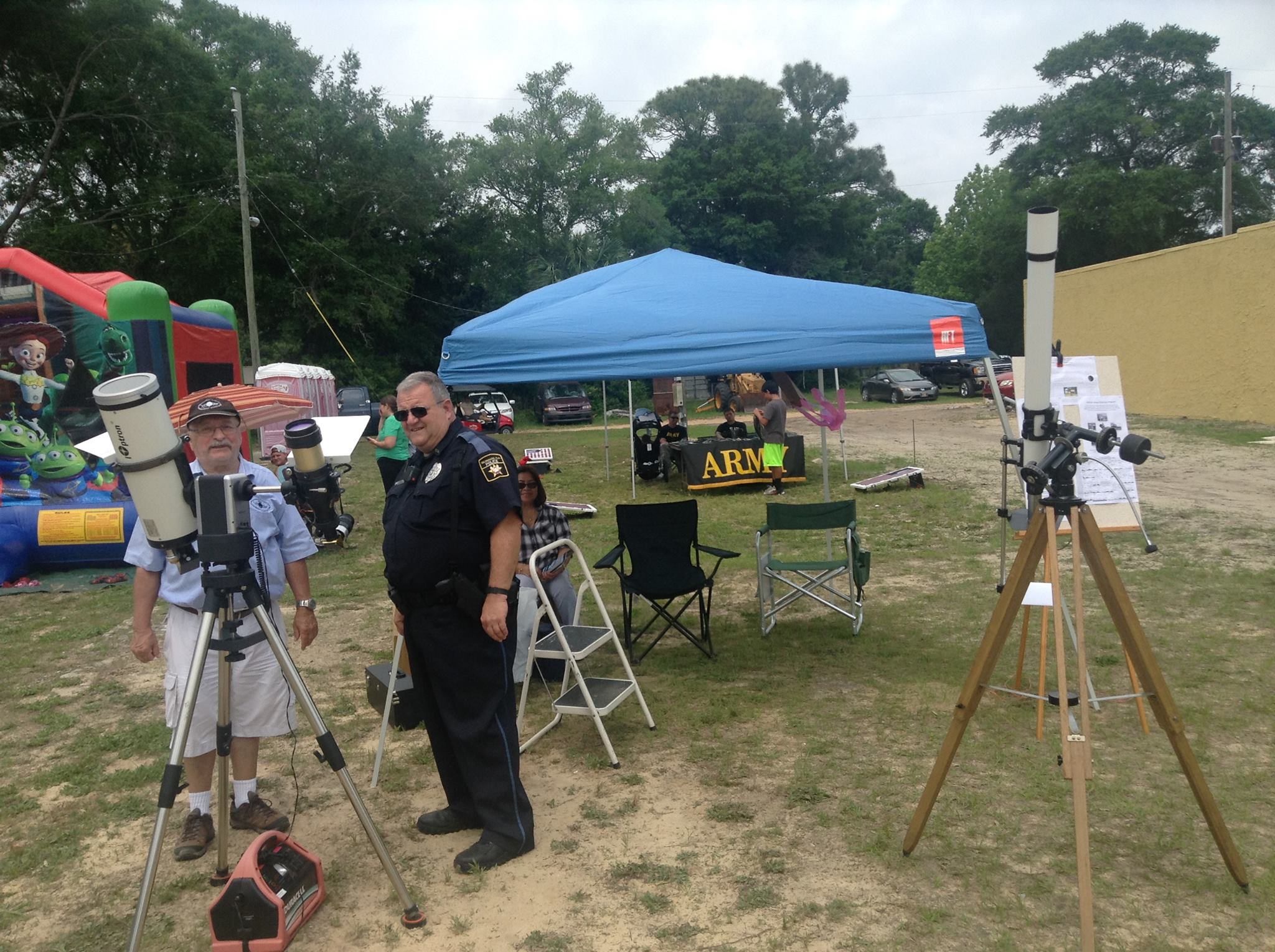
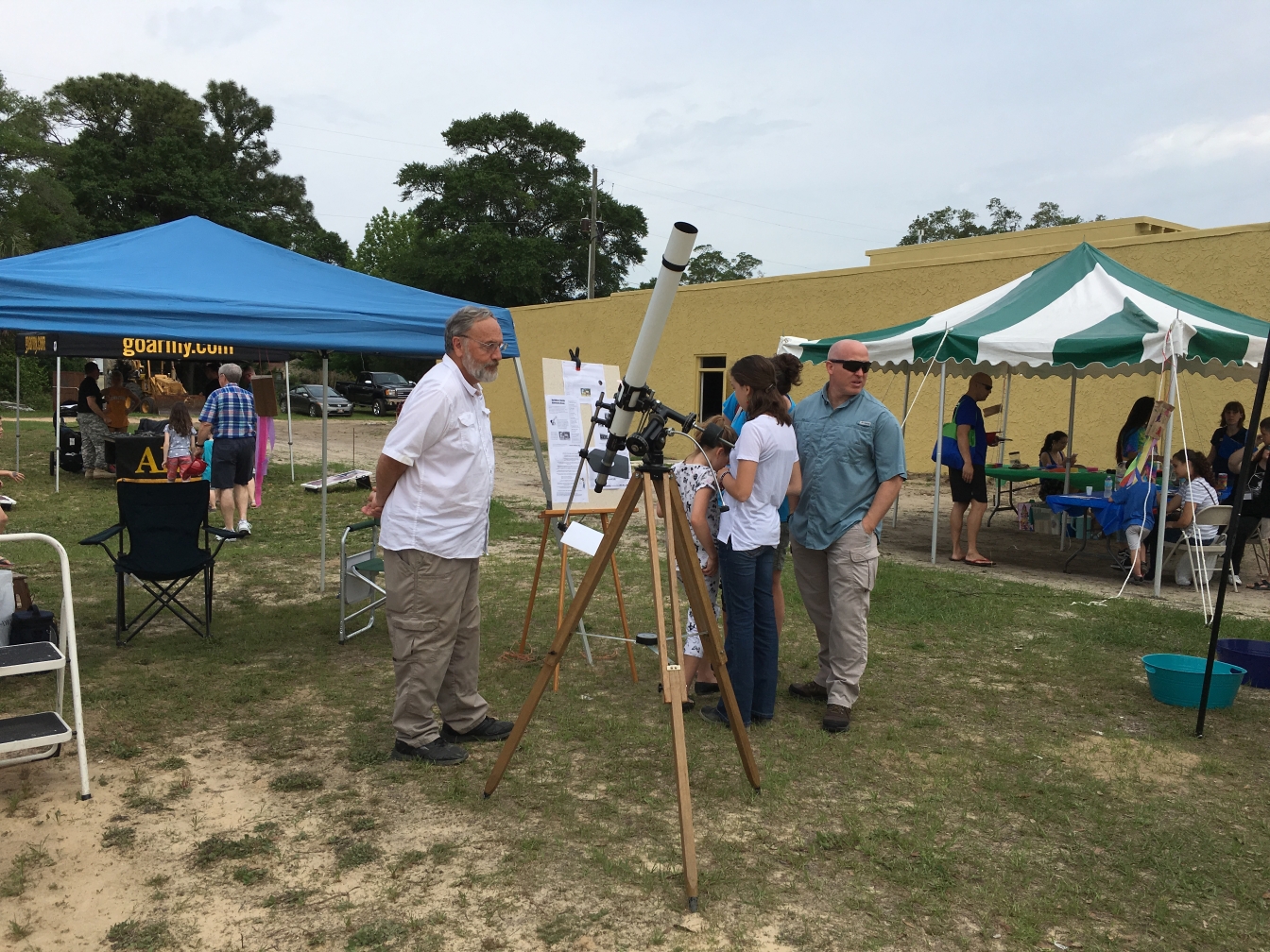
Dave Halupowski and Dennis Hausch braved the mostly cloudy skies and setup solar telescopes at the Heritage Museum’s 40th annual “Saturday in the Park” celebration in Valparaiso. Dave set up his ancient and honored Unitron refractor and provided a projection view of the Sun. Dennis set up his white light filtered Maksutov-Cassegrain telescope and his Coronado Hydrogen-Alpha scope. Later in the afternoon club member Professor Tony Russo from NWFSC joined the pair and added his expertise to the group.

A local Constable examines Dennis' equipment.

A local Constable examines Dennis’ equipment.

Dave waiting for the clouds to clear.

Dave waiting for the clouds to clear.

When the clouds intervened they answered lots of Astronomy questions and handed out the club’s schedule of public star gazes. Photos courtesy of Dave Halupowski and Marietta Hausch

 Posted by at 12:49 pm
Apr 292016
 

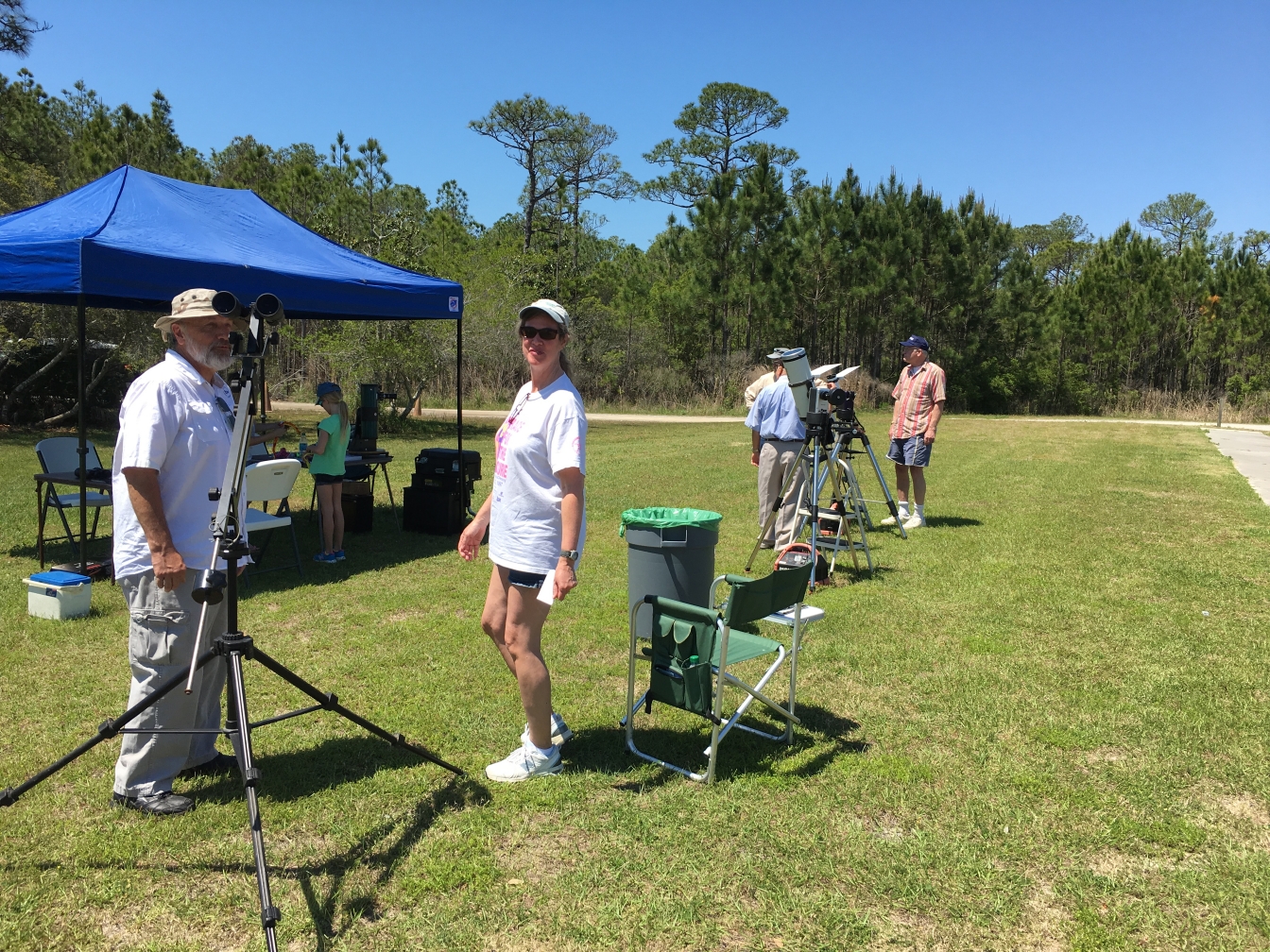
The NWFAA was once again glad to lend our support to Walton County’s Earth Day Festival held at Topsail Hill Preserve State Park. Dave Halupowski and his granddaughter Kennedy were the first to show up. Dave brought a set of binoculars mounted on a parallelogram equipped tripod. Needless to say, the binos were a big hit with the kids and bird watchers that attended the festival. Tom Haugh and Dennis Hausch brought the necessary equipment to safely view Earth’s nearest star; the Sun.

Dave and guest observer discuss his mount.

Dave and guest observer discuss his binocular mount.


The steady stream of visitors were able to view a moderately sized solo sunspot in Dennis’ white light filtered Mak-Cass and a small prominence in Tom’s H-alpha scope. We handed out plenty of star gaze handouts and made sure that everyone was aware of our regularly scheduled star gaze at the same spot one week hence. If everyone shows who said they would, we will have a great turnout on the 30th.

Both solar telescopes in use.

Both solar telescopes in use.

Thanks go to the unofficial ‘official’ club photographer Marietta Hausch for the photos.

 Posted by at 11:52 am
Apr 272016
 

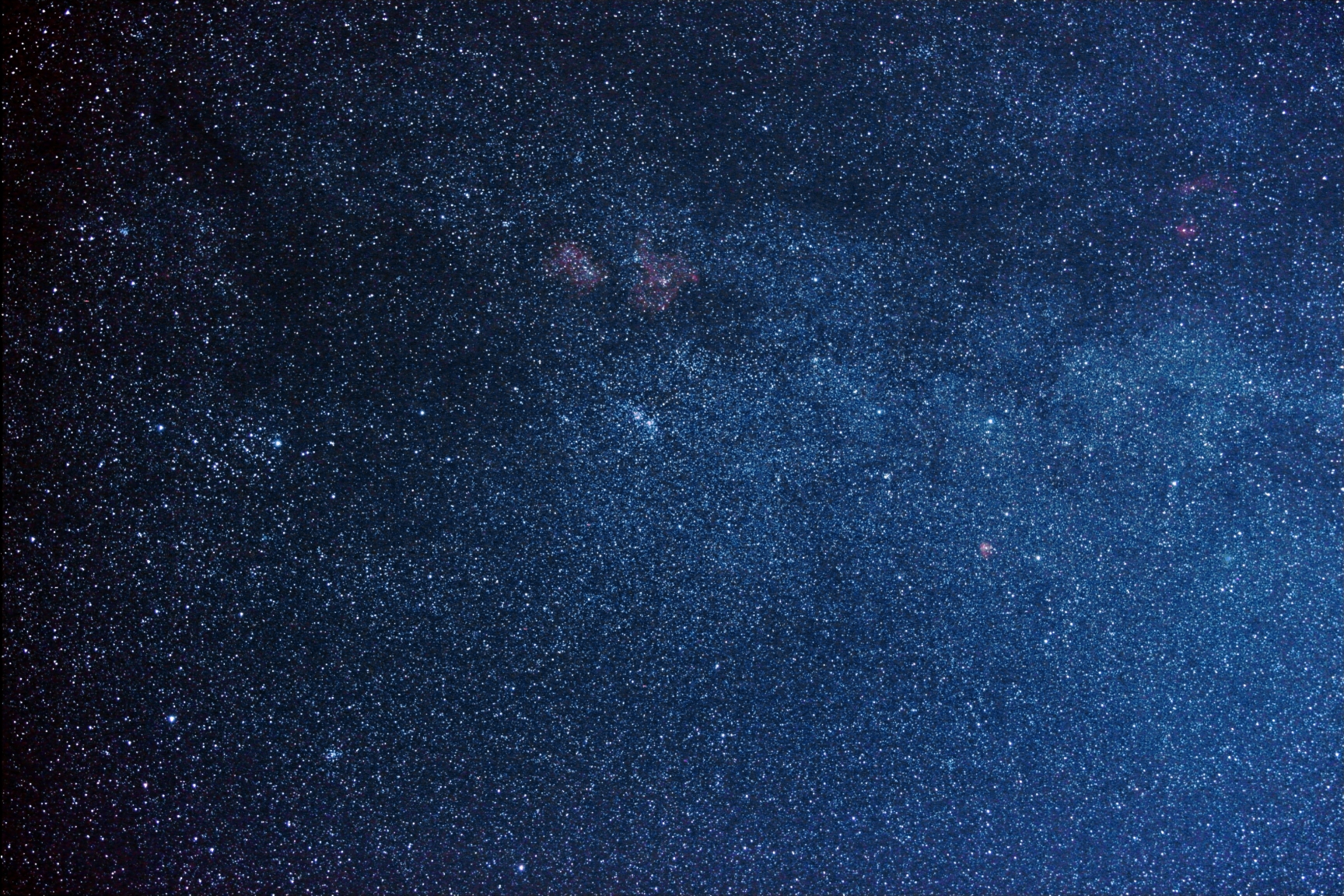
Milky_Way_Double_Cluster_3x3

The overall image is of the Milky Way centered on the Double Cluster. Additional objects include The Heart Nebula, the Soul Nebula, Pacman Nebula, Sh2-171 and Ced 214.

Mount IOptron Skytracker
Camera Canon T3i
Lens 28mm @ f/2.8
Exposure [CLS:25x30s@ISO 800]
Software Deep Sky Stacker, Photoshop
 Posted by at 10:46 pm